FIFA World Cup Late-Night Orders: How Indian Retailers Can Fulfil Demand
Table of Contents
- Introduction
- The Problem: Why Late-Night Demand Breaks Indian Retail Operations
- The Solution: What Indian Retailers Need to Fulfil World Cup Orders
- Key Steps to Build a Late-Night Fulfilment Strategy
- How Commmerce Helps Indian Retailers Win During the World Cup
- Conclusion
- FAQs
TL;DR
- FIFA World Cup late-night orders create sudden demand spikes that disconnected retail tools like Tally or Marg ERP cannot handle in real time.
- Indian retailers need unified inventory visibility, an automated OMS, and integrated last-mile logistics to fulfil orders placed during midnight match hours without errors or delays.
- Commmerce, an Omnichannel Retail Operating System, connects stock across all stores and warehouses, routes orders automatically, and triggers delivery bookings so retailers never miss a sale during high-demand sporting events.
- Preparing in advance with demand forecasting, pre-positioned stock, and staff scheduling is the single biggest factor that separates retailers who win big event demand from those who lose it.
Introduction
FIFA World Cup late-night orders are one of the most intense and time-compressed demand events an Indian retailer will face in 2026. Matches kick off between 12:30 AM and 3:30 AM IST, and in those hours, thousands of fans across India are ordering snacks, beverages, football jerseys, streaming accessories, and fan merchandise online, expecting fast delivery or same-day fulfilment. For retailers running disconnected tools like Vyapar, Marg ERP, or manual Excel sheets, this is where revenue leaks, stock mismatches, and failed deliveries pile up.
The retailers who profit from events like the FIFA World Cup are not necessarily the biggest ones. They are the most operationally prepared ones, with unified inventory, automated order routing, and last-mile delivery integrations that work at 2 AM just as reliably as they do at 2 PM.
This guide walks Indian retailers through exactly how to build that readiness using an omnichannel retail platform.
The Problem: Why Late-Night Demand Breaks Indian Retail Operations
Late-night FIFA World Cup order surges expose every weak point in a retailer's operations at the worst possible time, when staff is minimal, systems are untested under pressure, and customers have zero patience for delays.
Here are the most common breakdowns Indian retailers experience during late-night sporting events:
Stock Mismatches Between Online and Physical Stores
A customer orders a 12-pack of beverages or a Messi jersey online at 1 AM. The website shows it as available. But the actual stock was sold to a walk-in customer three hours earlier and the system was never updated. The order gets confirmed, fulfilment fails, and the customer calls your WhatsApp number at 2 AM for a refund. This is one of the most common pain points for Indian retailers using separate tools for their physical store and online store, where inventory is never synchronised in real time.
No Visibility Into Which Store Has Stock
For retailers running 5 to 20 stores across a city, the challenge is not whether stock exists somewhere. It is knowing where it exists and routing the order to the right branch instantly. Without centralised inventory management, store managers are texting each other at midnight trying to locate a product, losing 30 to 45 minutes on a single order.
Manual Order Processing Causes Delays and Errors
Retailers receiving orders through WhatsApp, their own website, and marketplace apps simultaneously have no single screen to see all incoming orders. Someone on a spreadsheet at midnight, manually copying order details into a billing system, is a recipe for wrong addresses, missed items, and unhappy customers.
Logistics Chaos After Order Confirmation
Even when an order is confirmed correctly, the next failure point is delivery booking. If the retailer has to manually log into Delhivery or Shiprocket to create a shipment for every order, the queue builds fast during a surge. Orders placed at 1 AM do not get picked up until mid-morning, missing the customer's expectation entirely.
POS Downtime During Late-Night Internet Outages
Internet connectivity in India, especially in Tier 2 and Tier 3 cities, is not always stable late at night. Retailers using cloud-only POS systems find their billing terminal frozen exactly when a queue of last-minute in-store buyers arrives to stock up before the match. A system that does not work offline is a liability during high-demand events.
⚠️Watch OutRetailers using Tally, Marg ERP, or Vyapar as standalone tools have no real-time inventory sync between their physical store and online channels, which means World Cup order confirmations frequently fail at fulfilment when stock has already been sold in-store.
The Solution: What Indian Retailers Need to Fulfil World Cup Orders
Fulfilling FIFA World Cup late-night demand at scale requires four capabilities working together in one platform: real-time inventory visibility across all channels and stores, a unified order management system that auto-routes each order, integrated last-mile logistics that trigger delivery bookings automatically, and an offline-capable POS for in-store billing.
Retailers who have these four capabilities unified on a single platform, rather than stitched together across separate tools, consistently outperform competitors during high-demand windows. According to industry estimates, retailers who unify their online and offline inventory reduce order cancellations due to stock mismatches by over 60 percent during event-driven demand spikes.
The right platform for Indian retailers also needs to be built for India specifically, with support for GST-compliant billing, UPI and Razorpay payment integration, and logistics tie-ups with Delhivery, Shiprocket, and Ecom Express. International platforms like Shopify or WooCommerce require multiple plugins and third-party apps to achieve what an India-first omnichannel retail platform delivers out of the box.
For a deeper understanding of how a unified OMS works in practice, read this Order Management System (OMS) Guide for Indian Retailers.
💡Pro TipPre-position your fastest-moving World Cup SKUs in the warehouse or dark store closest to your highest-density delivery pin codes at least 48 hours before the first late-night match, so your OMS can route and despatch those orders within minutes.
Key Steps to Build a Late-Night Fulfilment Strategy for the FIFA World Cup
Building a reliable late-night fulfilment strategy involves five sequential steps, each of which reduces a specific failure point in your operations. Indian retailers should complete these steps at least two weeks before the tournament's knockout rounds, when late-night order volume peaks.
Step 1: Use Demand Forecasting to Identify High-Velocity SKUs
Start by analysing your sales data from previous high-demand events, including IPL seasons, Diwali, or New Year's Eve, to identify which products sell fastest between 10 PM and 3 AM. For the FIFA World Cup, typical high-velocity categories include packaged snacks and beverages, football jerseys and fan merchandise, small electronics like Chromecast sticks and portable projectors, and energy drinks. Use your retail analytics platform to forecast how much stock you will need per store and per warehouse for each match night. For a detailed approach to multi-store forecasting, see Multi-Store AI Demand Forecasting: Cut Food Price Surge Overstock 40%.
Step 2: Synchronise Inventory Across All Channels Before the Tournament Begins
Before the first late-night match, audit your inventory across every physical store, warehouse, and your online storefront to ensure all stock counts are accurate and synchronised. Any discrepancy in your system at the start of the tournament will compound with every order. Set low-stock threshold alerts for your top 20 World Cup SKUs so your buying team gets a notification when stock drops below a safe level, giving them time to replenish before the next match night.
Step 3: Configure Your OMS for Automated Late-Night Order Routing
Your Order Management System should be configured to automatically route each incoming order to the fulfilment location with the closest available stock and the shortest delivery time to the customer's pin code. During late-night hours, manual order routing is simply not feasible at volume. Automated routing rules should account for cut-off times for same-night delivery and switch to next-morning delivery automatically when the logistics window closes. Read more about optimising these workflows in Optimizing OMS for Indian Retailers: Boost Order Accuracy in 2026.
Step 4: Integrate Last-Mile Logistics for Automated Dispatch
Every order that your OMS confirms should trigger a delivery booking with your logistics partner automatically, without any staff member needing to manually create a shipment. Integrations with Delhivery, Shiprocket, or Ecom Express allow your platform to generate a waybill, assign a pickup slot, and send the customer a tracking link via WhatsApp, all within seconds of the order being confirmed. This is how a three-person midnight shift can handle the same order volume that would otherwise require ten people. See more on building this capability in the Last-Mile Delivery and Fulfilment Guide for Indian Retailers.
Step 5: Prepare Your Warehouse for High-Volume Picking and Packing
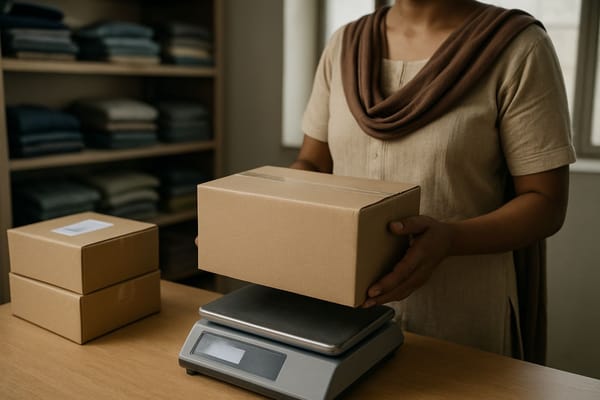
A World Cup late-night surge is not just a technology challenge. It is a warehouse operations challenge. Your picking, packing, and putaway workflows need to be optimised so staff can process a high volume of small orders quickly. Barcode-based picking reduces errors, zone-based putaway reduces walking time, and pre-packed kits for popular combinations, like a beverage bundle or a jersey-plus-scarf combo, reduce pack time per order significantly. For a detailed guide on warehouse readiness, visit Warehouse Management India 2026: Boost Order Accuracy and Reduce Costs and Retail Warehouse Automation India: Cut Fulfillment Costs 55% Chains.
Step 6: Enable Offline-First POS for Uninterrupted In-Store Billing
For retailers with physical stores that stay open late during World Cup nights, the POS must continue working even if the internet goes down. An offline-first billing system stores all transaction data locally and syncs automatically when connectivity is restored, ensuring no sale is lost and all GST-compliant invoices are generated correctly. This is especially critical in Tier 2 and Tier 3 cities where internet reliability after midnight is inconsistent. The Central Board of Indirect Taxes and Customs mandates e-invoice compliance for eligible retailers, and any POS downtime during a billing surge can create compliance gaps that are costly to correct.
| Capability | Disconnected Tools (Tally, Vyapar, Marg ERP) | Commmerce Omnichannel Retail OS |
|---|---|---|
| Real-time inventory across stores | Not available, manual reconciliation | Unified live stock across all branches |
| Automated order routing | Manual, error-prone at scale | OMS auto-routes to nearest stocked location |
| Logistics integration | Manual login to separate courier portals | Auto-dispatch via Delhivery, Shiprocket, Ecom Express |
| Offline POS capability | Cloud-only, breaks without internet | Offline-first, syncs when reconnected |
| Multi-channel order visibility | Separate dashboards per channel | Single dashboard for all channels |
How Commmerce Helps Indian Retailers Win During the FIFA World Cup
Commmerce is an Omnichannel Retail Operating System built specifically for Indian retailers with 2 to 50 stores. It unifies every operational layer that matters during a FIFA World Cup late-night order surge, from inventory and OMS to delivery and analytics, into a single dashboard, so a retailer does not need a team of ten people at midnight to handle peak demand.
Centralised Inventory That Eliminates Stock Mismatches
Commmerce keeps inventory synchronised in real time across every physical store, warehouse, and your online storefront. When a customer orders a jersey online at 1:15 AM and your store sold the last one at 12:50 AM, Commmerce's system already reflects that and either shows the product as unavailable or reroutes the order to the next nearest stocked location automatically. There is no manual update required and no failed fulfilment due to a sync gap.
OMS That Auto-Routes Every Late-Night Order
The built-in Order Management System in Commmerce receives orders from your website, WhatsApp, and marketplace channels in one unified view. It applies your pre-configured routing rules to assign each order to the correct fulfilment location, whether that is a dark store, a main warehouse, or the nearest branch with stock. For retailers managing omnichannel order fulfilment across jewellery, fashion, or electronics categories, this unified routing logic is a significant operational upgrade. See how this applies to specialised retail in Omnichannel Order Management for Indian Jewellery Chains.
Native Logistics Integrations for Instant Dispatch
Commmerce's delivery and fulfilment module integrates natively with Delhivery, Shiprocket, and Ecom Express. When your OMS confirms an order, a delivery booking is triggered automatically, the waybill is generated, and the customer receives a WhatsApp message with their tracking link, all without any staff action. This reduces the time between order confirmation and dispatch from 20 to 30 minutes to under 2 minutes, which is the difference between a 2-hour delivery and a 4-hour delivery during a late-night match window.
Offline-First POS for Uninterrupted In-Store Billing
Commmerce's POS module is built offline-first. It works without an internet connection and syncs all transactions, inventory changes, and GST invoices automatically when connectivity is restored. For stores in areas where late-night internet reliability is unpredictable, this means your billing counter never freezes during a queue. Every invoice generated is GST-compliant and can be sent to the customer via WhatsApp instantly, which also supports the GSTN e-invoice mandate for eligible businesses.
Real-Time Analytics Across All Stores During the Event
During a multi-week tournament like the FIFA World Cup, knowing which store is running low on stock, which channel is generating the most revenue, and which SKUs are moving fastest allows you to make restocking and promotion decisions between match nights. Commmerce's real-time analytics dashboard gives you this view across all branches in one screen, without needing to pull reports from five different systems. According to the India Brand Equity Foundation, the Indian retail sector is increasingly moving toward data-driven operations, and real-time analytics is one of the key differentiators between high-growth retailers and those stagnating on legacy tools.
WhatsApp-Based Order Communication and Invoicing
Many Indian consumers place late-night orders via WhatsApp directly to their favourite local retailer. Commmerce routes these WhatsApp orders into the unified OMS, so they are treated identically to orders from your website or a marketplace. The customer gets a GST invoice, an order confirmation, and a tracking link on WhatsApp without any manual copy-paste by your team. This is a capability that tools like Vyapar or Marg ERP simply do not offer.
Conclusion
FIFA World Cup late-night orders represent one of the highest-value and most operationally demanding windows Indian retailers will face in 2026. The retailers who convert that demand into revenue are not the ones with the most staff on the midnight shift. They are the ones with a unified omnichannel retail platform that handles inventory sync, order routing, logistics dispatch, and offline billing automatically, so every order placed at 1 AM is fulfilled as reliably as one placed at noon. Disconnected tools like Tally, Marg ERP, or Vyapar were not built for this kind of multi-channel, high-velocity demand. Commmerce, an Omnichannel Retail Operating System built specifically for Indian retailers, is. If you want your business ready before the next late-night kickoff, start with a demo today.
FAQs
Q: How can Indian retailers handle a sudden spike in late-night orders during the FIFA World Cup?
A: Indian retailers can handle FIFA World Cup late-night order spikes by using an omnichannel retail platform that combines real-time inventory visibility, automated order routing, and logistics integrations, so every order placed at 1 AM is picked, packed, and dispatched without manual intervention.
Q: What products see the highest demand during FIFA World Cup late-night matches in India?
A: During FIFA World Cup late-night matches, Indian retailers typically see the highest demand for snacks, beverages, jerseys, electronics like projectors and streaming devices, and fan merchandise, all of which require pre-stocked inventory and fast fulfilment workflows to meet customer expectations.
Q: How does an OMS help retailers fulfil late-night orders faster during the World Cup?
A: An Order Management System (OMS) helps retailers fulfil late-night orders faster by automatically routing each order to the nearest warehouse or store that has stock, generating pick-and-pack instructions for staff, and triggering a delivery booking with integrated logistics partners like Delhivery or Shiprocket.
Q: Can Commmerce help retailers manage FIFA World Cup demand across multiple stores?
A: Yes, Commmerce is an Omnichannel Retail Operating System built for Indian retailers with multiple stores, and it unifies inventory, order management, delivery, and analytics across all branches in one dashboard, making it easy to manage high-demand events like the FIFA World Cup from a single control centre.
Q: How should Indian retailers prepare their inventory before the FIFA World Cup?
A: Indian retailers should use demand forecasting tools to identify fast-moving SKUs based on past event data, pre-position stock in the warehouses closest to high-demand zip codes, set low-stock alerts so replenishment happens before shelves run empty, and ensure all online and in-store inventory is synchronised in real time.
Disclaimer: This article is for general informational purposes only and does not constitute legal, financial, or tax advice. GST rules, compliance requirements, and platform features may change over time. Please verify the latest guidelines with a qualified professional or refer to official sources such as the GSTN or CBIC. Market statistics mentioned are based on publicly available estimates and may not reflect current figures. Commmerce product features referenced are accurate at the time of writing and subject to change.