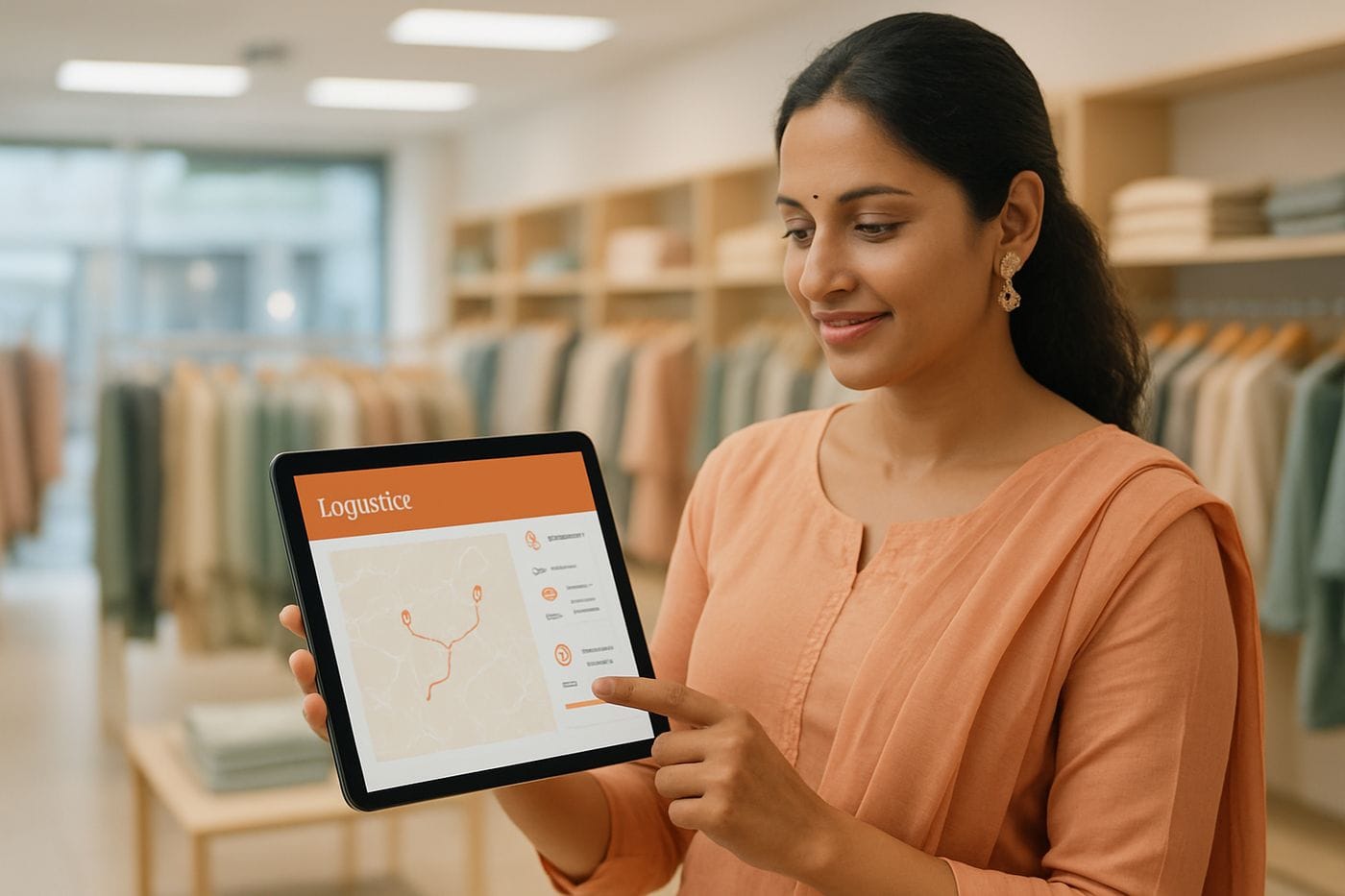
Multi-Store Delivery Partner Auto-Switch: Cut RTO Losses 45% India 2026
Table of Contents
- Introduction
- The RTO Problem Crushing Indian Multi-Store Retailers
- The Solution: What to Look for in a Delivery Partner Auto-Switch System
- Key Features of an Effective Auto-Switch Delivery System
- How Commmerce Helps Multi-Store Retailers Cut RTO Losses
- Conclusion
- FAQs
TL;DR
- Multi-store delivery partner auto-switch automatically routes each order to the logistics provider with the lowest RTO rate for the destination pincode, helping Indian retailers cut return-to-origin losses by up to 45%.
- Manual courier selection is a leading cause of high RTO rates because retailers cannot consistently track which partner performs best across hundreds of pincodes at scale.
- Commmerce, an Omnichannel Retail OS built for Indian retailers, includes native delivery auto-switch logic integrated with Delhivery, Shiprocket, and Ecom Express across all stores from one dashboard.
- Retailers using legacy tools like Vyapar, Marg ERP, or TallyPrime have no built-in logistics intelligence and must manage delivery partner selection entirely by hand.
Introduction
Multi-store delivery partner auto-switch is one of the most impactful yet underused strategies available to Indian retailers looking to cut RTO losses in 2026. If you operate two or more physical stores and ship orders to customers across India, your RTO rate is almost certainly costing you more than you realise. Every returned shipment means paying forward freight, reverse freight, restocking effort, and lost selling time, all while the original customer walks away unsatisfied.
According to industry estimates, RTO rates for Indian ecommerce and omnichannel retailers range between 20% and 40% depending on the category and the logistics partner used. For a retailer shipping 500 orders a month at an average order value of ₹1,500, even a 25% RTO rate translates to over ₹1.87 lakh in wasted freight costs every single month.
The good news is that intelligent delivery partner auto-switching, built into a proper omnichannel retail platform, can reduce those losses by up to 45%. This guide explains how the system works, what to look for when evaluating a solution, and how Commmerce, an Omnichannel Retail Operating System built specifically for Indian retailers, makes auto-switch a core part of your fulfilment workflow.
The RTO Problem Crushing Indian Multi-Store Retailers
High RTO rates in Indian retail are driven largely by mismatched logistics partner selection, not just customer behaviour. When the wrong courier is assigned to a pincode it does not serve well, failed delivery attempts increase, and returns pile up.
Multi-store retailers face this problem at a scale that single-store businesses do not. When you operate five, ten, or twenty branches across different cities, each store may have access to different logistics partners, serve different delivery zones, and face different customer expectations around speed and reliability. Managing all of that manually is impossible.
Why Manual Courier Selection Fails at Scale
When a store manager manually selects a courier partner at the time of shipping, that decision is based on habit, familiarity, or the last conversation with a sales rep, not on real performance data. No manager can track which partner delivered successfully in Tier 2 pincodes last week versus which one had three failed attempts in the same zone. The result is a guessing game that inflates RTO.
Retailers using disconnected tools like TallyPrime, Marg ERP, or Vyapar face an even harder challenge. These tools have no native logistics integration, no RTO tracking by partner or pincode, and no automated fulfilment logic. Every courier assignment is manual, every RTO is invisible until it hits the bank account.
The Real Cost of a High RTO Rate
The financial damage from RTO goes well beyond the obvious freight charges. Consider the full cost structure for a single returned order:
- Forward shipping cost paid to the courier
- Reverse shipping cost paid for the return leg
- Restocking and quality check labour time
- Potential product damage during return transit
- Lost revenue from a sale that never completed
- Customer acquisition cost that yielded zero return
According to industry estimates, the total cost of a single RTO event including all hidden costs can be 2x to 3x the visible freight charge alone. For high-volume multi-store retailers, this is a structural profitability problem that cannot be solved by negotiating better freight rates. It requires smarter routing at the point of shipment creation.
You can explore a detailed breakdown of fulfilment economics in the Last-Mile Delivery and Fulfilment Guide for Indian Retailers.
⚠️Watch OutRetailers who optimise only for the lowest per-shipment rate often end up with the highest overall fulfilment cost because cheap couriers frequently have poor pincode coverage and high RTO rates in Tier 2 and Tier 3 cities.
The Solution: What to Look for in a Delivery Partner Auto-Switch System
A delivery partner auto-switch system automatically selects the most suitable logistics provider for each order at the moment of fulfilment, using live and historical data rather than manual choice. The right system eliminates human bias from courier selection and replaces it with consistent, data-driven routing logic.
Not every platform that claims to offer logistics integration actually provides intelligent auto-switching. There is a significant difference between a system that lets you manually choose from a list of couriers and one that automatically routes orders based on performance rules. Here is what separates a genuinely effective solution from a basic integration.
Pincode-Level Serviceability and Performance Data
The foundation of any auto-switch system is pincode-level data. Different logistics partners perform very differently across Indian pincodes. A partner that delivers reliably in Mumbai may have a 35% RTO rate in smaller Rajasthan towns. Your platform must track this at a granular level and use it to inform every routing decision.
Look for a system that maintains a live scorecard for each logistics partner across all the pincodes your stores serve. This scorecard should include delivery success rate, average transit time, and RTO rate, updated continuously as new shipments complete or return.
Rule-Based and Fallback Routing Logic
The auto-switch engine should allow you to define primary and fallback rules. For example, your primary rule might be: use Partner A for all pincodes in Karnataka where Partner A's delivery success rate exceeds 90%. Your fallback rule might be: if Partner A does not service the pincode or has less than 80% success there, switch to Partner B automatically.
This rule-based architecture gives retailers control without requiring manual intervention on every order. It is also essential for multi-store retailers because different branches may have contracts with different logistics providers.
Real-Time Weight and Dimension-Based Cost Optimisation
Auto-switch should also factor in the economics of each shipment. A bulky furniture order has a very different cost profile than a small fashion accessory. Your system should use the actual weight and dimensions of each shipment to calculate the all-in cost for each eligible partner and route to the most cost-effective option that still meets your delivery SLA.
This is a particularly important capability for retailers managing multiple categories across stores, where shipment profiles vary widely. For more on managing delivery costs across store formats, read our guide on Multi-Store Delivery Partner Auto-Selection Cut Shipping Costs 40% India.
OMS Integration for End-to-End Visibility
Delivery auto-switch is only as effective as the order management system it sits inside. Without a unified OMS, the auto-switch engine cannot see all orders across channels, cannot track which orders have already been assigned, and cannot monitor RTO events when they happen.
A proper omnichannel retail platform integrates the OMS and the delivery routing engine natively, so every order, whether it originates from your physical store, your online storefront, or a marketplace, flows through the same auto-switch logic.
💡Pro TipSet a 30-day lookback window for your auto-switch RTO scoring so seasonal delivery fluctuations do not permanently penalise a logistics partner that performs well most of the year.
Key Features of an Effective Auto-Switch Delivery System
An effective multi-store delivery partner auto-switch system combines several interconnected capabilities that work together to reduce RTO, lower shipping costs, and improve customer experience. Here are the core features to evaluate.
Multi-Partner Logistics Integration Out of the Box
The platform must integrate natively with the major Indian logistics providers including Delhivery, Shiprocket, and Ecom Express. Native integrations are far more reliable than third-party middleware because they maintain direct API connections that stay current with partner updates. According to IBEF's ecommerce industry data, logistics reliability is among the top factors affecting customer satisfaction in Indian online retail, making the quality of these integrations a business-critical decision.
Automated RTO Prediction Scoring
Beyond historical partner performance, advanced systems use order-level signals to predict RTO risk before the shipment is even dispatched. Signals include the customer's delivery address type, past purchase and return history, payment method (prepaid orders have lower RTO rates than COD), and pincode-level demographics.
When the RTO risk score for an order is high, the system can automatically trigger additional steps such as sending a WhatsApp confirmation to the customer before dispatch, or routing the order to the partner with the strongest delivery attempt record in that zone.
Delivery Partner Auto-Switch Based on Live Performance
The core auto-switch mechanism must operate in real time. If a logistics partner's delivery performance drops below your configured threshold during a specific window, the system should automatically reroute new orders away from that partner without requiring manual intervention. This is the defining capability of a true automated delivery routing system for multi-store retailers, and it is what separates it from a basic courier comparison tool.
Store and Warehouse Origin-Aware Fulfilment
For multi-store retailers, the best fulfilment origin is not always the store that received the order. Auto-switch logic should work in tandem with your inventory management system to identify which store or warehouse has the item in stock and is closest to the customer, then select the best delivery partner for that specific origin-destination pair.
This origin-aware routing can dramatically reduce transit time and, as a result, reduce RTO because faster delivery attempts are more likely to succeed. Learn how cross-docking setups can complement this strategy in our post on Multi-Store Cross-Docking Setup: Cut Delivery Costs 50% Grocery Chains.
Centralised RTO Analytics and Partner Scorecards
To continuously improve your auto-switch rules, you need a unified analytics layer that shows RTO rates by partner, by pincode, by store, by product category, and by time period. This data should be visible from a single dashboard that covers all your stores, not scattered across separate partner portals.
| Capability | Commmerce Omnichannel OS | Vyapar / Marg ERP / TallyPrime |
|---|---|---|
| Native logistics integrations | Delhivery, Shiprocket, Ecom Express built in | None or limited third-party add-ons |
| Delivery partner auto-switch | Rule-based, automated, real-time | Not available, manual selection only |
| RTO analytics by partner and pincode | Centralised dashboard across all stores | No native RTO tracking |
| OMS and fulfilment integration | Fully unified, same platform | Separate tools, manual reconciliation |
| Multi-store origin-aware routing | Supported across all branches | Not supported |
WhatsApp-Based Delivery Communication to Reduce COD RTO
COD orders account for a disproportionate share of RTO events in India. A simple but highly effective tactic is sending an automated WhatsApp message to the customer confirming the order details and expected delivery window before the shipment is dispatched. This single step can significantly improve delivery success rates by ensuring the customer is aware and ready to receive the package.
For a deeper look at how aggregators fit into this picture, the Guide to Sales Channel and Delivery Aggregators for Indian Retailers is worth reading alongside this post.
How Commmerce Helps Multi-Store Retailers Cut RTO Losses
Commmerce is an Omnichannel Retail Operating System built specifically for Indian retailers managing 2 to 50 stores. It brings together POS, inventory, OMS, delivery fulfilment, and analytics into a single unified platform, which means the delivery auto-switch capability is not bolted on as an afterthought but is deeply integrated with every other part of the retail operation.
Native Integrations with Indian Logistics Partners
Commmerce integrates natively with Delhivery, Shiprocket, and Ecom Express, and its iPaaS integration engine allows additional logistics providers to be connected without custom development. These integrations pull live data on serviceability, transit times, and cost into the auto-switch engine so routing decisions are always based on current information, not static rate cards.
Unified OMS That Powers Intelligent Auto-Switch
The Commmerce Order Management System processes orders from all channels, whether from your physical store, your built-in online storefront, or any marketplace, through a single fulfilment workflow. The auto-switch delivery logic sits inside this OMS, which means every order automatically gets routed to the right partner and the right origin store without any manual steps from your team.
This unified approach is also what enables the multi-store delivery partner auto-switch to function correctly across different branch configurations. You can read more about how last-mile software reduces RTO in our post on Last-Mile Delivery Software India: Cut RTO Losses 40%.
Centralised Inventory Visibility for Origin-Aware Fulfilment
Commmerce provides real-time inventory visibility across all stores and warehouses on a single dashboard. When an order comes in, the system knows exactly which locations have the item in stock and uses that information, combined with the delivery auto-switch rules, to fulfil from the closest available location using the best available partner. This reduces transit time, improves delivery success rates, and ultimately cuts RTO.
RTO Analytics and Continuous Rule Optimisation
The Commmerce analytics layer tracks RTO rates by logistics partner, by pincode, by store, and by product category across your entire retail network. This data feeds directly back into the auto-switch configuration, so your routing rules improve automatically over time as more delivery data accumulates. You will also find detailed guidance on managing rising shipping costs in our post on Multi-Store Delivery Cost Surge: Beat Rising Fuel Prices 40% India.
WhatsApp Invoicing and Pre-Delivery Confirmation
Commmerce includes built-in WhatsApp-based customer communication, which means your team can send automated order confirmations and pre-delivery alerts to customers without any additional tool. For COD orders in particular, this dramatically improves delivery success rates and reduces the RTO share of total shipments.
Offline-First POS That Keeps Store Operations Running
Because Commmerce operates on an offline-first architecture, your store billing and order processing continue without interruption even during internet outages. When connectivity is restored, all data syncs automatically. This means your fulfilment workflow is never blocked by connectivity issues, which is a common pain point for retailers in Tier 2 and Tier 3 cities where internet reliability varies.
For a detailed comparison of logistics partners, see the Multi-Store Delivery Partner Comparison: Delhivery vs Ecom Express 2026.
Conclusion
Multi-store delivery partner auto-switch is no longer a nice-to-have feature for Indian retailers. In 2026, with freight costs rising, customer expectations tightening, and RTO rates eating directly into operating margins, intelligent automated courier routing is a core part of running a profitable multi-store retail business. Retailers who continue to rely on manual partner selection through disconnected tools like TallyPrime, Marg ERP, or Vyapar will keep absorbing preventable losses on every return shipment. The retailers who build auto-switch logic into a unified omnichannel platform will cut RTO losses by as much as 45%, protect their margins, and deliver a consistently better customer experience across every channel and every store. Commmerce is built specifically for this, offering Indian multi-store retailers a single operating system that connects inventory, OMS, and intelligent delivery routing in one place, so you can stop managing logistics by hand and start letting data make every shipment decision for you.
FAQs
Q: What is delivery partner auto-switch for multi-store retailers?
A: Delivery partner auto-switch is a feature that automatically selects the best logistics provider for each order based on rules like pincode serviceability, delivery speed, RTO history, and cost, so multi-store retailers do not need to manually assign courier partners for every shipment.
Q: How does auto-switching delivery partners reduce RTO losses in India?
A: Auto-switching routes each order to the logistics partner with the lowest RTO rate for the destination pincode, which means fewer undelivered shipments, lower return freight costs, and faster reinstatement of stock into sellable inventory.
Q: Which delivery partners does Commmerce integrate with for auto-switch?
A: Commmerce integrates natively with Delhivery, Shiprocket, and Ecom Express, and its iPaaS engine allows additional logistics providers to be connected, enabling intelligent auto-switch rules across all integrated partners.
Q: Can delivery partner auto-switch work across multiple stores and warehouses?
A: Yes, Commmerce allows retailers to configure fulfilment rules per store or warehouse, so the auto-switch logic considers both the origin store's available partners and the destination pincode's delivery performance before assigning an order.
Q: Is delivery partner auto-switch suitable for small and mid-size Indian retailers?
A: Absolutely. Indian retailers with 2 to 50 stores doing ₹2 crore to ₹100 crore in annual revenue benefit the most from auto-switch because they ship across diverse pincodes where different logistics partners perform very differently, making manual selection both time-consuming and error-prone.
Disclaimer: This article is for general informational purposes only and does not constitute legal, financial, or tax advice. GST rules, compliance requirements, and platform features may change over time. Please verify the latest guidelines with a qualified professional or refer to official sources such as the GSTN or CBIC. Market statistics mentioned are based on publicly available estimates and may not reflect current figures. Commmerce product features referenced are accurate at the time of writing and subject to change.