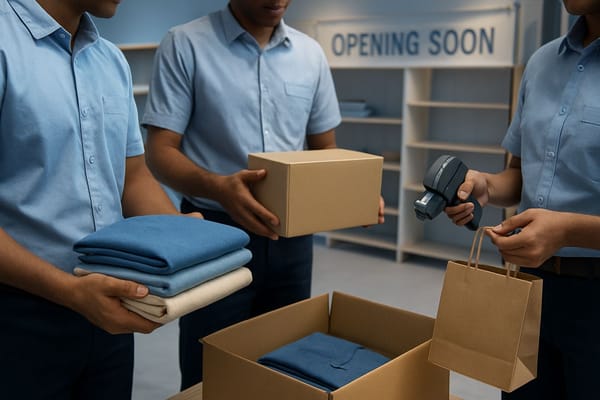
Ship from Store vs Warehouse: Which Cuts Delivery Costs for Indian Chains
Table of Contents
- Introduction
- Quick Comparison: Ship from Store vs Warehouse Fulfilment
- What Is Ship from Store Fulfilment?
- What Is Centralised Warehouse Fulfilment?
- Head-to-Head: Cost, Speed, and India-Specific Fit
- Which Fulfilment Model Should Indian Retailers Choose?
- How Commmerce Goes Beyond Both Models
- Conclusion
- FAQs
TL;DR
- Ship from store reduces last-mile delivery costs by dispatching orders from the store nearest to the customer, making it ideal for Indian chains with 5 or more city locations.
- Centralised warehouse fulfilment offers better inventory accuracy and faster processing for high-volume retailers but adds distance-based shipping costs for every order.
- Most Indian multi-store retailers benefit from a hybrid model that routes each order to the optimal fulfilment node, which requires a unified Order Management System to execute correctly.
- Commmerce is an Omnichannel Retail Operating System that supports ship from store, warehouse fulfilment, and hybrid routing from a single platform built specifically for Indian retailers.
Introduction: The Ship from Store vs Warehouse Debate for Indian Retail Chains
The question of ship from store vs warehouse fulfilment is one of the most consequential decisions an Indian retail chain can make in 2026, because the wrong choice directly inflates your delivery costs, slows your order turnaround, and frustrates customers who expect same-day or next-day delivery. Indian consumers now expect delivery windows that rival quick-commerce platforms, and the pressure on multi-store retailers to fulfil orders faster and cheaper has never been higher.
Direct answer: Ship from store typically cuts last-mile delivery costs for retailers with multiple city locations by shortening the distance between stock and customer. Centralised warehouse fulfilment is better when order volumes are very high and inventory needs tight control in one place. Most Indian chains with 5 to 50 stores benefit from a hybrid approach.
This post compares both fulfilment models across cost, speed, inventory accuracy, operational complexity, and India-specific logistics realities. Whether you run a fashion chain in Bengaluru, a pharmacy group in Mumbai, or a grocery chain spread across Tier 1 and Tier 2 cities, you will find a clear recommendation here. You can also explore our Last-Mile Delivery and Fulfilment Guide for Indian Retailers for a broader view of how fulfilment strategy fits into your overall retail operations.
Quick Comparison: Ship from Store vs Warehouse Fulfilment
Before diving into the details, here is a side-by-side comparison of both retail fulfilment models across the criteria that matter most to Indian retail chains.
| Criteria | Ship from Store | Centralised Warehouse |
|---|---|---|
| Last-mile delivery cost | Lower (shorter distance) | Higher (single origin point) |
| Inventory accuracy | Moderate (walk-in sales can conflict) | High (dedicated fulfilment stock) |
| Setup investment | Low (use existing stores) | High (dedicated facility needed) |
| Fulfilment speed | Fast for local orders | Consistent at scale |
| Scalability | Scales with store network | Scales with warehouse capacity |
| Staff complexity | Moderate (store staff pack orders) | High (dedicated warehouse team) |
| Dead stock clearance | Excellent | Poor (stock must be transferred first) |
| Best suited for | Multi-store chains, fashion, grocery | High-volume single-category retailers |
💡Pro TipIndian retailers with stores in multiple pin codes can often eliminate an entire shipping zone surcharge by fulfilling orders from the store closest to the delivery address, a saving that compounds quickly across thousands of monthly orders.
What Is Ship from Store Fulfilment?
Ship from store fulfilment is a model where customer orders placed online, on a marketplace, or via WhatsApp are picked, packed, and dispatched directly from a physical retail store rather than a central warehouse. The store acts as a mini fulfilment centre.
How Ship from Store Works in an Indian Retail Context
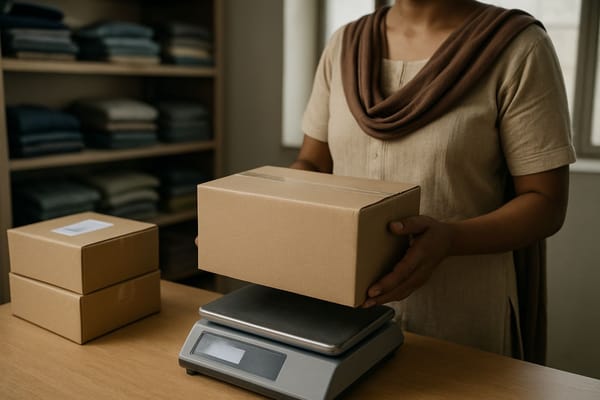
When an order comes in, the Order Management System identifies which store holds the relevant stock and is geographically closest to the delivery pin code. That store receives a pick list on a screen or printed slip. A staff member picks the item from the shelf, packs it, and hands it to a logistics partner like Delhivery, Shiprocket, or Ecom Express, who is either pre-scheduled or on-demand. The order is then tracked through to delivery just like any warehouse-originated shipment.
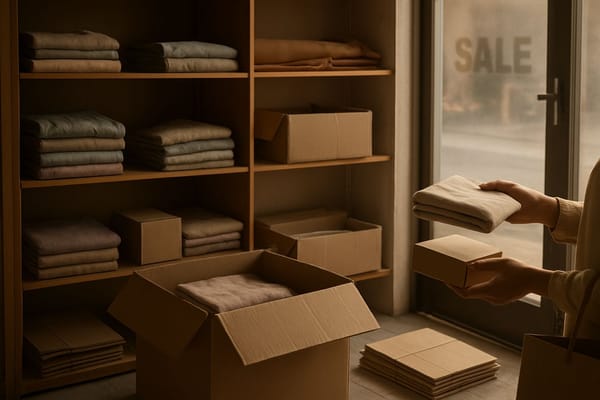
For Indian retail chains that have invested in building a store network across cities and neighbourhoods, this model transforms each store into a delivery asset rather than just a cost centre. A fashion retailer with stores in Koramangala, Indiranagar, and Whitefield in Bengaluru can fulfil orders for customers across the city in hours rather than days, without maintaining a separate warehouse.
When Ship from Store Delivers the Biggest Cost Advantage
The cost advantage of ship from store fulfilment is most visible when:
- Your store network is spread across multiple pin codes within a metro area or across Tier 1 and Tier 2 cities
- A significant share of your orders are intra-city deliveries where last-mile distance is the primary cost driver
- You carry slow-moving or branch-specific stock that would otherwise sit unsold until a seasonal sale
- You want to offer same-day or express delivery without the cost of operating a dark store or warehouse in every locality
According to industry estimates, retailers who implement ship from store fulfilment across a network of 10 or more stores can reduce average last-mile delivery costs by 20 to 35 percent compared to shipping every order from a single central warehouse. You can also read our Multi-Store Delivery Automation: Cut Q-Comm Costs 40% Grocery Chains post for a practical breakdown of how automation multiplies these savings.
The Real Challenges of Ship from Store for Indian Retailers
Ship from store is not without operational complexity. The most common challenge is inventory accuracy. If a product shows as available online but a walk-in customer just bought the last piece, you face a cancellation or a delay. This is why real-time inventory synchronisation across all channels is non-negotiable for this model to work. Retailers relying on Tally Prime, Marg ERP, or Vyapar, which do not offer real-time multi-channel inventory sync, frequently encounter this exact problem.
Staff training is another hurdle. Store associates who are accustomed to serving walk-in customers now need to manage picking, packing, and handover workflows within defined SLAs. Without the right tools and processes, this can slow down in-store service during peak hours.
What Is Centralised Warehouse Fulfilment?
Centralised warehouse fulfilment is a model where all stock earmarked for online or omnichannel orders is held in one or more dedicated warehouse facilities, and every order is processed, picked, packed, and shipped from that warehouse regardless of where the customer is located.
How Warehouse Fulfilment Works for Indian Retail Chains
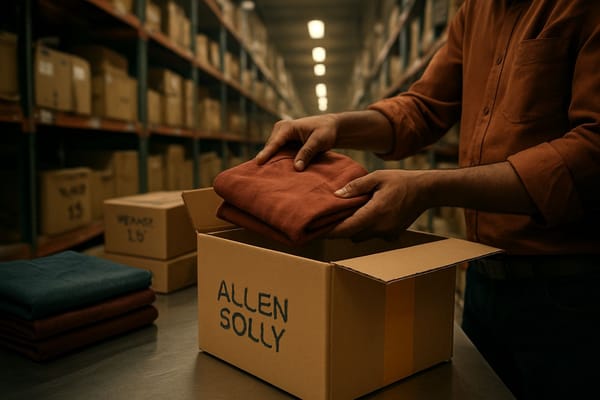
Inventory is transferred from supplier or manufacturer directly into the warehouse. When an order is placed, the warehouse management system generates a pick task for a warehouse associate. The item is picked from a designated bin location, packed, labelled with a GST-compliant invoice, and handed to the logistics partner. Most established Indian retailers using this model operate their own warehouse or use third-party logistics (3PL) providers who manage the facility on their behalf.
For a deeper look at how warehouse operations can be optimised for retail chains, see our post on Retail Warehouse Automation India: Cut Fulfillment Costs 55% Chains.
Where Centralised Warehouse Fulfilment Has a Clear Edge
Centralised warehouse fulfilment excels in specific scenarios:
- Very high order volumes where a dedicated team with specialised equipment processes orders far faster than store staff can
- Retailers selling nationwide where no store network exists near many delivery pin codes
- Categories like electronics or jewellery where every item requires security checks, quality verification, and careful packaging before dispatch
- Retailers with complex kitting or bundling requirements that cannot be handled in a store environment
The India Brand Equity Foundation's retail industry overview notes that organised retail in India is growing rapidly, with more chains investing in dedicated fulfilment infrastructure to handle the surge in omnichannel demand. For retailers at scale, a well-run warehouse delivers consistent order accuracy and processing speed that is difficult to replicate across dozens of stores.
The Hidden Costs of Centralised Warehouse Fulfilment
The biggest drawback of centralised warehouse fulfilment for Indian chains is the cost of distance. When every order ships from a single point, customers located far from the warehouse incur higher zone-based shipping charges. Logistics providers in India price shipments based on weight and zone, and a retailer in Chennai shipping to a customer in Jaipur from a Mumbai warehouse will pay significantly more than a competitor who ships from a store in Delhi.
There is also the capital cost of the warehouse facility itself, rent, staff, racking systems, warehouse management software, and the ongoing cost of transferring stock from stores to the warehouse. For retailers with annual revenues between Rs 2 crore and Rs 50 crore, these fixed costs can weigh heavily on unit economics.
⚠️Watch OutMany Indian retailers assume a centralised warehouse automatically means lower costs because it looks more organised, but if your customer base is spread across multiple cities and your store network already covers those cities, you may be paying unnecessary zone-based shipping surcharges on every single order.
Head-to-Head: Cost, Speed, and India-Specific Fit
When you compare ship from store vs warehouse fulfilment directly across the dimensions that most affect Indian retail chains, clear patterns emerge for different business profiles.
Delivery Cost Per Order
Last-mile delivery in India is priced primarily by weight and zone. Delhivery, Shiprocket, and Ecom Express all use a multi-zone slab model. A 500-gram shipment within the same city zone typically costs Rs 40 to Rs 60. The same shipment crossing two or three zones can cost Rs 80 to Rs 130. A retailer with 10 stores distributed across a metro city who ships from the nearest store to each customer can route the majority of orders as same-zone or adjacent-zone shipments, dramatically reducing the per-order cost.
In contrast, a retailer fulfilling all orders from a single warehouse in, say, Pune, will see a large percentage of their orders cross multiple zones, especially if they serve customers in Delhi, Chennai, or Hyderabad. This zone premium is a structural cost that ship from store avoids by design.
Inventory Management Complexity
Centralised warehouse fulfilment scores higher on inventory accuracy because stock is ring-fenced for online orders and not touched by walk-in customers. Ship from store requires real-time inventory sync to avoid overselling. Retailers running disconnected systems like Tally Prime for accounts, Marg ERP for inventory, and a separate billing system for the store will find ship from store nearly impossible to execute without a unified platform. This is where many Indian chains run into operational chaos.
Our Guide to Sales Channel and Delivery Aggregators for Indian Retailers explains how connecting your sales channels and delivery partners through a single platform prevents exactly this kind of inventory fragmentation.
Speed to Market and Delivery Promises
Ship from store wins on same-day and next-day delivery promises within a city. If a customer orders at 10 AM from a store 3 kilometres away, a logistics partner can pick up by noon and deliver by evening. No warehouse in the outer ring of a city can match that. For grocery, pharmacy, and fashion categories where delivery speed is a differentiator, ship from store gives Indian chains a competitive weapon against quick-commerce platforms and marketplaces.
GST Compliance and E-Invoice Requirements
India's GST framework requires that invoices be generated at the point of supply. When shipping from a store, the invoice must carry the store's GSTIN as the supplier. When shipping from a warehouse registered under a different GSTIN, that entity issues the invoice. Retailers must ensure their fulfilment platform automatically generates the correct e-invoice from the correct GSTIN for every order, a compliance requirement that many generic tools miss. The GSTN e-invoice portal outlines the requirements that apply to all retailers above the applicable turnover threshold.
Also see our post on Multi-Store Cross-Docking Setup: Cut Delivery Costs 50% Grocery Chains for how smart inventory routing between stores and warehouses can further reduce costs.
Returns and Reverse Logistics
Returns in ship from store can be routed back to the nearest store or to a centralised returns hub. This gives Indian retailers flexibility but requires a clear reverse logistics policy and system support. Warehouse fulfilment typically has a more standardised returns process but can increase the cost of reverse logistics for customers in cities far from the warehouse. Our post on Multi-Store Delivery Partner Auto-Selection Cut Shipping Costs 40% India covers how smart routing rules apply equally well to returns.
Which Fulfilment Model Should Indian Retailers Choose?
The right answer depends on your store count, order volume, category, and geographic spread. Here is a practical framework for Indian retail chains.
Choose Ship from Store if:
- You have 5 or more stores spread across one or more cities
- A significant share of your orders are intra-city or same-state deliveries
- You sell fashion, grocery, pharmacy, or general merchandise where speed matters more than elaborate packaging
- You want to liquidate branch-specific dead stock through online channels without transferring it to a warehouse first
- You do not have the capital to invest in a dedicated warehouse facility
Choose Centralised Warehouse Fulfilment if:
- You ship nationwide to pin codes where you have no store presence
- Your order volumes are high enough that a dedicated fulfilment team delivers better per-order economics than store staff
- You sell high-value or fragile products like jewellery, electronics, or glassware that require specialised packing
- Your category demands strict quality checks on every outbound unit before dispatch
Consider a Hybrid Model if:
- You serve customers both within cities where you have stores and in markets where you do not
- You want to offer same-day delivery locally while maintaining nationwide reach
- Your inventory is split between fast-moving items at stores and slow-moving or bulk stock at a warehouse
According to industry estimates, the majority of Indian multi-store retail chains with revenues above Rs 10 crore are moving toward a hybrid fulfilment model that uses both store stock and warehouse stock to fulfil orders based on real-time routing logic. Executing this hybrid model effectively requires an Order Management System that can see inventory across every node and route each order to the most cost-effective and fastest fulfilment point automatically. You can also explore how drone delivery may extend your fulfilment reach in our post on Drone Delivery Setup Multi-Store Chains India: Cut Last Mile Costs 50%.
How Commmerce Goes Beyond Both Models
Commmerce is an Omnichannel Retail Operating System built specifically for Indian retailers with 2 to 50 stores, and it is designed to make both ship from store and centralised warehouse fulfilment work together from a single dashboard, without the operational chaos that typically comes with managing multiple disconnected systems.
Unified Order Management Across Every Fulfilment Node
The Commmerce OMS receives orders from every channel, including your own online store, WhatsApp, walk-in POS, Flipkart, Amazon, and any other marketplace, and routes them to the correct fulfilment node based on rules you define. You can set routing logic that prefers the nearest store for intra-city orders, falls back to the warehouse for out-of-city orders, and escalates to an alternate store if the primary store is out of stock. This is multi-channel order routing for ship from store and warehouse fulfilment working together in real time.
Real-Time Inventory Across Stores and Warehouses
Commmerce tracks inventory across every physical store, warehouse, and in-transit stock in real time. When a walk-in customer at your Pune store buys the last piece of a product, that inventory deduction immediately reflects across your online store, your marketplace listings, and your OMS so no online order is accepted for stock that no longer exists. This is the foundational requirement for ship from store to work without cancellations and customer complaints, and it is something tools like Vyapar, Marg ERP, or Tally Prime simply cannot provide because they are not built for real-time multi-channel inventory synchronisation.
Built-In GST Compliance for Multi-Location Fulfilment
When an order is fulfilled from a store, Commmerce automatically generates a GST-compliant e-invoice from that store's registered GSTIN. When the same order is re-routed to a warehouse, the invoice switches to the warehouse's GSTIN. This automated GST entity management is critical for Indian retailers fulfilling orders from multiple locations registered under different GSTINs, and it eliminates the manual reconciliation errors that plague retailers using disconnected billing and inventory tools.
Native Logistics Integrations for Instant Dispatch
Commmerce integrates natively with Delhivery, Shiprocket, and Ecom Express. The moment a pick-and-pack task is completed at a store or warehouse, Commmerce automatically generates the shipping label, triggers the logistics partner pickup, and shares the tracking link with the customer via WhatsApp. No manual data entry, no copy-pasting order details into a separate logistics portal, and no delays caused by store staff not knowing how to use a logistics tool they interact with once a week. For retailers defending against quick-commerce competition, this speed matters enormously. See our post on Quick Commerce Defense: Cut Grocery Delivery Costs 45% India 2026 for more on this.
Warehouse Management with Picking, Packing, and Putaway
For retailers who do operate a warehouse alongside their stores, Commmerce includes a full warehouse management module with picking workflows, packing stations, putaway logic, and RFID or barcode-based bin management. This means you do not need a separate warehouse management system. Everything, from the customer's order to the final delivery confirmation, lives in one platform with one source of truth for inventory.
Conclusion
The ship from store vs warehouse debate for Indian retail chains does not have a single universal answer, but the direction is clear. For most Indian multi-store retailers, ship from store fulfilment is the fastest path to lower delivery costs because it uses an asset you already own, your store network, to shorten the distance between stock and customer. Centralised warehouse fulfilment makes sense when volumes are high, categories require specialised handling, or your customer base extends well beyond your store footprint. The retailers who will win on fulfilment cost and delivery speed in 2026 are those who implement a hybrid model that routes each order intelligently, and that requires a unified platform, not a patchwork of Tally, Marg ERP, a separate OMS, and a logistics portal. Commmerce is the Omnichannel Retail Operating System that connects all of these pieces into one coherent system built specifically for Indian retail chains, so you can execute ship from store and warehouse fulfilment together without the operational complexity that defeats most teams before they start.
FAQs
Q: What is ship from store fulfilment for Indian retailers?
A: Ship from store is a fulfilment model where online or omnichannel orders are packed and dispatched directly from a physical retail store rather than a centralised warehouse, allowing Indian retailers to use existing store stock to fulfil orders faster and at lower last-mile delivery costs.
Q: Is ship from store cheaper than warehouse fulfilment in India?
A: Ship from store can significantly reduce last-mile delivery costs for Indian retailers with multiple store locations because orders are dispatched from the store nearest to the customer, reducing the distance and zone charges applied by logistics partners like Delhivery or Shiprocket.
Q: Which fulfilment model is better for Indian fashion retailers with multiple stores?
A: Fashion retailers with 5 or more stores spread across a city or region typically benefit most from ship from store fulfilment, because slow-moving stock at individual branches can be liquidated through online orders without transferring inventory to a central warehouse.
Q: Can Commmerce manage both ship from store and warehouse fulfilment together?
A: Yes, Commmerce is an Omnichannel Retail Operating System that supports both ship from store and centralised warehouse fulfilment simultaneously through its unified Order Management System, allowing Indian retailers to route each order to the most optimal fulfilment node automatically.
Q: What Indian logistics partners integrate with omnichannel retail platforms for store fulfilment?
A: Leading Indian logistics partners such as Delhivery, Shiprocket, and Ecom Express integrate directly with omnichannel retail platforms like Commmerce, enabling automated shipping label generation and order tracking whether the order is fulfilled from a store or a warehouse.
Disclaimer: This article is for general informational purposes only and does not constitute legal, financial, or tax advice. GST rules, compliance requirements, and platform features may change over time. Please verify the latest guidelines with a qualified professional or refer to official sources such as the GSTN or CBIC. Market statistics mentioned are based on publicly available estimates and may not reflect current figures. Commmerce product features referenced are accurate at the time of writing and subject to change.