A wrong delivery address costs an Indian retailer the most when it is found after the label is printed, because by then the order is packed, the courier is booked and every fix means a phone call, a re-attempt or a return. The cheap fix is to check the address while the order is still waiting to be picked.
Why does a wrong address cost so much more after dispatch?
Because every stage after confirmation adds cost to the same order. Before picking, an address edit takes seconds. After the label is printed, it needs a courier request, and after a failed attempt it becomes a race against the courier's return deadline.
Think about what one bad address sets off. The courier tries once or twice, the customer does not pick up the call, the shipment comes back as a return to origin, and you pay freight in both directions. If it was a cash on delivery order, you also never collected the money. Our post on fixing NDRs before they become RTOs covers what to do once a delivery has already failed. This post is about stopping the failure from being created at all.
Where do bad addresses come from?
Most bad addresses are typing and habit problems, not fraud. The customer is on a phone, in a hurry, at checkout. The same few patterns show up again and again.
- Missing detail: no flat or house number, no floor, or a landmark like "near the temple" with no road name.
- Pincode and city mismatch: the pincode belongs to one area and the locality typed belongs to another.
- Autofill leftovers: an old office or hostel address filled in by the browser while the customer is ordering for home.
- Unreachable phone number: a landline, a typo, or a number the customer rarely answers.
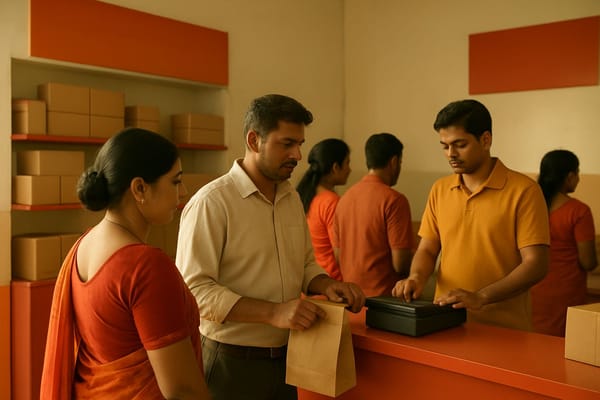
- Walk-in orders taken in a hurry: a store associate types a ship-to address at the counter while a queue builds behind the customer.
None of these need a clever system. They need a rule that says an order does not move on until its address passes a short check.
How to catch a wrong address before the order ships
Add a short address check between order confirmation and picking, and give one person the job of clearing it. Here is a setup that works for a store with one online channel or five.
- Define what a complete address means for your store: house or flat number, street or locality, landmark, city, six digit pincode and a working mobile number.
- Flag every new order that fails any one of those checks, and every order where the pincode and locality do not match.
- Hold flagged orders before they reach the picker, so no one spends time packing something that may not be deliverable.
- Message the customer once on WhatsApp or call, and ask them to confirm or correct the address in one reply.
- Edit the address on the order itself, not in a chat or a notebook, so the label, the invoice and the courier booking all read the same text.
- Release the order to picking only after the address is cleared, and note the correction so you can see which channel produces the most errors.
Run the check in batches at fixed times, for example mid-morning and late afternoon, instead of treating every order as an emergency. The goal is a small queue that is cleared twice a day.
Which orders deserve a confirmation call?
Call the orders where a failed delivery would hurt the most, not every order. A quick triage keeps your team's time for the cases that matter.
| Order type | Risk if the address is wrong | What to do |
|---|---|---|
| Cash on delivery | Freight both ways and no money collected | Confirm address and intent before picking |
| High value item | Large margin hit if it returns damaged | Call and confirm, then ship |
| First time customer | No delivery history to trust | Message to confirm the address |
| Prepaid, complete address | Low | Let it pass without a call |
If a COD customer does not answer after a reasonable attempt, offer to switch to prepaid. A customer who pays upfront is far less likely to refuse the parcel, and the offer itself filters out orders that were never serious.
What if the label is already printed?
If the label is already printed and the address is wrong, stop the shipment before handover if you can, and correct it on the order. Once the parcel is with the courier, you depend on the courier's own address update window, so move fast.
Keep the pack bench honest about this. A parcel with a corrected address needs a new label, and the old one must be pulled off the pack. Otherwise the wrong label travels and the work was wasted. The same discipline that prevents wrong-item shipments at the pack bench applies here: one scan, one label, one order. When the courier collects the day's parcels, check the handover list against what you packed, as described in our guide to courier pickup mismatches and the handover manifest.
Do pincode rules and address checks work together?
Yes. A pincode that your courier cannot serve is the same failure as a bad address, only found earlier. Check serviceability when the order arrives, then check address quality. Our post on pincode serviceability gaps and RTO explains the first half of that check.
The invoice side matters too. A tax invoice records the buyer's details and the place of supply, and the CBIC GST portal is the official place to confirm what an invoice must carry. If the ship-to address on the order is corrected after invoicing, make sure the invoice and the parcel still match, or you will explain the difference later to the customer, the courier or your accountant.
How does an order management system help here?
An order management system helps because it keeps the address inside the order, where every later step reads it. In Commmerce, an Omnichannel Retail Operating System for Indian retailers, every order from a store, your website or a marketplace lands in one place and moves through confirmed, allocated, picking, packed and dispatched in sequence. That sequence is what lets you put a hold before picking and edit before a label exists.
Commmerce also treats a failed delivery as a deadline, not a mystery. When a courier reports an NDR, you typically have a short window of roughly 24 to 48 hours to reattempt, update the address, move a COD order to prepaid or cancel, before the courier returns the parcel. A system that shows that deadline on the order is far better than a spreadsheet nobody opens. If the customer cancels after you have picked, the stock must also return to the shelf, which we cover in how order cancellations strand stock.
Retail in India keeps shifting online and across channels, and bodies such as IBEF and the Retailers Association of India track that growth. Whatever the volume, the order of work stays the same: confirm the order, clear the address, then pick.
What should you measure every week?
Measure four numbers and review them on one day each week. Bad address rate: orders flagged at the check, divided by orders received. Correction rate: flagged orders that the customer fixed. Failed delivery reasons: how many NDRs cite a wrong or incomplete address. And COD returns: how many came back and from which channel.
If one channel produces most of your bad addresses, fix the form or the process at that source. If the walk-in channel is the culprit, give associates a short address checklist at the counter. Within a few weeks you will see fewer parcels returning for reasons you could have caught in a minute.
Frequently asked questions
How long should an address check take?
For a clean order, no time at all, because it passes automatically. For a flagged order, a single message or call, so one person can usually clear a day's queue in two short sessions.
Should I call every COD customer?
No. Call COD orders that are high value, from a first time customer, or flagged for an incomplete address. Let clean orders through.
Can I edit an address after the order is packed?
Yes, but it costs more. You must correct the order, reprint the label and replace the old one on the parcel, so catching it before picking is always cheaper.
What if the customer will not respond?
Set a time limit, such as one working day, and cancel or hold the order after it. Shipping a doubtful address to save a sale usually costs more than the sale was worth.