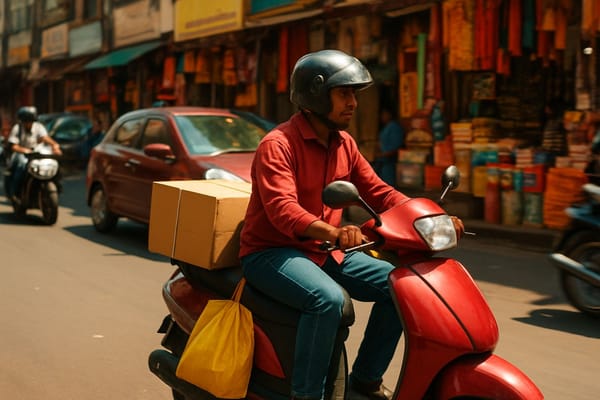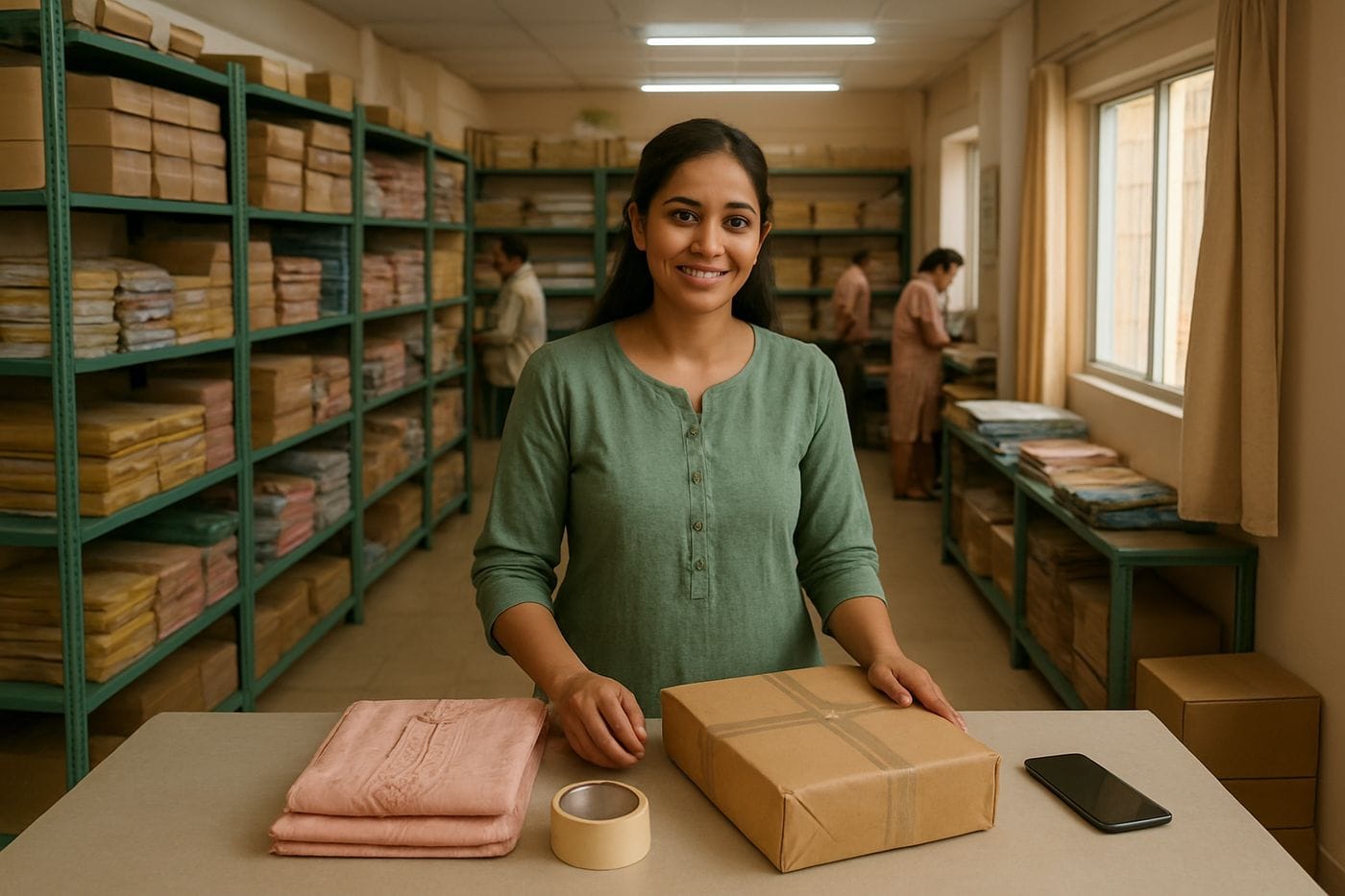
Most retailers treat a failed delivery attempt as the courier's problem until the parcel comes back as an RTO and the money is already gone. The window between the first failed attempt and the return decision is short, and what you do inside it decides whether the order is delivered or returned.
What Is an NDR and Why Does It Cost Retailers Money?
An NDR, or non-delivery report, is the notice a courier raises when a delivery attempt fails: customer not reachable, address incomplete, premises closed, payment not ready for a COD order, or the customer refusing the parcel. It opens a short window, usually a day or two, in which the seller can give fresh instructions before the shipment is marked for return to origin.
The cost is not only the reverse freight. You pay forward shipping, you pay return shipping, the stock is out of sellable inventory for a week or more, and the parcel often comes back opened, mismatched or damaged. For a store selling both online and in the shop, that stuck unit is also stock a walk-in customer could have bought.
| NDR reason | Who can fix it | Best first action | Typical window |
|---|---|---|---|
| Customer not reachable | Seller and customer | Call and WhatsApp the customer, then request a reattempt | Same day |
| Address incomplete or wrong | Customer | Collect landmark, floor and pincode, then update the address on the courier panel | Within the reattempt window |
| Customer asked for another date | Seller | Log the promised date and schedule the reattempt for it | Next 1 to 3 days |
| COD amount not ready | Customer | Offer a prepaid payment link or a later slot | Same or next day |
| Customer refused the parcel | Seller | Ask why, offer an exchange or accept the return | Before reattempt |
| Area not serviceable | Seller | Switch courier or cancel and refund | Immediately |
Which NDR Reasons Can You Actually Recover?
Most of them, if you reach the customer quickly. Unreachable customers, incomplete addresses and "call me tomorrow" requests are recoverable because the buyer still wants the product. Genuine refusals and unserviceable pincodes are mostly not, and the right move there is to cut your losses fast.
The mistake is treating all NDRs the same. A queue that sorts by reason lets one person clear the recoverable cases first and send the rest to a return or cancellation path. Retailers who skip that sorting tend to spend the whole window chasing a refusal while a recoverable address fix expires.
Part of this is decided before the parcel ships. If the pincode was never checked, the NDR is a symptom of a gap we cover in how pincode serviceability gaps cause RTO. If you are weighing who should carry your parcels at all, what a courier aggregator does is a good starting point.
How to Handle NDRs Before They Become RTOs
Run the same short routine on every failed attempt, and make it someone's named job. A written sequence beats ad hoc follow-ups because the window is short and nobody has time to decide the process while the clock runs.
- Pull every open NDR into one list each morning, with order ID, reason, attempt number, payment mode and order value.
- Sort by reason and value so high-value and recoverable cases are handled first.
- Call the customer and send a WhatsApp message at the same time, since many buyers ignore unknown numbers but answer a message from a brand they ordered from.
- Record the customer's response, the corrected address or the agreed delivery date, against the order, not in a personal chat.
- Submit the reattempt instruction to the courier before the window closes, and note the time you did it.
- Convert unreachable COD orders to prepaid by sending a payment link, which removes the cash-ready excuse on the next attempt.
- Mark unrecoverable cases for return early, so stock planning is not waiting on a parcel that will never be delivered.
- Review closed NDRs weekly by reason, courier and pincode to see where the pattern sits.
How Should You Contact the Customer?
Use a call and a WhatsApp message together, within hours of the NDR, and keep both short. The customer should be able to answer with one reply: confirm the address, name a date, or say they no longer want it.
A good message names the product, states the problem in plain words, and asks one question. For example: your order for the cotton kurta set could not be delivered today because the address landmark is missing, please reply with a landmark or a better time. Avoid long paragraphs and avoid asking the buyer to log in anywhere. Reply in the language they used to order.
Set a rule for how many attempts you make. Two or three outreach attempts across a day or two is reasonable. Beyond that, the order is more likely to be a loss than a sale, and further effort costs more than it returns.
Why Does COD Make NDRs Worse?
Cash on delivery removes the buyer's commitment. A prepaid customer has already paid and will usually accept the parcel, while a COD customer can simply not be home, not have cash, or have changed their mind. COD orders therefore carry a higher chance of failed attempts and refusals than prepaid ones in most categories.
UPI and other digital payments are overseen by the RBI, and a payment link or UPI request is a practical conversion tool at the NDR stage. The regulator's payment systems material is at rbi.org.in. Converting even a portion of unreachable COD NDRs to prepaid turns a risky order into a settled one.
COD also creates cash that has to be matched to orders. If your NDR outcomes are not recorded cleanly, reconciliation gets harder, which is the problem described in how Indian retailers fix COD reconciliation losses.
What Should Your Store Do With Stock Tied Up in a Failing Delivery?
Decide quickly whether the unit is coming back to inventory or going to the customer, and reflect that in your stock count. A parcel sitting in NDR is neither sold nor available, and if your system still counts it as on hand, a marketplace or the store counter can sell it a second time.
A practical rule is to mark stock as "in transit - at risk" once the first NDR is raised, and release it to sellable only after the return is received and checked. This matters most for single-unit SKUs: one saree, one lehenga, one pair of shoes in a size. For these, an NDR is effectively a stockout you cannot see.
The same discipline applies to returns generally. Returned parcels should be inspected, restocked or written off on a fixed schedule, not left in a corner of the store. Our piece on how Indian grocery chains cut RTO losses with smarter fulfilment shows how fulfilment choices change the return rate itself.
How Does Courier Choice Change NDR Rates?
Couriers differ by pincode. One partner may have a strong delivery record in your metro and a poor one in a smaller town, with different NDR behaviour on each. A single default courier for every order hides this.
Track NDR and RTO by courier and by destination pincode rather than looking at one blended rate. When a partner repeatedly fails in a region, route that region elsewhere. Retailers with several stores can go further and ship from the store nearest the customer, which shortens the delivery and lowers the chance of a failed attempt. We covered automated switching in multi-store delivery partner auto-switch, and the commercial trade-offs between providers in ElasticRun vs Delhivery vs Shiprocket.
Also watch the cost side. Reattempts and returns are billed, and weight disputes can add to the invoice, as explained in how to stop courier weight discrepancy charges.
What Should You Measure Every Week?
Track a few numbers and keep them visible. A long dashboard is rarely read, while four numbers are.
- NDR rate: parcels with at least one failed attempt as a share of parcels shipped, split by prepaid and COD.
- NDR recovery rate: NDRs that ended in delivery as a share of all NDRs raised.
- Time to first action: hours between the NDR being raised and your first contact with the customer.
- RTO value: the rupee value of stock returned, plus forward and return freight, by courier and pincode.
If recovery is low and time to first action is long, the fix is your process, not the courier. If time to first action is short and recovery is still low, look at address quality at checkout and at who is placing COD orders.
How Can You Prevent NDRs at the Order Stage?
Verify before you ship. Confirm COD orders by call or WhatsApp, require a landmark and a valid pincode, and hold orders with obviously incomplete addresses for a quick check. Each of these takes seconds and removes failed attempts that would cost days.
For orders above a value you choose, ask for prepayment or a small advance. Offer a modest prepaid incentive instead of penalising COD, since it keeps conversion up while shifting payment mode. Market-level context on India's growing online retail is available from IBEF's e-commerce overview, which is useful when you are sizing how much of your volume is delivered rather than collected in store.
Finally, record the reason for every NDR in a consistent list. Free text cannot be counted, and what cannot be counted cannot be fixed. Once reasons are standard, you will usually find that two or three causes explain most of your failed deliveries, and those are the ones worth fixing first.
Where Commmerce Fits
Commmerce is an Omnichannel Retail Operating System for Indian retailers. It keeps online orders, store stock and courier status in one place, so an NDR shows against the order, the unit is held as at-risk stock, and the next action is visible to whoever owns it instead of living in a courier panel nobody checks.