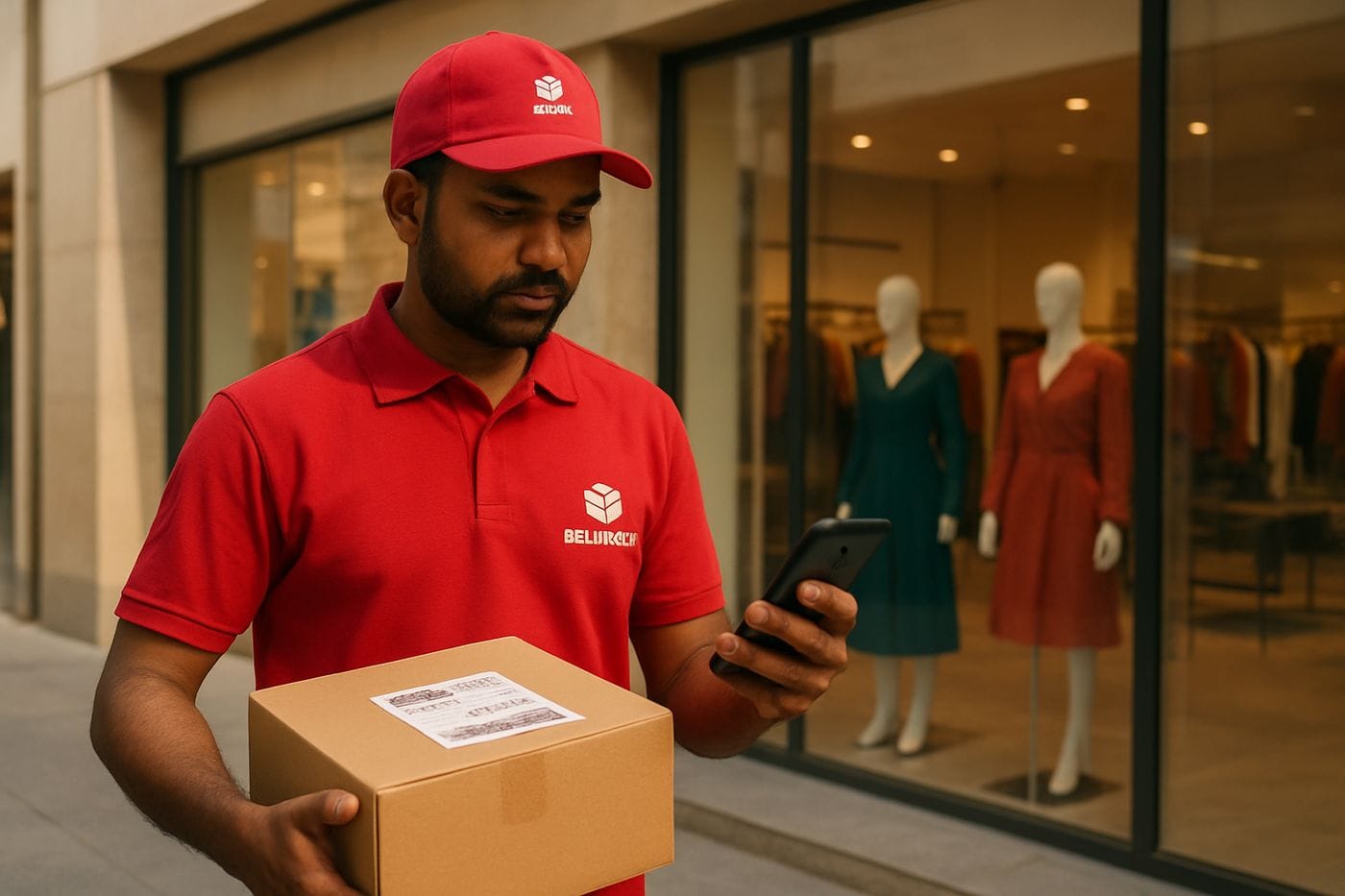
Last-Mile Delivery SLA Tracking for Indian Fashion Chains 2026
Table of Contents
- Introduction
- The Delivery SLA Problem Indian Fashion Chains Face
- What to Look for in a Delivery SLA Tracking Solution
- Key Features Every Fashion Chain Needs for SLA Compliance
- How Commmerce Delivery Hub Solves Last-Mile SLA for Fashion Retailers
- Conclusion
- FAQs
TL;DR
- Last-mile delivery SLA tracking for Indian fashion chains means monitoring every shipment across own riders and courier partners in one place, and receiving alerts before a promised delivery window is missed.
- Fashion retailers using disconnected tools like Shiprocket for carriers and a separate app for own riders have no unified SLA view, which leads to missed deliveries, unresolved COD, and rising RTO rates.
- Commmerce Delivery Hub combines internal fleet management, 12 plus carrier integrations, SLA breach alerts, and risk-based COD controls in one platform built specifically for Indian retail.
- Basic setup for delivery SLA tracking on Commmerce takes one day, with no hardware migration required, running on any existing Android, iOS, Mac, or Windows device.
Introduction
Last-mile delivery SLA tracking for Indian fashion chains has become one of the most operationally critical decisions a multi-store retailer can make in 2026. As fashion buyers shift comfortably between ordering on a brand website, WhatsApp, and walking into a store, the expectation is simple: when you promise a delivery by Thursday, it arrives on Thursday. When it does not, you lose the customer and often the COD cash too.
Fashion retail in India operates across a uniquely complicated delivery landscape. A Bengaluru chain might run its own two-wheeler riders for local pin codes, use Delhivery for tier-2 cities, and route international orders through FedEx or DHL. Each of these channels has its own delivery window, its own tracking portal, and its own definition of what counts as a successful delivery. Without a unified SLA monitoring system, store managers spend their mornings chasing courier portals and their evenings reconciling COD shortfalls.
This guide breaks down what delivery SLA management actually requires for an Indian fashion chain, what to look for in a solution, and how a modern omnichannel retail platform handles it end to end.
The Delivery SLA Problem Indian Fashion Chains Face
Indian fashion chains lose revenue and customer trust primarily because no single system shows them the full picture of what is delivered, what is delayed, and what has been returned. The core problem is fragmentation.
A mid-sized fashion chain with 10 stores typically operates three to five delivery channels simultaneously. Local same-day orders go out with in-house riders. Next-day city orders go to a hyperlocal courier. Outstation orders split across Delhivery, Ecom Express, and sometimes India Post for smaller pin codes. Each carrier has a separate dashboard, a separate AWB format, and a separate alert mechanism. None of them talk to each other.
According to the India Brand Equity Foundation, Indian retail is growing rapidly across both physical and digital channels, placing increasing pressure on last-mile fulfilment operations. For fashion specifically, where a size or colour mismatch can compound an already-late delivery into a return, SLA failures are expensive in multiple directions.
Here is what the fragmentation actually costs fashion chains:
- No consolidated SLA view means breaches are discovered after the customer complains, not before.
- COD cash collected by riders is not tracked against shipment records, so shortfalls appear days late.
- RTO rates climb because failed delivery attempts are not monitored and auto-RTO rules are not enforced.
- Manual tracking across carrier portals burns 2 to 3 hours of store manager time daily.
- Branded customer tracking pages do not exist, so buyers call the store directly for order status.
Legacy tools like Tally, Marg ERP, and Vyapar are built for accounting, not for delivery operations. They have no concept of a delivery SLA, no carrier integration layer, and no fleet management capability. Even retailers who have outgrown these tools often end up stitching together Shiprocket for carriers and a separate rider-tracking app for local fleet, which recreates the same fragmentation problem at a slightly higher cost.
⚠️Watch OutUsing a separate app for your own riders and a carrier portal for courier shipments means your SLA dashboard will always be incomplete. You will only see half your deliveries, which makes breach alerts and COD reconciliation unreliable.
What to Look for in a Delivery SLA Tracking Solution
The right delivery SLA tracking solution for a fashion chain is one that consolidates every delivery channel into a single operational view, from dispatch to proof of delivery, without requiring you to rip out existing carrier relationships or buy new hardware.
When evaluating options, Indian fashion retailers should look for five non-negotiable capabilities:
- Unified carrier and own-fleet management in one dashboard. If the tool only handles courier bookings but not your own riders, you still have a fragmentation problem.
- SLA breach alerts that fire before the window closes. An alert that tells you a shipment is overdue is useful. An alert that tells you it is at risk of going overdue is far more valuable.
- COD tracking that ties cash to specific orders and drivers. Fashion retail has high COD volumes. Outstanding cash reconciliation needs to be automatic, not manual.
- Pincode-based zone management. Indian delivery pricing and SLA commitments vary by pin code range. A solution that does not support 6-digit Indian pin code zones will produce incorrect SLA calculations.
- Risk-based RTO controls. Automatically triggering a return after failed attempts, and suppressing COD for buyers with a non-delivery history, directly protects margin.
You should also check whether the platform runs on devices you already own. A solution that requires proprietary hardware terminals or a dedicated server is a significant capital cost that a fashion chain with 10 to 30 stores does not need to absorb.
For a broader view of how delivery fits into a full omnichannel fulfilment strategy, read this Last-Mile Delivery and Fulfilment Guide for Indian Retailers.
💡Pro TipAlways ask a delivery platform vendor whether their SLA breach alert fires before the breach or only after. Post-breach alerts tell you what went wrong. Pre-breach alerts give you a chance to fix it.
Key Features Every Fashion Chain Needs for SLA Compliance
Effective last-mile delivery SLA management for Indian fashion retailers requires a specific set of operational features working together. Here is a breakdown of each one and why it matters for a fashion chain specifically.
SLA Breach Monitoring and Alerts
SLA breach alerts monitor every active shipment against its committed delivery window and notify the operations team when an order is at risk of or has exceeded its SLA. For fashion, where a seasonal item returned after the event it was needed for has no resale urgency, catching a breach early can mean the difference between a re-attempt and a full return. Alerts should be configurable by zone, carrier, and order type.
Multi-Carrier Rate Comparison and Booking
Fashion chains ship to hundreds of pin codes across India. Different carriers perform differently in different geographies. A delivery management platform should automatically compare rates and SLA commitments across all connected carriers and book the option that best matches the retailer's priority for each order, whether that is the cheapest option for a low-value shipment or the fastest option for an express order.
Understand how carrier selection fits into a broader channel strategy in this Guide to Sales Channel and Delivery Aggregators for Indian Retailers.
Internal Fleet Dispatch with Real-Time GPS Tracking
For local same-day delivery, fashion chains with their own riders need zone-based auto-assignment, real-time GPS tracking of each rider, and proof of delivery capture including photo and digital signature. This is particularly important for high-value fashion items where delivery confirmation reduces disputes.
COD Collection Tracking and Reconciliation
Cash on delivery remains a significant payment mode for fashion purchases in India, particularly for first-time buyers and tier-2 city customers. The delivery platform needs to track exactly how much COD each driver has collected per order, when it was deposited at the store, and show outstanding balances in real time. Partial COD collection, where a buyer pays part in cash and part online, should also be supported.
Risk-Based RTO Controls and COD Suppression
High RTO rates are a margin killer for fashion chains. Automatically triggering a return-to-origin after a defined number of failed delivery attempts, and automatically suppressing the COD payment option for customers who have a pattern of non-delivery, reduces return volumes without any manual intervention from the operations team.
Branded Customer Tracking Pages
Every fashion brand invests in customer experience inside the store. The post-purchase delivery experience should match. Branded real-time tracking pages shared via a link reduce inbound status calls to the store and strengthen the customer's association with the brand, not the courier company.
WhatsApp Delivery Notifications
Indian fashion buyers check WhatsApp far more frequently than email. Automated WhatsApp messages for key delivery milestones, specifically out for delivery and order delivered notifications, reduce anxiety and improve the post-purchase experience without any manual effort from store staff.
| Capability | Legacy Tools (Tally, Marg ERP, Vyapar) | Commmerce Delivery Hub |
|---|---|---|
| SLA breach alerts | Not available | Live, configurable by zone and carrier |
| Multi-carrier booking | Manual, separate portals | 12 plus carriers, auto rate comparison |
| Internal fleet dispatch | Not available | GPS tracking, auto-assignment, POD capture |
| COD reconciliation | Manual Excel entry | Per-driver COD tracking, deposit verification |
| Risk-based RTO controls | Not available | Auto-RTO, COD suppression for non-delivery history |
| WhatsApp notifications | Not available | Built-in, Out for Delivery and Order Delivered |
| Pincode zone management | Not available | 6-digit Indian pincode ranges with custom SLA and pricing |
How Commmerce Delivery Hub Solves Last-Mile SLA for Fashion Retailers
Commmerce is an Omnichannel Retail Operating System built for Indian retailers with 2 to 50 stores. Its Delivery Hub product is the last-mile delivery management layer of that platform, and it addresses every SLA tracking requirement a fashion chain encounters, from a single dashboard running on existing devices.
Here is exactly how Delivery Hub handles the delivery SLA challenges that Indian fashion chains face most frequently.
One Dashboard for Own Fleet and Carriers
Delivery Hub manages internal riders and external carrier shipments from the same interface. Orders flowing in from the Commmerce POS, from a Shopify-connected online store, or entered manually are automatically routed to the nearest available rider (for local zones) or to the best-rate carrier (for outstation shipments). Store managers see every active delivery, every pending pickup, and every SLA status in one screen. There is no need to log in to separate courier portals.
The platform integrates with Delhivery, BlueDart, DTDC, Ecom Express, FedEx, India Post, Shiprocket, Porter, Shadowfax, FShip, DHL, and UPS, giving a fashion chain's operations team full carrier flexibility without adding complexity.
SLA Breach Alerts That Fire in Real Time
Delivery Hub monitors every active shipment against its assigned SLA window and fires alerts when an order is at risk of breaching its committed delivery time. For a fashion chain running same-day delivery in a metro and next-day delivery in tier-2 cities, these alerts allow the operations team to intervene before the customer is impacted, not after. Alerts are delivered via the management dashboard and pushed via API to connected systems.
COD Tracking That Closes the Cash Loop
Every rupee collected by a delivery rider is logged against the specific order in the Delivery Hub driver app. The dashboard shows outstanding COD per driver in real time. Deposit verification is built in, so when a rider deposits cash at the store, it is reconciled against their collection record. Partial COD is supported, allowing a buyer to pay part in cash and settle the balance via a Razorpay payment link, including UPI.
For a detailed look at how delivery cost and COD efficiency interact for fashion chains, see this post on Last-Mile Delivery Cost Optimisation for Indian Fashion Chains.
Risk-Based COD and Auto-RTO Controls
Commmerce Delivery Hub includes platform-level circuit breakers that automatically trigger a return-to-origin after the maximum number of allowed delivery attempts. COD is automatically suppressed for customers who have a non-delivery history, reducing the risk of cash loss on repeat non-delivery patterns. According to Commmerce's own customer data, this has reduced RTO at YourDesignStore (YDS), which processes over 1 lakh shipments across domestic and 90 plus international destinations on the platform.
Pincode Zone Management Designed for India
Delivery Hub supports Indian 6-digit pincode-based zone mapping. Fashion chains can define custom delivery pricing and SLA commitments per zone, so a next-day SLA for Bengaluru pin codes and a three-day SLA for Rajasthan pin codes are both tracked accurately against the right benchmark. This is the foundation of reliable SLA compliance reporting across a geographically diverse customer base.
Branded Tracking and WhatsApp Notifications
Every shipment generates a branded real-time tracking page shared with the customer via link. The page shows live status using the fashion brand's identity, not the courier company's. Automated WhatsApp notifications for out-for-delivery and order-delivered milestones are sent via a built-in WhatsApp server, and delivery riders can also message customers directly on WhatsApp from the driver app. All of this is included in the platform with no third-party notification subscription required.
Runs on Devices You Already Own
Because Commmerce is a modern platform, not legacy retail software, Delivery Hub runs on any web browser for the back-office dashboard, and on any Android or iOS device for store managers and delivery riders. There is no proprietary hardware to buy and no data migration. A fashion chain can go live on the same day using the phones and laptops already in the store. The Quick Commerce Setup for Indian Grocery Chains: 10-Min Delivery Hub Guide shows how fast a deployment can move when the platform is built this way.
Delivery Hub is priced at ₹4 per delivery, with a ₹1,500 per month minimum and ₹500 per month per driver for fleet management. Unlimited carrier integrations and sales channels are included. For a fashion chain doing 100 deliveries a day, the platform cost is well within the margin recovered by reducing a single percentage point of RTO.
According to the India Brand Equity Foundation's e-commerce outlook, last-mile delivery reliability is among the top factors driving repeat purchase behaviour in Indian online retail, making delivery SLA tracking a direct revenue lever for fashion chains, not just an operational nicety.
Running a retail business in India? See how Commmerce unifies your stores, inventory, orders and delivery in one platform.
Conclusion
Last-mile delivery SLA tracking for Indian fashion chains in 2026 is not a logistics problem in isolation. It is a retail operations problem that requires a unified view of own-fleet riders, courier partners, COD cash flow, and customer communication in one place. Fashion chains relying on disconnected tools like Tally, Marg ERP, or Vyapar for accounting and separate carrier portals for shipping will continue to discover SLA breaches after the damage is done. The solution is a single delivery management platform that connects every delivery channel, fires SLA alerts before windows close, tracks every rupee of COD, and suppresses risk automatically. Commmerce Delivery Hub delivers each of these capabilities as part of a broader Omnichannel Retail Operating System, runs on devices already in the store, and goes live in a day without hardware migration or data disruption.
FAQs
Q: What is delivery SLA tracking for Indian fashion retailers?
A: Delivery SLA tracking is the process of monitoring whether every shipment is delivered within the promised time window. For Indian fashion retailers, this means tracking orders across own delivery riders, courier partners like Delhivery and BlueDart, and hyperlocal services from a single dashboard, and receiving alerts when any order is at risk of breaching its SLA.
Q: Which carriers does Commmerce Delivery Hub integrate with for fashion retail?
A: Commmerce Delivery Hub integrates with 12 or more shipping carriers including Delhivery, BlueDart, DTDC, Ecom Express, FedEx, India Post, Shiprocket, Porter, Shadowfax, FShip, DHL, and UPS, and also supports internal fleet management for own delivery riders, all from one dashboard.
Q: How do Indian fashion chains reduce RTO using delivery management software?
A: Indian fashion chains reduce RTO by using risk-based COD controls that automatically trigger a return-to-origin after a set number of failed delivery attempts, and by suppressing COD as a payment option for customers who have a history of non-delivery, both of which are features available in Commmerce Delivery Hub.
Q: Can a fashion retailer track COD collection from delivery riders in real time?
A: Yes. Commmerce Delivery Hub tracks every cash-on-delivery amount collected by each driver, records when it is deposited at the store, and shows outstanding COD balances per driver on a live dashboard, giving fashion store managers full visibility into cash in transit.
Q: How long does it take to set up delivery SLA tracking for a fashion store on Commmerce?
A: Basic internal fleet setup with SLA tracking on Commmerce Delivery Hub can be completed on the same day. Carrier integrations take one to two additional days depending on how quickly each carrier completes their onboarding process.
Disclaimer: This article is for general informational purposes only and does not constitute legal, financial, or tax advice. GST rules, compliance requirements, and platform features may change over time. Please verify the latest guidelines with a qualified professional or refer to official sources such as the GSTN or CBIC. Market statistics mentioned are based on publicly available estimates and may not reflect current figures. Commmerce product features referenced are accurate at the time of writing and subject to change.