Omnichannel Retail Strategy for Indian Fashion Chains: 2026 Guide
Table of Contents
- Introduction
- The Problem Indian Fashion Retailers Face Today
- The Solution: What to Look for in an Omnichannel Platform
- Key Steps to Building an Omnichannel Strategy for Your Fashion Chain
- How Commmerce Helps Indian Fashion Chains Go Omnichannel
- Conclusion
- FAQs
TL;DR
- An omnichannel retail strategy for Indian fashion chains means unifying physical stores, an online storefront, and marketplaces into one platform so inventory, orders, and customer data stay synchronised in real time.
- Disconnected tools like Tally, Marg ERP, and Vyapar cannot handle multi-channel retail and cause stock mismatches, billing errors, and lost sales at peak hours.
- Commmerce is an Omnichannel Retail Operating System built for Indian retailers with 2 to 50 stores that connects POS billing, inventory, OMS, warehouse, and delivery into a single dashboard.
- Fashion chains that implement a proper omnichannel strategy gain real-time inventory visibility, faster fulfilment, and a unified customer experience across every channel.
Introduction
An omnichannel retail strategy for Indian fashion chains is no longer a competitive advantage, it is a baseline requirement for survival in 2026. Indian shoppers today research a kurta on Instagram, check its availability on your website, walk into your Lajpat Nagar or Phoenix Mall store to try it, and then complete the purchase on WhatsApp. If your business cannot follow that journey seamlessly across every touchpoint, you are already losing sales to a competitor who can.
This guide is written for fashion retail owners and operations managers running two to fifty physical stores across India, currently doing anywhere between ₹2 crore and ₹100 crore in annual revenue. If you are still relying on separate billing software, a disconnected ecommerce store, and Excel sheets for inventory, this guide will show you exactly why that model is breaking and what a unified omnichannel retail strategy looks like in practice.
We will cover the core problems Indian fashion chains face, the features you should demand from an omnichannel platform, a step-by-step framework to build your strategy, and how The Complete Guide to Omnichannel Retail for Indian Businesses principles apply specifically to fashion retail.
The Problem Indian Fashion Retailers Face Today
Indian fashion chains operating across multiple stores face a common and costly set of operational failures that stem from using disconnected, single-channel tools.
Consider a fashion chain with eight stores across Pune, Nagpur, and Nashik. The billing happens on Vyapar at each store. Inventory is tracked in a head-office Excel sheet that gets updated once every evening. The online store runs on a standalone platform with no connection to the physical store stock. WhatsApp orders are handled manually by a staff member who checks stock over the phone. This is not a hypothetical scenario, it is how thousands of Indian fashion retailers operate today.
The consequences are severe and measurable. Stock listed as available online gets sold in-store before the website updates, leading to order cancellations and customer complaints. Staff at one branch have no visibility into stock at another branch three kilometres away, so a customer who wants a size 38 salwar in midnight blue walks out empty-handed when that exact item is sitting unsold in another store. GST filings are manual, error-prone, and slow. During a festival sale, the billing system at two stores goes offline because of internet disruption and staff revert to paper, creating inventory chaos.
According to industry estimates, Indian fashion retail loses a significant portion of potential revenue every year due to stockouts and poor inventory visibility across channels. The India Brand Equity Foundation (IBEF) notes that organised retail in India continues to grow rapidly, which means the gap between retailers who have unified their operations and those who have not is widening every month.
Tools like Marg ERP and TallyPrime were built for accounting and single-location billing. They were not designed for a world where the same SKU needs to be tracked across a physical store in Bengaluru, a Meesho listing, a Shopify storefront, and a WhatsApp catalogue simultaneously. Trying to bolt omnichannel functionality onto these tools using workarounds is expensive, fragile, and ultimately unsustainable.
⚠️Watch OutUsing separate tools for billing, inventory, and ecommerce creates data silos that compound over time. By the time a stock discrepancy is discovered, it has usually already caused cancelled orders, excess purchasing, and shrinkage that is impossible to trace back to its source.
The Solution: What to Look for in an Omnichannel Platform
The right omnichannel retail platform for an Indian fashion chain is one that treats every store, every channel, and every customer interaction as part of a single connected system, not separate data points that need to be manually reconciled.
Here is what you must evaluate before choosing a platform for your fashion chain:
Unified inventory across all channels: A single pool of stock that deducts automatically whether the sale happens in-store, on your website, or through a marketplace. This is the foundation of any working omnichannel strategy for fashion retail. Without it, every other feature is unreliable.
Offline-first billing: Fashion stores in tier-two and tier-three cities, and even in mall locations during peak sale days, face internet disruptions. Your billing system must work without internet and sync automatically the moment connectivity returns. Losing billing capability during a Diwali or Eid sale is not acceptable.
GST compliance built in: India's GST framework requires accurate e-invoicing, HSN code mapping, and return filing. Your platform must generate GST-compliant invoices automatically, not as an add-on or a manual step. The GSTN e-invoicing portal mandates e-invoice generation for businesses above certain turnover thresholds, and your retail platform must integrate with this natively.
Order Management System (OMS): Fashion chains receive orders from walk-ins, WhatsApp, their own website, and marketplaces like Myntra, Meesho, and Ajio simultaneously. An OMS routes each order to the right fulfilment point, whether that is a warehouse, the nearest store with stock, or a specific branch, and tracks it through to delivery.
Logistics integrations: Your platform should connect natively with Delhivery, Shiprocket, Ecom Express, and other Indian logistics providers so that shipping labels, tracking, and delivery updates are handled from within the same dashboard rather than a separate logistics portal.
CRM and loyalty: Fashion retail is driven by repeat customers. Your platform must track customer purchase history across every store and channel so that your loyalty programme, personalised offers, and WhatsApp communication are based on complete data, not just what was purchased at one branch.
For a detailed comparison of how multi-channel and omnichannel approaches differ in practice, read Omnichannel vs Multichannel: Which Grows Indian Fashion Chains.
💡Pro TipWhen evaluating omnichannel platforms, ask the vendor to demonstrate a live stock transfer between two store locations and show you how an online order gets routed to the nearest fulfilling store. If they cannot demo this in under five minutes, the platform is not truly unified.
Key Steps to Building an Omnichannel Strategy for Your Fashion Chain
Building a working omnichannel retail strategy for your Indian fashion chain involves a structured sequence of decisions and implementations. Here are the critical steps, each of which corresponds to a capability your platform must support.
Step 1: Centralise Your Inventory Across All Stores and Warehouses
Before any channel can sell reliably, every store and warehouse in your network must report stock to a single centralised inventory system. This means tagging every SKU with a barcode or RFID tag, defining minimum stock levels per location, and setting up automatic low-stock alerts. Fashion retail has high SKU complexity, with multiple sizes, colours, and style variants for every product, which makes barcode and RFID-based tracking non-negotiable rather than optional.
Real-time inventory visibility across branches also reduces inter-branch stock imbalances. When your Malad store has thirty units of a slow-moving kurta and your Thane store is out of stock of the same item, your system should flag this and suggest a transfer rather than letting the Malad stock sit unsold through the season. For a deeper look at this, see Inventory Turnover Optimization: Multi-Store Fashion Chains Cut Costs 30%.
Step 2: Deploy an Offline-First POS at Every Store Location
Your in-store billing must never depend on internet connectivity. An offline-first POS system stores transactions locally and syncs to the central system the moment the connection is restored. This is especially critical for fashion chains in smaller cities, mall locations with shared and sometimes unreliable Wi-Fi, and during high-footfall sale events when network congestion is common.
The POS must also generate GST-compliant invoices with the correct HSN codes for apparel and send digital invoices to customers via WhatsApp, which is now the standard expectation for Indian shoppers.
Step 3: Launch and Connect Your Online Store
Your own ecommerce storefront, connected directly to your centralised inventory, is more valuable than a marketplace presence for building long-term customer relationships. When a customer buys from your own website, you own the customer data, the relationship, and the margin. When they buy from a marketplace, you own none of these fully.
Your online store must pull live inventory from the same pool as your physical stores. If a kurta sells out in your Bandra store, it must go out of stock on your website simultaneously, not after a manual update. This is where most fashion chains using standalone Shopify or WooCommerce installations fail, since those platforms require third-party integrations or manual syncing to stay aligned with physical store inventory.
Step 4: Implement a Multi-Channel Order Management System
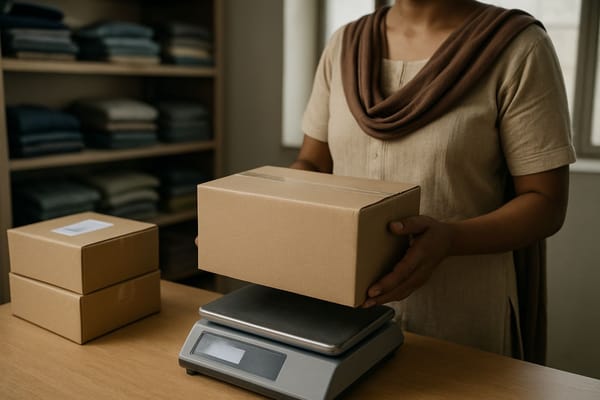
An Order Management System is the operational brain of your omnichannel retail strategy. It receives orders from every channel, applies your fulfilment rules, assigns each order to the right store or warehouse, triggers picking and packing workflows, and hands off to your logistics partner for delivery.
For fashion chains, the OMS must handle size and colour variants accurately, manage partial fulfilments when a multi-item order needs to ship from two locations, and process returns and exchanges without manual intervention. Ship-from-store is a particularly effective fulfilment model for Indian fashion chains with wide store networks. Read more at Ship from Store India: Cut Delivery Costs 40% for Fashion Chains.
Step 5: Integrate Payments and Logistics Natively
Your platform must connect natively with Indian payment gateways including Razorpay, PhonePe, and Paytm for both in-store UPI payments and online checkout. On the logistics side, native integrations with Delhivery, Shiprocket, and Ecom Express mean that shipping labels, tracking numbers, and delivery status updates flow automatically into your central dashboard without requiring a separate login or manual data entry.
Step 6: Activate Customer Loyalty and CRM Across All Channels
A fashion retailer's most valuable asset is its repeat customer base. Your CRM must record every purchase, whether it happened in-store in Jaipur or online from a customer in Hyderabad, against a single customer profile. Loyalty points, birthday offers, and personalised promotions should work identically and automatically across every channel and every store location.
This is also the foundation for effective WhatsApp marketing, where you can send personalised restocking alerts, new collection previews, and exclusive member offers based on a customer's actual purchase history rather than generic broadcast messages.
For fashion chains targeting younger shoppers, see Omnichannel Gen Z Retail Strategy: Fashion Chains Boost Engagement 45%.
| Capability | Vyapar / Marg ERP / Tally | Commmerce Omnichannel OS |
|---|---|---|
| Real-time multi-store inventory | Not available or manual | Built-in, real-time across all stores |
| Offline-first POS billing | Partial or not available | Full offline mode with auto-sync |
| Built-in ecommerce storefront | Not available | Included in the platform |
| Multi-channel OMS | Not available | Unified OMS across all channels |
| Delhivery / Shiprocket integration | Not available | Native integrations included |
| Customer CRM and loyalty | Basic or not available | Full CRM with cross-store loyalty |
| GST e-invoice integration | Available in Tally, not in Vyapar | Native GSTN e-invoice integration |
How Commmerce Helps Indian Fashion Chains Go Omnichannel
Commmerce is an Omnichannel Retail Operating System built specifically for Indian retailers with two to fifty stores. It brings together every capability described in this guide into a single unified platform, so fashion chains can stop managing five different tools and start running their entire retail operation from one dashboard.
Here is how each core problem faced by Indian fashion chains is addressed directly within the Commmerce platform:
Centralised inventory management: Commmerce maintains a single real-time inventory pool across every store location, warehouse, and online channel. Barcode and RFID-based tracking ensures every size, colour, and variant is accounted for accurately. Low-stock alerts, inter-branch transfer workflows, and automated reorder triggers mean your buying team always has accurate data to act on.
Offline-first POS that never goes down: The Commmerce POS works fully without internet, stores all transactions locally, and syncs automatically the moment connectivity is restored. Your billing counter keeps running during festival sales, mall Wi-Fi outages, and power fluctuations, without any data loss or reconciliation headaches.
Built-in GST billing and e-invoice generation: Every invoice generated through Commmerce is GST-compliant with correct HSN code mapping for apparel. The platform integrates natively with the GSTN e-invoicing system and Tally Prime, so your accounts team is not manually re-entering data from billing reports.
Unified OMS for all channels: Walk-in customers, WhatsApp orders, website purchases, and marketplace orders all flow into a single Commmerce OMS. Fulfilment rules route each order to the nearest or best-stocked location automatically. Picking, packing, and putaway workflows are built into the warehouse module so your operations team has a clear task queue rather than a chaotic inbox.
Native payment and logistics integrations: Commmerce connects out of the box with Razorpay, PhonePe, and Paytm for in-store and online payments. Logistics integrations with Delhivery, Shiprocket, and Ecom Express mean shipping labels are generated and tracking is updated from within the same dashboard your billing team already uses.
Customer loyalty and CRM across every store: Every customer interaction, whether a purchase in your Ahmedabad store or a return at your Surat branch, is recorded against a single customer profile. Loyalty points apply and redeem across all locations. WhatsApp-based invoicing and follow-up communication use the same customer data, so every message is personalised and relevant.
Real-time analytics across your entire chain: Commmerce gives you a single dashboard view of sales, inventory, returns, and staff performance across every store simultaneously. You can see which store is your highest-margin location, which channel is driving the most repeat purchases, and which SKUs are moving fastest before the season ends.
Fashion chains like those profiled in Omnichannel Retail Trent Zudio Growth Strategy: Scale Fashion Chains demonstrate what is possible when a fashion retailer fully commits to a unified omnichannel operating model. Commmerce is designed to give independent Indian fashion chains access to the same operational infrastructure, without requiring the enterprise IT budget that large chains spend.
Commmerce also uses flat pricing with no per-terminal fees, so as you open new stores, your platform cost does not spike unpredictably. Every new store connects to the same central system without additional licensing complexity.
Conclusion
A well-executed omnichannel retail strategy for Indian fashion chains is not about adding more tools to an already fragmented stack. It is about replacing disconnected billing software, manual inventory spreadsheets, and separate ecommerce platforms with a single operating system that treats every store, every channel, and every customer as part of one unified business. In 2026, the Indian fashion retailers who are growing are those who have unified their operations so completely that a customer can browse online, try in-store, buy on WhatsApp, and return at a different branch without experiencing any friction. That level of operational maturity is now achievable for fashion chains of every size, not just the large enterprise players. Commmerce is the Omnichannel Retail Operating System built to make this possible for Indian retailers with two to fifty stores, with the GST compliance, UPI payment integrations, offline billing, and local logistics partnerships that the Indian market specifically requires. If your fashion chain is ready to move beyond disconnected tools and build a retail operation that works as one cohesive system, the next step is simple.
FAQs
Q: What is an omnichannel retail strategy for fashion chains in India?
A: An omnichannel retail strategy for Indian fashion chains means connecting physical stores, an online storefront, and marketplaces into a single unified system so that inventory, orders, and customer data are synchronised in real time across every sales channel.
Q: Why do Indian fashion retailers need an omnichannel platform in 2026?
A: Indian fashion retailers need an omnichannel platform in 2026 because shoppers now research online, try in-store, and buy on WhatsApp, and disconnected tools like Tally or Marg ERP cannot keep inventory, orders, and customer records synchronised across those channels.
Q: How does omnichannel retail reduce stock mismatch for fashion chains?
A: Omnichannel retail reduces stock mismatch by maintaining a single centralised inventory pool that updates in real time whenever a sale, return, or stock transfer happens across any physical store, online store, or marketplace channel.
Q: What features should Indian fashion retailers look for in an omnichannel platform?
A: Indian fashion retailers should look for centralised inventory management, an offline-first billing system, a built-in Order Management System for multi-channel orders, GST-compliant invoicing, logistics integrations with providers like Delhivery and Shiprocket, and a customer loyalty and CRM module.
Q: How is Commmerce different from Vyapar or Marg ERP for fashion retailers?
A: Unlike Vyapar or Marg ERP, which are primarily accounting or billing tools, Commmerce is a full Omnichannel Retail Operating System that connects physical stores, an online storefront, marketplaces, an OMS, warehouse workflows, and last-mile delivery into one unified platform built specifically for Indian multi-store retailers.
Disclaimer: This article is for general informational purposes only and does not constitute legal, financial, or tax advice. GST rules, compliance requirements, and platform features may change over time. Please verify the latest guidelines with a qualified professional or refer to official sources such as the GSTN or CBIC. Market statistics mentioned are based on publicly available estimates and may not reflect current figures. Commmerce product features referenced are accurate at the time of writing and subject to change.