What Is Click and Collect for Indian Retail?
Click and collect lets a customer order a product online and pick it up at a nearby physical store instead of waiting for home delivery. For an Indian retailer running both an online store and a chain of stores, it turns store shelves that already hold stock into a same-day fulfilment point, without adding a single rupee of last-mile delivery cost.
The idea is simple. The hard part is operational: the store that fulfils the order needs to know, in real time, that it has the item, needs to hold it instead of selling it to a walk-in customer, and needs a process for handing it over that does not slow down the billing counter. Commmerce, the Omnichannel Retail Operating System built for Indian retailers with 2 to 50 stores, treats this as an order routing problem rather than a delivery problem, because the item never leaves the building until a customer walks in to collect it.
Why Click and Collect Matters More for Indian Retailers Than It Looks
Click and collect solves a cost problem and a trust problem at the same time, and both are sharper in India than in most markets.
The cost problem is last-mile delivery. For low and mid ticket categories like apparel, footwear and accessories, a courier run to a customer's address can cost more than the margin on the item itself, especially outside metro pin codes. When the customer collects the order from a store the retailer already pays rent and staff for, that cost disappears entirely.
The trust problem is cash on delivery and the return-to-origin cycle that follows it. A large share of online orders in India are still placed with COD as the payment option, and a meaningful fraction of those are refused at the doorstep, sent back, and never properly reconciled against the inventory that was blocked for them. Our own experience helping retailers fix this is covered in how Indian retailers fix COD reconciliation losses. Click and collect sidesteps the whole cycle: the customer either pays online when ordering or pays at the counter when picking up, so there is no parcel travelling to an address that may or may not accept it. Payment rails like UPI, which the Reserve Bank of India (rbi.org.in) continues to push for real-time, low-cost settlement, make prepaid pickup orders easy to collect without the courier ever being involved.
How to Set Up Click and Collect for Your Stores
Launching click and collect is a sequence of operational decisions, not a feature toggle. Here is the order that works for a multi-store Indian retailer.
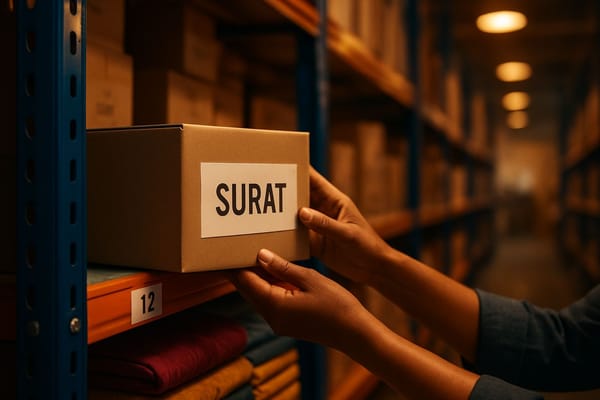
- Map which stores can fulfil which SKUs in real time. Before you offer a pickup option on a product page, your online store needs a live read of stock at the store level, not a warehouse-level number that gets reconciled overnight. This is the same inventory visibility problem covered in real-time multi-store stock visibility for Indian retailers, and it has to be solved first because every other step depends on it.
- Reserve the unit the moment the order is placed, not when the store confirms it. If reservation happens after confirmation, a walk-in customer can buy the exact item a pickup customer already ordered, and you find out when they arrive at the counter. The reservation has to lock the unit against sale instantly, the same logic that already needs to exist for syncing online and offline stock in real time.
- Set a realistic pickup window and automate the notification. Promise a window your store staff can actually meet during both quiet hours and Saturday footfall, and send the ready-for-pickup message automatically the moment the item is set aside, not on a fixed timer. An overpromised window that is missed does more damage to trust than a slightly longer honest one.
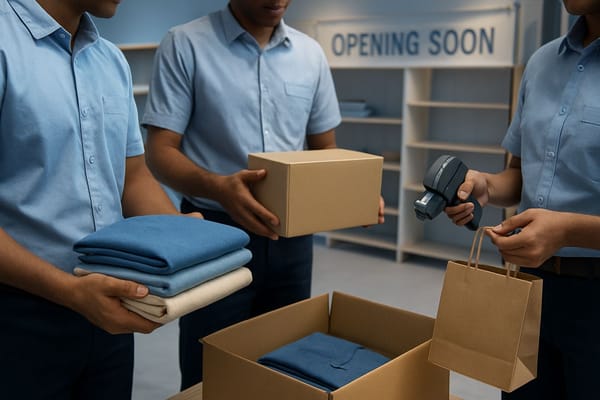
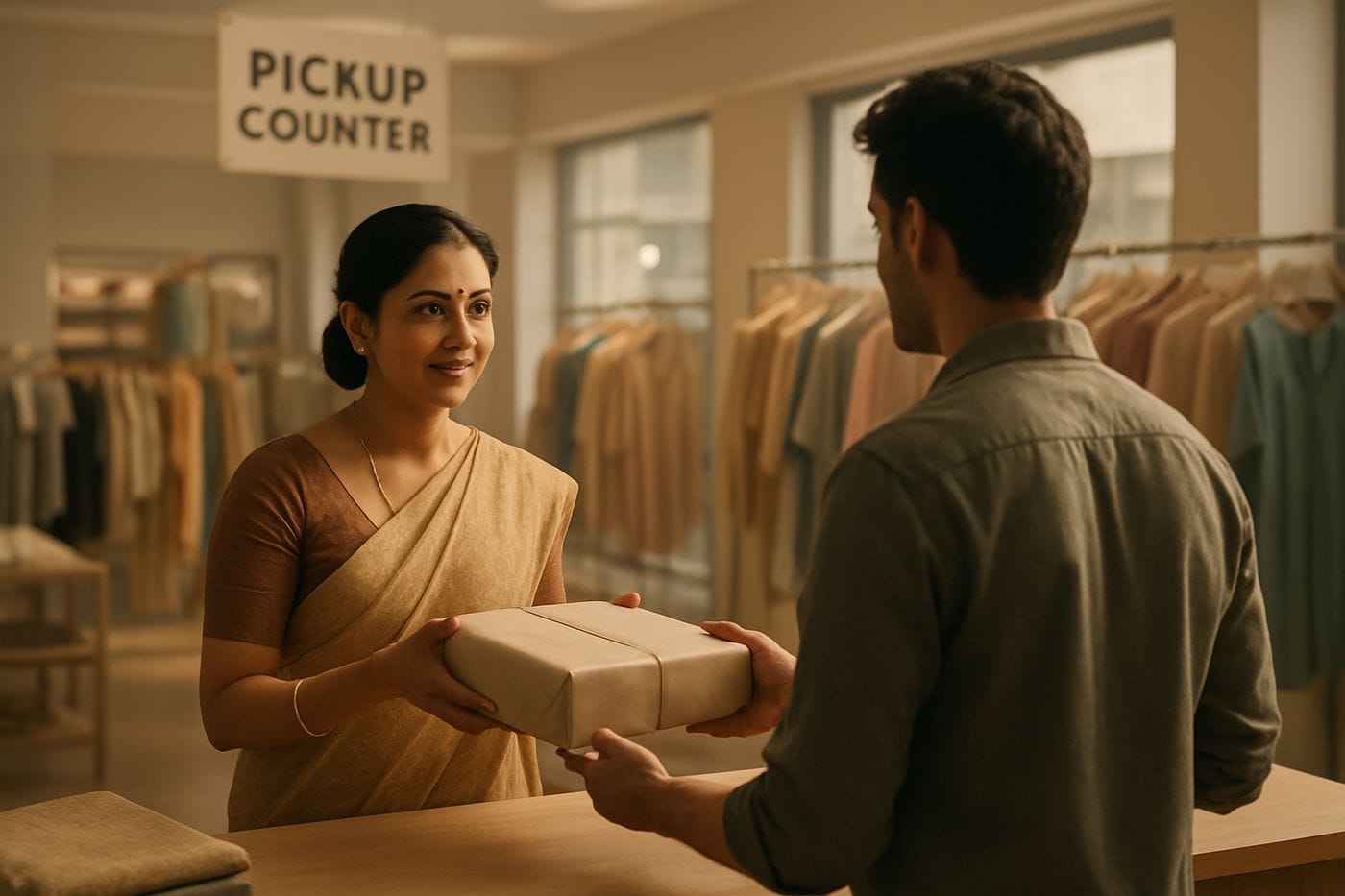
- Create a dedicated pickup point separate from the main billing queue. Routing pickup customers through the same line as walk-in billing defeats the purpose of a fast, no-queue collection and frustrates both sets of customers during peak hours.
- Decide where payment and the GST invoice get finalised. A pickup is still a point-of-sale transaction. If the customer paid online, the handover still needs an invoice generated against that store, consistent with the e-invoicing rules published at gstn.org.in; if payment happens at the counter, it needs to flow through the same billing system as every other sale so the store's books stay accurate.
- Track no-show and cancellation rates from week one, and adjust. A pickup order that never gets collected ties up stock exactly like a cancelled home delivery does. Watching this number early tells you whether your pickup window, notification timing, or product mix needs to change before it becomes a habit.
Click and Collect vs Home Delivery: What Actually Changes
The two fulfilment modes solve different problems, and most Indian retailers end up running both side by side rather than picking one.
| Factor | Home Delivery | Click and Collect |
|---|---|---|
| COD and RTO exposure | High, especially outside metros | Removed, since nothing travels unaccompanied to an address |
| Last-mile cost | Courier fee per order | None, uses existing store footfall |
| Inventory source | Usually warehouse or dark store | Nearest store with live stock, see ship from store vs warehouse |
| Typical fulfilment time | 1 to 5 days depending on pin code | Same day to next day for in-city stores |
| Best suited categories | Bulky, low urgency, remote pin codes | Apparel, footwear, electronics, jewellery where customers want to check the item |
| Upsell opportunity | None after dispatch | High, customer is physically in the store |
Where Click and Collect Breaks Down for Indian Retailers
The most common failure is reserving stock on a delay instead of instantly, which leads to the exact oversell problem click and collect was supposed to prevent, except now it happens in front of the customer at the counter instead of quietly online.
The second is ignoring festive season load. A pickup counter sized for a normal Tuesday collapses during a sale weekend when online orders spike and the same staff are also handling walk-in billing and gift wrapping. Multi-store retailers scaling fulfilment for peak periods face the same staffing and routing questions covered in multi-store order fulfilment automation, and click and collect needs its own peak-season plan rather than inheriting the regular counter's capacity.
The third is treating the invoice as an afterthought. If billing only happens when the courier would have delivered, rather than when the customer actually takes the item, GST records and store-level sales numbers stop matching, which turns into a reconciliation problem at month end instead of a one-time setup decision.
Measuring Whether Click and Collect Is Paying Off
Four numbers tell you whether the programme is working: the pickup fulfilment rate, which is the share of pickup orders actually collected within the promised window; the no-show rate, which is stock sitting reserved and unsold; the in-store attach rate, meaning additional items bought at the counter during pickup, which is the single biggest financial upside click and collect has over home delivery; and the average time between order placement and the ready-for-pickup notification, which tells you whether your store-level stock data is actually real time or just close to it.
Organised retail bodies like the Retailers Association of India (rai.net.in) have been tracking omnichannel fulfilment as a growing priority for member retailers, and the retailers getting real upside from it are the ones treating click and collect as a store operations project with a technology dependency, not a website feature with a store as an afterthought.