ONDC DigiDukaan Explained: B2B Procurement for Kirana Stores
Table of Contents
- Why ONDC DigiDukaan Matters for Indian Retail
- What Is ONDC DigiDukaan
- How ONDC DigiDukaan Works
- What DigiDukaan Is Not
- DigiDukaan vs ONDC Retail at a Glance
- What This Means for Multi-Store Retailers
- How Commmerce Fits In
- Conclusion
- FAQs
TL;DR
- ONDC DigiDukaan is a B2B procurement initiative launched by ONDC with the Department for Promotion of Industry and Internal Trade, built to digitise how kirana stores order stock from distributors and brands.
- It is not a consumer-facing selling channel, so it is not an alternative to a marketplace listing or to running your own online store.
- DigiDukaan does not remove distributors from the chain. It digitises the ordering, scheme visibility and collection workflows that already run through them.
- Retailers who adopt it still need a single inventory and purchase record on their own side, otherwise digital ordering just produces faster data entry into a system that was never connected.
Why ONDC DigiDukaan Matters for Indian Retail
ONDC DigiDukaan matters because it targets the part of Indian retail that digital commerce has largely left alone: the buying side of a neighbourhood store. India has more than 1.4 crore kirana stores, and general trade still accounts for roughly 75 to 80 percent of FMCG sales according to industry estimates. Consumer-facing commerce has changed enormously over the last decade. Procurement has not.
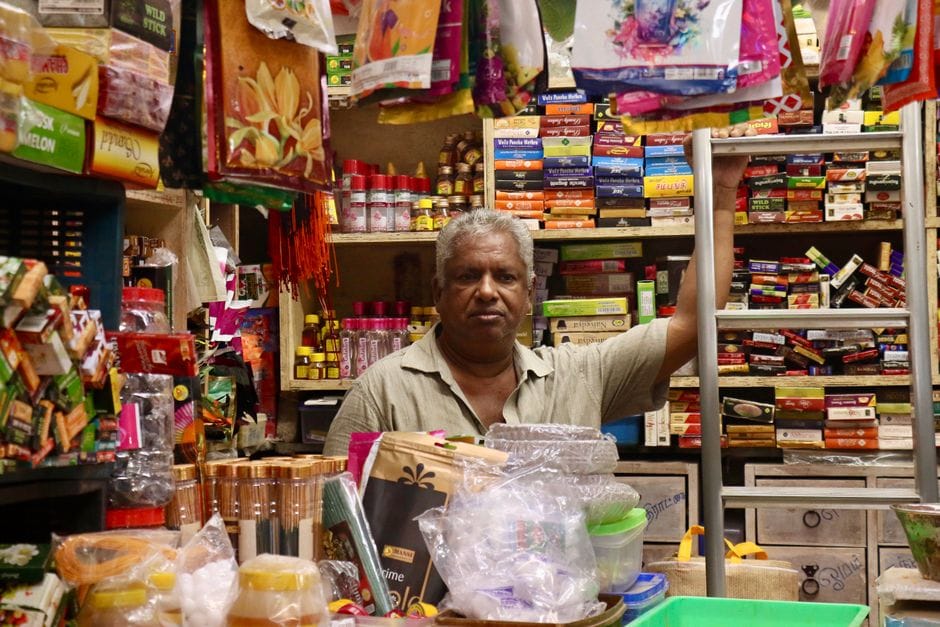
For most kirana owners, restocking still runs on a field sales representative walking in with an order book, a phone call to a distributor, or a WhatsApp message. That process creates a set of costs nobody records anywhere: stock-outs on fast-moving lines, promotional schemes the retailer never hears about, cash tied up in slow stock ordered on guesswork, and a separate app for every brand that decided to build one.
💡Pro TipThe most expensive number in a kirana business is the sale that did not happen because the shelf was empty. It never appears in your books, which is exactly why it never gets fixed.
What Is ONDC DigiDukaan
ONDC DigiDukaan is shared digital infrastructure for B2B retail procurement in India's general trade ecosystem. It was launched by ONDC, the Open Network for Digital Commerce, in coordination with the Department for Promotion of Industry and Internal Trade. It connects three groups on one open network: retailers who buy stock, distributors and wholesalers who supply it, and the brands whose products move through that chain.
The rollout began in Hyderabad in March 2026 through the ONDC network participant Qwipo, with more than 10,000 retailers and over 35 brands onboarded. A Jaipur launch followed on 19 June 2026 through Salescode, with expansion planned across Mumbai, Bengaluru and Delhi NCR. Participating FMCG companies include Hindustan Unilever, ITC, Nestlé, Coca-Cola, Tata Consumer Products, Marico, CavinKare and L'Oréal, among others.
The structural problems DigiDukaan is designed to address are specific and worth listing plainly, because they are the problems any retailer evaluating it should measure it against:
- Missed sales caused by stock-outs on fast-moving SKUs
- Limited visibility of the schemes and promotions a retailer is actually eligible for
- High inventory holding, and the working capital locked inside it
- Dependence on a different ordering app for every brand
- Operational complexity and field cost on the distributor side
- Limited visibility for brands into secondary sales beyond the distributor
How ONDC DigiDukaan Works
DigiDukaan works by putting ordering, scheme discovery and fulfilment onto an open network rather than inside one company's app. A retailer sees catalogue, pricing and applicable schemes from participating suppliers in one place, places an order digitally, and the order routes to the distributor who would have served that territory anyway.
Each participant gets something different out of it. For the retailer, the gain is visibility: what is available, at what price, under which scheme, without waiting for a salesperson to visit. For the distributor, order and collection digitisation means wider retailer coverage without a proportional increase in field headcount, which is the cost line that has been squeezing distribution margins hardest. For the brand, the network produces demand signals and secondary sales visibility that historically stopped at the distributor's boundary.
⚠️Watch OutCommission and fee structures for DigiDukaan have not been published in detail, and terms vary by the network participant a retailer signs up through. Confirm the specifics with the participant onboarding you rather than assuming the network sets one common rate.
What DigiDukaan Is Not
This is the point most commentary gets wrong, and it is worth stating directly. DigiDukaan is a buying rail, not a selling rail. It does not put a kirana store's products in front of end consumers, it does not give the retailer a storefront, and it does not compete with a branded online store or a marketplace listing.
It also does not replace distributors or wholesalers. That distinction separates DigiDukaan from the B2B marketplace model that tried to disintermediate distribution and largely struggled against it. DigiDukaan digitises the existing supply chain and keeps its participants in place, which is a meaningfully different bet: it assumes the distribution network is an asset to be made more efficient rather than a cost to be removed.
The consumer-facing side of ONDC is a separate track entirely, where a seller app lists a retailer's catalogue across buyer apps. If you are weighing that decision, it is a genuinely different question with different trade-offs, and we covered it separately in ONDC vs your own store.
DigiDukaan vs ONDC Retail at a Glance
| Criteria | ONDC DigiDukaan | ONDC Retail Network |
|---|---|---|
| Direction of Trade | B2B: retailer buys stock | B2C: retailer sells to consumers |
| Who the Retailer Faces | Distributors, wholesalers and brands | End consumers via buyer apps |
| Core Problem Solved | Stock-outs, scheme visibility, working capital | Online discovery and reach |
| Effect on Intermediaries | Preserves distributors, digitises their workflow | Introduces seller and buyer app intermediaries |
| Customer Data | Not applicable, no end consumer involved | Buyer app holds the consumer relationship |
| Current Availability | City by city rollout, Hyderabad and Jaipur first | Live across the ONDC network nationally |
What This Means for Multi-Store Retailers
For a retailer running two to fifty stores, DigiDukaan is worth watching for one specific reason: procurement is usually the least instrumented part of the business. Most multi-store operators can tell you yesterday's sales by store within minutes, and cannot tell you their true fill rate, their scheme capture rate, or how much working capital is sitting in slow-moving stock across branches.
Digitising the order itself does not fix that on its own. An order placed through an open network still has to land in a purchase record, update expected stock, reconcile against what actually arrived, and inform the next order. If those steps stay manual, digital procurement produces cleaner input into the same disconnected system, and the retailer ends up with faster ordering and the same blind spots.
Three things are worth having in place before the network reaches your city:
- One inventory record across every store and channel, so on-hand stock is a fact rather than an estimate per branch.
- Purchase and goods-received workflows that reconcile what was ordered against what arrived, including short supply and scheme credits.
- Reorder logic driven by actual sell-through per store, so procurement decisions come from demand rather than from habit or from whoever visited last.
How Commmerce Fits In
Commmerce is an Omnichannel Retail Operating System for Indian retailers with two to fifty stores. It does not connect to DigiDukaan, and this article is not a pitch that it does. What it does is close the gap that determines whether digitised procurement actually pays back.
Commmerce keeps one inventory record across every store, warehouse and online channel, so stock levels are shared rather than reconciled. Purchase orders and goods received are tracked against that same record, which is what makes fill rate and short supply measurable instead of anecdotal. Sell-through data per store and per SKU feeds reorder decisions, so buying reflects what is actually moving in each location. GST-compliant billing and e-invoicing are built in, and the POS works offline and syncs when connectivity returns, which matters in exactly the store formats DigiDukaan is aimed at.
Retailers still running Tally Prime, Marg ERP or Vyapar for billing will find these are accounting and billing tools rather than retail operating systems. They record transactions accurately. They do not give you a live, shared view of stock across branches, which is the capability that turns a digitised purchase order into a better one.
Running a retail business in India and want to see what unified stock and purchase records look like across your branches? Schedule a Demo and we will walk through it with your own numbers.
Conclusion
ONDC DigiDukaan is a serious attempt at a problem Indian retail has mostly ignored, which is that the buying side of a kirana store runs on phone calls and order books while the selling side has been rebuilt three times over. By treating distributors as infrastructure to digitise rather than as middlemen to remove, it takes a more realistic view of how FMCG actually reaches 1.4 crore stores than the marketplace models that came before it. It is early, the rollout is city by city, and the commercial terms are not yet public. For retailers, the useful preparation is not deciding whether to join. It is making sure that when a purchase order becomes digital, it lands somewhere that can tell you whether it was the right order.
FAQs
Q: What is ONDC DigiDukaan?
A: ONDC DigiDukaan is a B2B procurement initiative launched by ONDC with the Department for Promotion of Industry and Internal Trade, which digitises how India's kirana stores order stock from distributors and brands over an open digital network.
Q: Is DigiDukaan a way for kirana stores to sell to customers online?
A: No. DigiDukaan is a business-to-business procurement network that handles how a retailer buys stock. It does not list products for end consumers and is not an alternative to a marketplace listing or a branded online store.
Q: Does DigiDukaan replace distributors and wholesalers?
A: No. DigiDukaan is designed to preserve the existing FMCG distribution ecosystem and digitise it, so distributors and wholesalers remain part of the chain while their ordering, coverage and collection workflows move onto a shared network.
Q: Where is ONDC DigiDukaan available in India?
A: DigiDukaan began in Hyderabad in March 2026 through Qwipo and launched in Jaipur on 19 June 2026 through Salescode, with expansion planned across Mumbai, Bengaluru and Delhi NCR.
Q: What should a retailer do before joining DigiDukaan?
A: A retailer should first have one shared inventory record across all stores, purchase and goods-received workflows that reconcile ordered against received quantities, and reorder decisions driven by per-store sell-through, otherwise digital ordering feeds an unconnected system.
Disclaimer: This article is for general informational purposes only and does not constitute legal, financial, or tax advice. Programme details, availability, and commercial terms for ONDC DigiDukaan may change over time, and figures cited are drawn from publicly available announcements at the time of writing. Please verify current details with ONDC or the network participant onboarding you, and refer to official sources such as the GSTN or CBIC for tax matters. Commmerce product features referenced are accurate at the time of writing and subject to change.