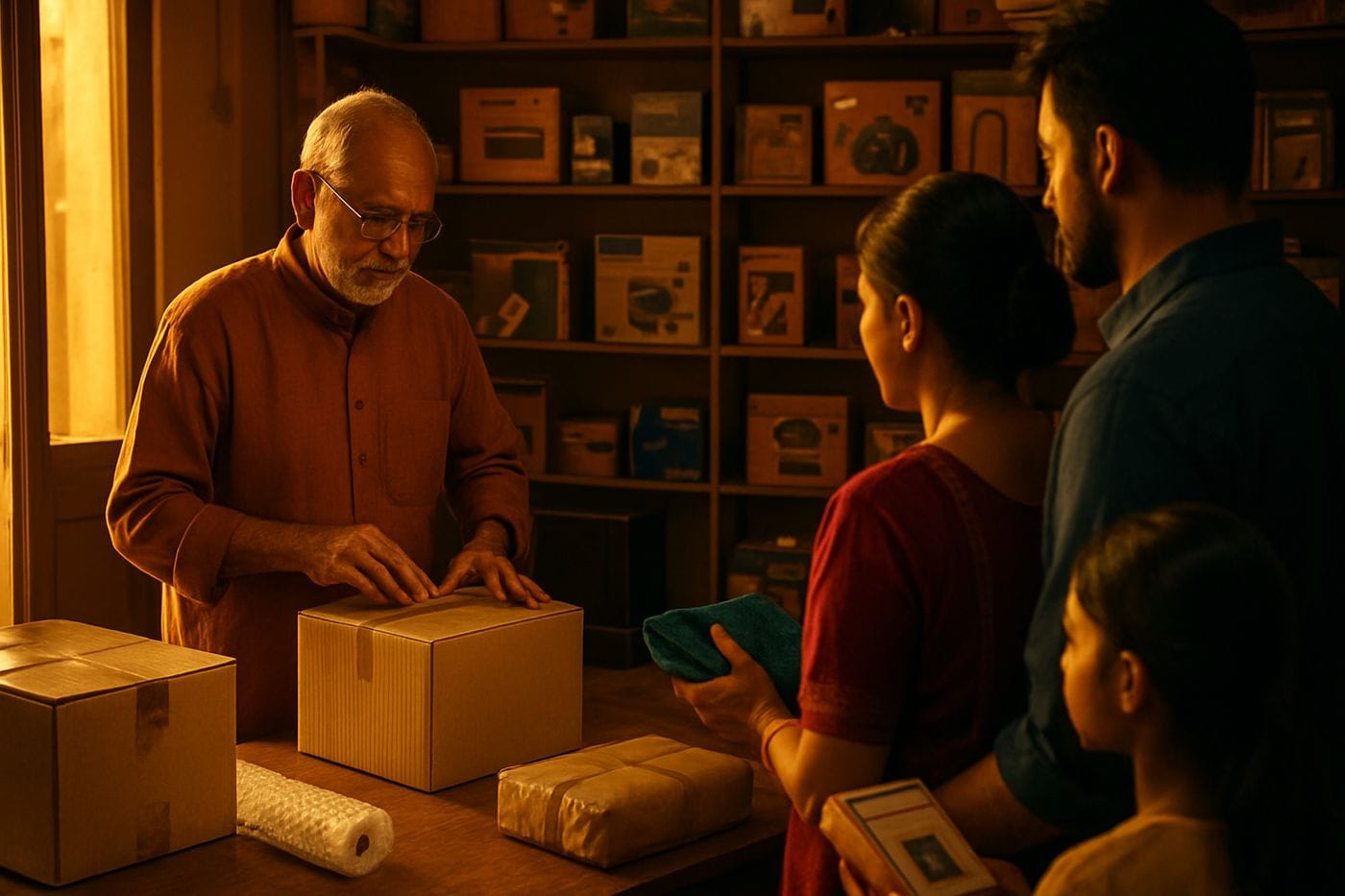
Every lost or damaged parcel is a double hit: you lose the product and the sale, and often the freight too. Many Indian retailers absorb these losses silently because filing a claim feels slow, when the real problem is that the evidence was never captured at dispatch.
Why Do Lost and Damaged Parcels Quietly Drain Margin?
Lost and damaged shipments rarely show up as one clear line in the books. They are scattered across refunds, replacement orders, write-offs and courier remittance shortfalls, so no one sees the total.
Consider what one lost parcel actually costs. The product cost is gone. The customer is refunded or reshipped, which means a second pick, pack and freight charge. The original freight is usually not returned. If the order was prepaid, the money has to come back from your pocket. If it was cash on delivery, the COD amount never arrives in your remittance.
The loss is also invisible in stock. A parcel that vanished in transit may still count as sold and in-transit in your system for weeks, which distorts availability.
What Counts as a Claimable Loss With a Courier?
A claimable loss is a shipment that is lost, delivered damaged, delivered with missing contents or marked delivered but never received by the customer. Each type needs different proof, and your courier or aggregator agreement decides what is covered and for how much.
| Loss type | What you must show | Common reason claims fail |
|---|---|---|
| Lost in transit | Tracking history frozen with no movement, invoice, proof of dispatch | Claim raised after the courier's deadline |
| Damaged on delivery | Packing photos, photo of damaged outer box and product, customer complaint with timestamp | No proof the item left your store intact |
| Missing contents | Packing video or photo of contents, weight at dispatch, delivered weight | Parcel was repacked and cannot be matched |
| Marked delivered, not received | Customer statement, delivery location and time, any OTP log | No written complaint from the customer |
Read your agreement closely for three things: the claim filing window, the liability cap per shipment, and whether declared value or invoice value is used. These terms differ by courier and by plan, so check the document you actually signed rather than assuming.
Where Do Claims Usually Fall Apart?
Claims fall apart because of missing evidence and missed deadlines, not because couriers always refuse. A claim with a clean evidence trail is simple for a courier to settle, while one built from memory three weeks later is easy to reject.
- No dispatch proof. Without a photo or video of the sealed parcel, you cannot show the damage happened in transit.
- Slow customer reporting. Customers complain on WhatsApp or a marketplace chat, and the message never reaches the person who files claims.
- Mismatched weight and value. A weight dispute can sink a missing-contents claim. See how to stop courier weight discrepancy charges for how to keep a reliable dispatch weight.
- Ownership gaps. Nobody is responsible for chasing the claim, so it expires.
- Mixing up returns and losses. A parcel returned to origin is not a lost parcel. Treating them the same blurs your numbers. Our post on pincode serviceability gaps and RTO explains the return side.
How to Build a Claim Process That Recovers Money
A working claim process has four parts: evidence at dispatch, fast detection, a filing routine with one owner, and a monthly review. Follow these steps in order.
- Capture a photo or short video of every parcel at packing, showing the contents, the sealed outer box and the label together, and store it against the order number.
- Record the dispatch weight and the declared value on the order so both sides of any dispute use the same figures.
- Flag stalled shipments automatically, for example no tracking movement for several days or a delivered status with a customer complaint, and send them to a claims queue.
- Assign one person to own the queue and file each claim with the invoice, tracking history, photos and the customer's written complaint attached.
- Track every claim by courier, filing date, amount and outcome, and chase anything unanswered past the courier's stated resolution time.
- Refund or reship the customer immediately instead of waiting for the courier, so the claim never holds up the customer experience.
- Review the claims log monthly and move volume away from couriers with repeated loss or damage on specific lanes.
Step six matters more than it looks. Customers judge you, not your courier, so the claim should run in the background while the customer is already made whole.
How Should You Treat Lost Stock in Your Books and GST?
Lost goods should be written off or recovered through a claim, and the tax treatment should be confirmed with your chartered accountant. Under the CGST Act, input tax credit is generally not available on goods that are lost, stolen or destroyed, so a lost parcel can also mean credit to reverse on the purchase side.
Read the provisions on the official CBIC GST portal and discuss any reversal with your accountant. If a courier pays a claim, record it as a recovery against the loss rather than as sales revenue, so your sales and margin numbers stay clean.
COD parcels add another trap. If the COD amount was never remitted, that cash is missing from your settlement even though the order shows as delivered. Reconcile it using the routine in how Indian retailers fix COD reconciliation losses.
Which Metrics Show Whether Claims Are Working?
Four numbers tell you whether the process pays for itself: loss and damage rate by courier, claim filing rate, claim recovery rate and average days to settle. Together they show whether your problem is packing, carrier choice or follow-up.
- Loss and damage rate by courier and lane. A single lane with repeated losses is a routing decision, not bad luck.
- Claim filing rate. The share of eligible losses you actually filed. Anything below nearly all of them means money is being left on the table.
- Recovery rate. The rupee value recovered divided by the rupee value claimed.
- Days to settle. Long settlement ties up cash, especially for higher-value categories.
Industry bodies such as IBEF track how fast Indian online retail is growing, and every extra shipment is another chance for something to go wrong in transit. Growth makes a claims routine more important, not less.
Does Choosing the Right Courier Model Reduce Losses?
Yes, because the carrier mix and the delivery model change how often parcels are handled and how easily you can fix problems. Fewer handoffs generally mean fewer losses, and a courier you can escalate with is worth more than one that is slightly cheaper.
Compare your own fleet against aggregators in own fleet or courier aggregator: what retail chains should pick, and review the basics in what is a courier aggregator. Pair the choice with last-mile SLA tracking so a courier's reliability is measured, not guessed. For store-level context, the retail association RAI publishes ongoing industry perspectives worth following.
How Does Commmerce Help?
Commmerce is an Omnichannel Retail Operating System for Indian retailers. It keeps order, dispatch and shipment status in one place, so the evidence needed for a claim, such as dispatch time, weight, courier and order value, is attached to the order from the start instead of reconstructed later.
That same single record also stops lost parcels from silently inflating your available stock, because an order stuck in transit is visible as an exception rather than a sale that looks complete.
Frequently Asked Questions
How soon should I file a claim for a lost parcel?
As soon as tracking stalls or the customer reports a problem. Courier agreements set filing windows that vary by provider, so confirm yours and file well inside it.
Do I need to refund the customer before the courier pays?
You should. Refund or reship first to protect the customer relationship, then pursue the courier claim separately.
Can I claim for a parcel marked delivered that the customer says never arrived?
Yes, usually with a written complaint from the customer and your dispatch proof, though acceptance depends on your courier's terms.