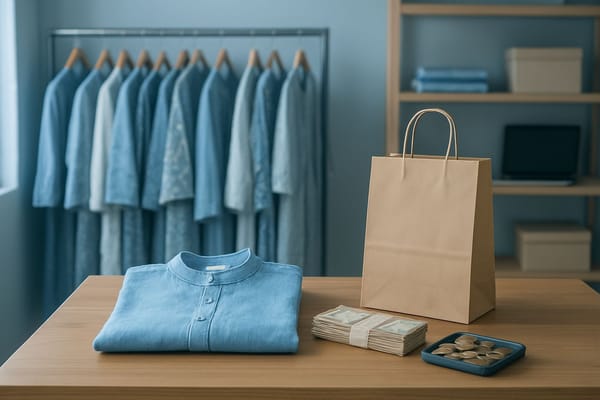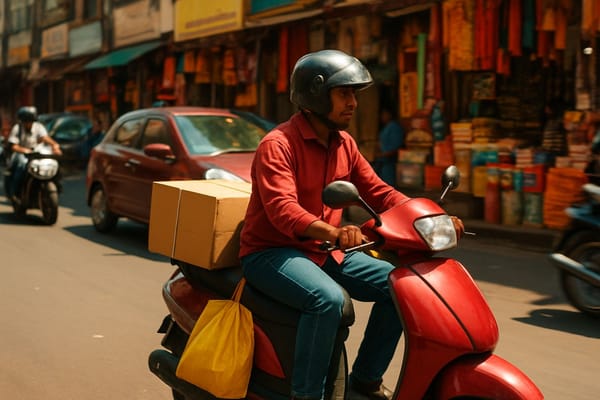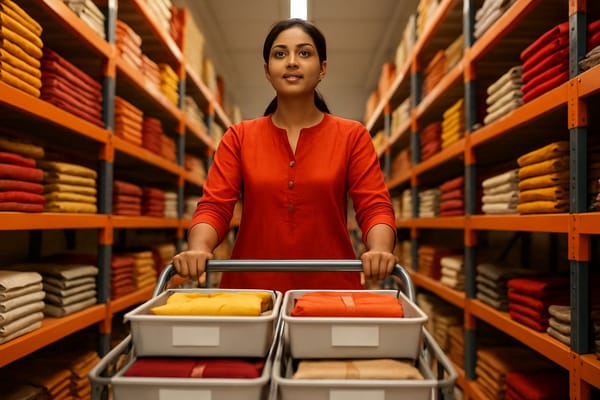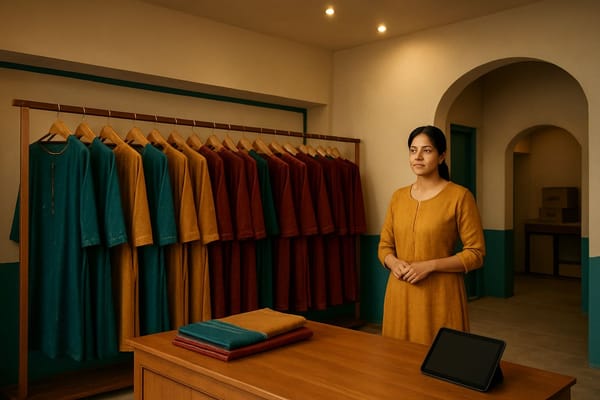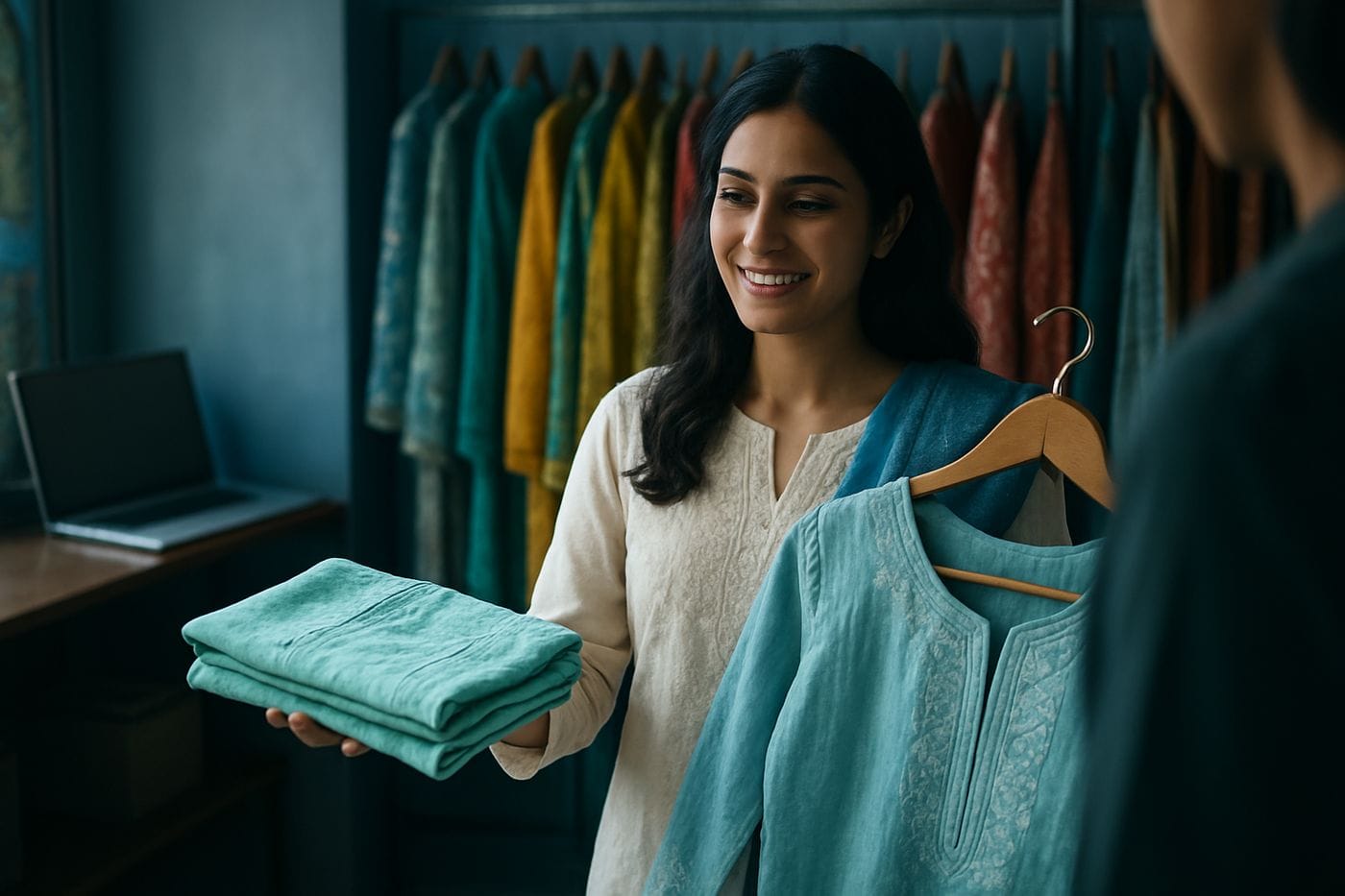
An endless aisle lets a customer order an item the store does not have on the shelf, and have it delivered from another store or the warehouse, or held for pickup. For an Indian retailer it turns the most common walk-out, "your size is not here", into a sale that is booked before the customer reaches the door.
Why do customers walk out when the stock exists somewhere else?
They walk out because the person on the shop floor can only sell what is physically in front of them. The size may be sitting in your other branch or in the warehouse, but the billing counter has no way to promise it, so the customer hears "not available" and leaves.
This is different from a plain stockout. A stockout means you do not own the unit at all. Here you own it, you paid for it, and it is earning nothing. The leak shows up in three common places:
- A size or colour is finished in one store but plentiful in another. We covered the pricing side of this in how broken size runs cost apparel stores full-price sales.
- A store sells a fast mover down to zero while the warehouse still holds a full carton.
- A customer asks for something you stock online only, or a variant you list but never display in the shop.
The customer does not wait. Most will buy the same item from a marketplace or a competitor before they are home, and you never see that lost sale in any report, because nothing was billed.
Where does a walk-out sale actually go?
It goes to whoever can promise delivery first. A shopper standing in your store with a phone in their pocket can compare you with a marketplace in seconds, and "ready in your size, delivered Thursday" beats "try another shop".
Your cost of that lost sale is more than the margin. You already paid for the shop rent, the staff time and the footfall that brought the customer in. The walk-out is the one moment where all of that spend converts or does not. Industry bodies such as the Retailers Association of India publish regular research on how stores and online channels are converging, which is worth a look.
If you are still deciding how far to take this, read our comparison of omnichannel versus multichannel retail in India first. An endless aisle is one of the smallest omnichannel steps with a direct revenue effect.
How to set up an endless aisle in your store
You need three things: one stock number you trust across locations, a way for staff to place the order at the counter, and a delivery promise you can keep. Work through these steps in order.
- Audit stock accuracy first. Count your top 50 selling items in each location and compare with the system, because you cannot promise stock the system only thinks you have.
- Decide which locations may fulfil. Mark the warehouse and your higher-stock stores as sources, and keep a small floor quantity at each store so that fulfilling an order never empties its own shelf.
- Set the delivery options. Offer home delivery and store pickup, and publish a clear time for each, for example next day within the city and three days elsewhere.
- Train staff to offer it. Give them one sentence to say, such as "I can have this delivered to you by Thursday, shall I book it?", and make placing the order faster than writing a phone number on a slip.
- Take payment at the counter. Collect the full amount or a firm part payment on UPI before the order leaves, so a walk-out does not turn into a return-to-origin parcel.
- Log the reason for every walk-out that you could not convert, including size, colour, price and "wanted it today". Review the log weekly.
For the stock side, how to prevent stockouts across multiple locations explains how order routing and transfers work, which is exactly the engine an endless aisle depends on.
Which location should fulfil an endless aisle order?
Fulfil from the location that holds the most spare stock and can reach the customer fastest. Do not default to the nearest store: a store with two units left should keep them for its own walk-ins.
| Option | Best when | Watch out for |
|---|---|---|
| Ship from warehouse | The item is deep in the warehouse and the customer is outside your store city | Pick and pack delay if the warehouse also serves marketplace orders |
| Ship from another store | The same city, and that store has more than a few units spare | That store's own shelf running empty, and staff time to pack |
| Store pickup after transfer | The customer will visit again within a day or two | Transfer delays, and the customer never returning to collect |
| Ship from the nearest dark stock | You hold a regional stock pool for online | Double-counting the same units on your website |
Our post on ship from store versus warehouse goes deeper on the delivery cost of each choice. If an order needs items from two places, plan for it up front, since split orders can quietly eat your margin.
What changes for GST when stock moves between your own stores?
If your stores or warehouse are registered under different GSTINs, moving stock between them is generally treated as a supply and needs a tax invoice or the right document, so build this into your process rather than finding out at an audit.
The rules depend on your registration structure, so check them against the guidance on the CBIC GST portal or ask your accountant. Whatever the answer, a home delivery sold at the counter should be billed to the customer at the time of sale, and the movement behind it should be documented, so your books and your stock agree.
How do you know an endless aisle is working?
Track a few numbers weekly and ignore the rest. You are looking for walk-outs turning into orders without hurting the stores that supply them.
- Walk-out log count: how many customers left without buying and why. This is your baseline before you start.
- Counter orders placed: how many out-of-stock requests were converted to a delivery or pickup order.
- Conversion share: counter orders divided by walk-outs logged. Even a modest rise is revenue you did not have.
- Promise kept: the share of those orders delivered or ready by the promised date.
- Source store stockouts: any store that now runs out of its own fast movers because it supplied too many orders.
The industry data on retail growth from IBEF shows how many new points of sale and online channels Indian retailers are adding. The practical lesson is that each extra location only pays off if its stock can be sold from every other location.
What mistakes break an endless aisle?
The main mistakes are promising stock you do not have, promising a date you cannot hit, and letting one store carry all the fulfilment.
- Trusting a stale stock number. If staff offer a unit that turns out to be missing, the customer loses trust twice.
- Skipping the floor quantity. A store that ships out its last pieces loses its own walk-in sales.
- No owner for the order. A counter order that nobody picks up is as bad as the original walk-out. Assign each one to a named person with a deadline.
- Free delivery on everything. Decide a minimum basket value, or charge for delivery on low-value items, so small orders do not run at a loss.
- Not reading the walk-out log. The reasons tell you what to stock more of, which is a cheaper fix than any delivery.
How does Commmerce help with an endless aisle?
Commmerce is an Omnichannel Retail Operating System for Indian retailers. Its Self Checkout kiosk app includes an endless aisle mode, where shoppers can order out-of-stock items on the kiosk for home delivery or store pickup. The idea is the same whether the order is placed on a kiosk or by a salesperson: one view of stock, one order record, one promise to the customer.
What should you do this week?
Start with a simple paper tally at the counter for seven days: every customer who leaves without buying, and the reason. Then check how many of those items were in your other store or warehouse. That number is the size of your endless aisle opportunity, and it is usually larger than owners expect.