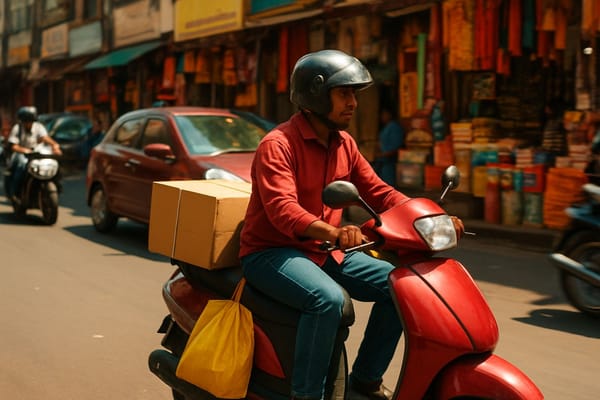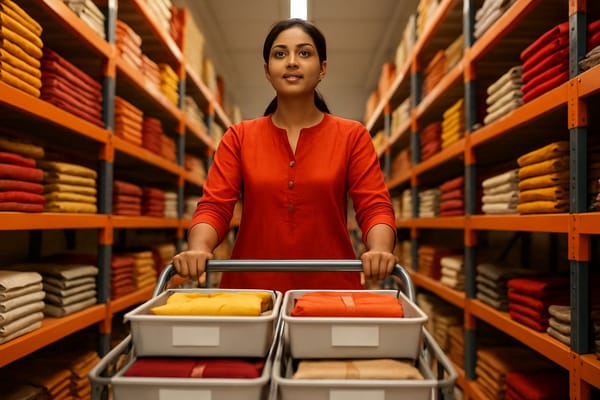
An order prioritisation rule is a written policy that decides which orders get picked, packed and handed to the courier first when you have more orders than hours. Most Indian retailers do not have one. During Diwali week that gap turns into late gift deliveries, cancelled orders and refunds that cost more than the sale.
Why does first in, first packed fail during Diwali?
Packing in the order orders arrived fails because orders do not share the same deadline. A gift that must reach a relative before Diwali is worth more to the customer, and to your reviews, than a restock order that can wait a week.
On a normal day the queue is short enough that nobody notices. In festive week the queue is long, and the first-come rule quietly pushes the most urgent parcels to the back. The customer who ordered at 11 pm for a Dhanteras gift waits behind the customer who ordered at 9 am for something they will use in November.
The loss is not only the late parcel. A late festive order is the most likely order to be cancelled, refused at the door or returned, and each of those costs you outbound freight, return freight and stock that is stuck in transit past the season. If you want to see where that hurts most, read how NDRs turn into RTOs for Indian retailers.
What should decide which order is packed first?
Four things should decide the pack order: the date you promised the customer, whether the order is a gift or time-bound, how likely the order is to fail at delivery, and which courier pickup it can still make today. Order time is the weakest signal of the four.
1. The promised delivery date
Every order carries a date you showed at checkout or agreed on a marketplace. Sort by that date, earliest first, and the queue organises itself. An order promised for tomorrow outranks one promised for next Monday, whatever time each was placed.
2. Gift and occasion orders
Gift orders carry an emotional deadline that the marketplace date does not capture. Mark them when the customer adds a gift note or picks gift wrap, and move them to the front of the pack bench.
3. Delivery risk
Cash on delivery orders to pincodes with a history of failed deliveries are the ones most likely to come back. Confirm them with one call or WhatsApp message before you spend packing time on them. Our guide to pincode serviceability gaps shows how to find those pincodes in your own data.
4. The courier pickup window
A parcel packed after the last pickup of the day ships tomorrow, however urgent it was. Work backwards from each courier's pickup time and finish the parcels bound for that courier before it arrives. The same logic sits behind order cut-off times that ship on time.
How to set up an order prioritisation rule for Diwali week
You can set this up in an afternoon with a spreadsheet, or with the order rules in your order management system. The steps are the same either way.
- List every channel that feeds your queue, including your website, Amazon, Flipkart, Meesho, WhatsApp orders and store pickups, and confirm all of them land in one order list.
- Add a promised delivery date to every order, using the checkout estimate or the marketplace dispatch-by date.
- Tag gift and time-bound orders, and tag cash on delivery orders to pincodes that failed last season.
- Sort the list by promised date first, then gift tag, then risk tag, and hold the risky orders for a confirmation message.
- Group the remaining orders by courier and pickup time, then assign each group to a packer.
- Freeze the list at a fixed hour each day, so packers are not chasing a queue that reshuffles every few minutes.
- Review the late and cancelled orders each morning and adjust the rule for the next day.
Do not try to build a clever scoring formula on day one. A plain sort on promised date, with two tags, beats a complicated model that nobody on the floor understands.
How do you protect stock for the orders that matter most?
You protect stock by deciding in advance which channel and which store gets the last few units of a fast mover. If every channel can sell the last unit, the first order to arrive wins it, and that is often a low-priority one.
Before the rush, review which styles will sell out first, using last year's festive sales and this year's pre-orders. The seasonal demand forecasting guide covers how to read that demand, and the buffer calculator article shows how to hold back safety stock per channel.
If an order cannot be filled from the store nearest the customer, route it to the store or warehouse that can still meet the promised date. The article on preventing stock-outs across multiple locations explains how routing and transfers work together.
What should you do with orders that will miss the promised date?
Tell the customer before they ask. A message that says the order will arrive two days later, with a new date and an option to cancel, keeps far more goodwill than silence followed by a late parcel.
Decide your trigger in advance. For example, if an order is still unpacked at noon on its dispatch-by date, flag it, message the customer and offer a cancel or a delayed date. Marketplaces also penalise late dispatch, so check each marketplace's own seller rules before you let an order slip.
Split orders deserve special care in festive week, because one late item delays the whole customer experience. See how retailers handle split orders without losing margin before you decide to ship in two parcels.
How does batching fit with prioritisation?
Batching and prioritisation pull in opposite directions, and you need both. Priority orders are packed as soon as possible, while the rest are batched so pickers walk less. Keep a small express lane for priority orders and batch everything else.
Our piece on batch picking explains how to cut walking time on the standard lane. The express lane stays small on purpose: a handful of gift and same-day orders per picker per hour.
Which public sources help you plan the festive load?
Use public industry data for context and your own sales history for the numbers. The India Brand Equity Foundation retail overview tracks how the sector is growing, and the Retailers Association of India publishes festive-season commentary for its members. For payment and refund rules that affect cash on delivery and prepaid refunds, check the Reserve Bank of India.
None of that replaces your own data. Last year's order log, with late and cancelled orders marked, is the best forecast of where this year's queue will break.
What mistakes do retailers make with festive order queues?
- Prioritising by order value alone. A high-value order with a week to spare can wait. A small gift order due tomorrow cannot.
- Letting each channel keep its own queue. Packers then choose the nearest pile, not the most urgent one.
- Re-sorting all day. Constant reshuffling makes packers abandon half-finished batches. Freeze the list at fixed hours.
- Skipping the confirmation call on risky COD orders. You pack, ship and pay freight twice for an order the customer never wanted.
- Ignoring the courier pickup time. The most urgent parcel misses the vehicle and ships a day late.
What does a one-page festive priority sheet look like?
Print one sheet and stick it above the pack bench. It should be short enough to read in ten seconds.
| Priority | Order type | Action |
|---|---|---|
| 1 | Gift or promised within 24 hours | Pack in the express lane now |
| 2 | Promised within 48 hours | Pack in today's batch |
| 3 | Cash on delivery to a risky pincode | Confirm first, then pack |
| 4 | Everything else | Batch by courier and pickup time |
Adjust the cut-offs to your own courier network and product mix. The point is that every packer applies the same rule without asking.
Frequently asked questions
Should I stop taking orders when the queue gets too long?
Not usually. Instead, move your shown delivery estimate out by a day or two so the promise matches what you can ship. Customers accept a longer date they were told about, and resent a shorter date you missed.
How do I treat marketplace orders versus website orders?
Treat them by promised date, not by channel. Marketplaces set a dispatch-by date and penalise misses, so those dates are real deadlines, but a website order promised for tomorrow is just as urgent.
Is it worth confirming every cash on delivery order?
No. Confirm only the orders with a risk tag, such as a pincode with past failed deliveries or a first-time buyer on a high-value order. Confirming everything slows the queue more than it saves.
When should I start preparing for Diwali orders?
Set the rule and tag the data at least two weeks before the peak, and run it for a few days at normal volume first. A rule tested on a quiet day is easier to fix than one tested on Dhanteras.