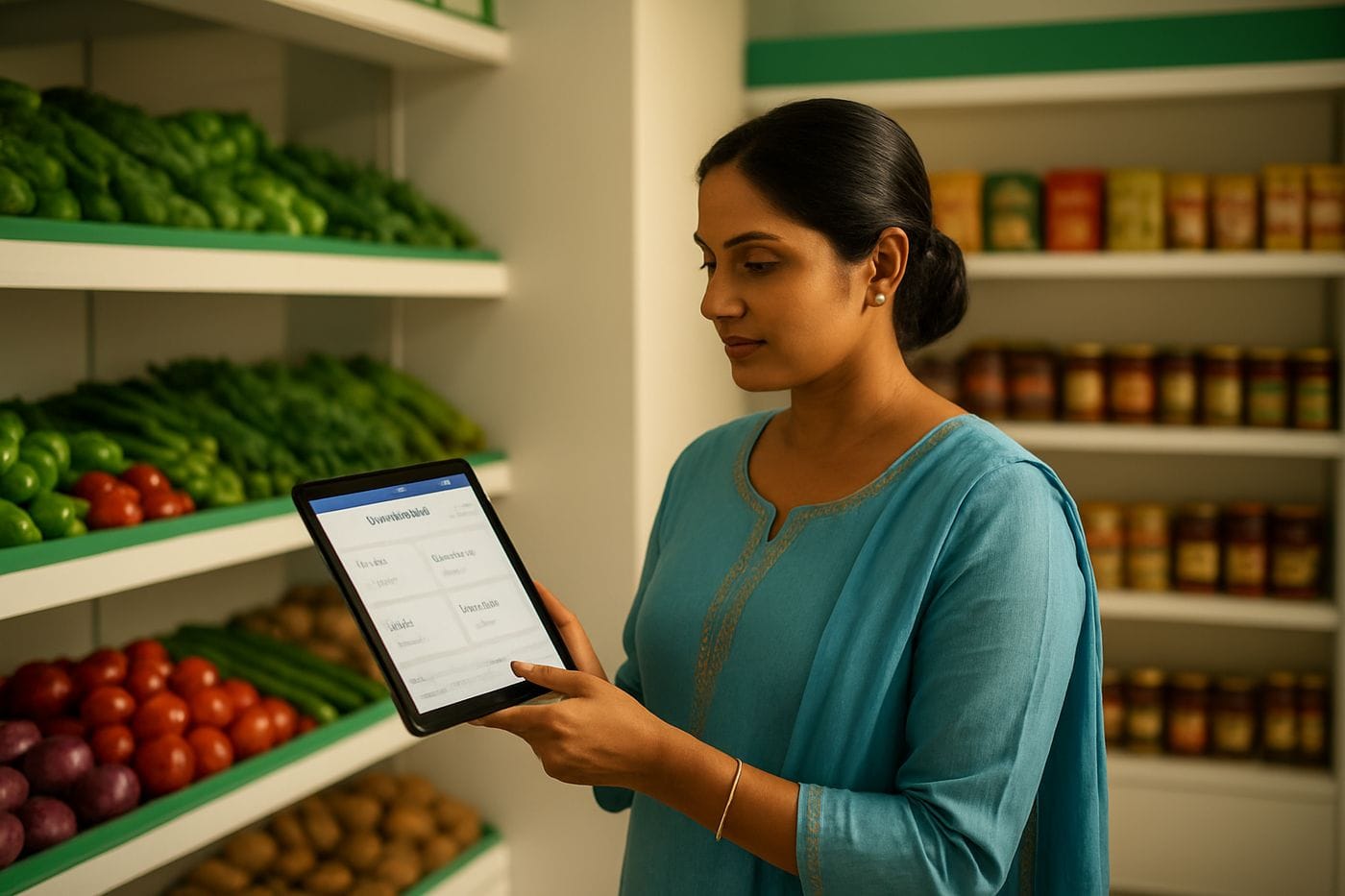
Quick Commerce Fulfilment for Indian Grocery Chains: 2026 Guide
Table of Contents
- Introduction
- The Problem Indian Grocery Chains Face with Quick Commerce
- What to Look for in a Quick Commerce Fulfilment Solution
- Key Steps to Build Quick Commerce Fulfilment in 2026
- How Commmerce Helps Indian Grocery Chains Fulfil Faster
- Conclusion
- FAQs
TL;DR
- Quick commerce fulfilment for Indian grocery chains requires unified inventory, rapid order picking, and real-time last-mile dispatch working together in one system.
- The biggest operational failure point is running separate tools for stock management, order processing, and delivery, which creates delays that kill the 10 to 45 minute promise.
- Commmerce Delivery Hub lets grocery retailers manage their own riders and 12 or more third-party carriers from one dashboard, with COD collection, zone-based routing, and branded customer tracking built in.
- Unlike legacy software such as Marg ERP or Tally, a modern omnichannel platform connects your physical stores, online orders, and delivery operations in real time without expensive hardware or lengthy migrations.
Can Your Grocery Chain Actually Promise 30-Minute Delivery?
Commmerce syncs live store inventory with hyperlocal delivery routing so your grocery chain fulfils quick commerce orders without overselling.
Introduction
Quick commerce fulfilment for Indian grocery chains has shifted from a competitive advantage to an operational necessity in 2026. Customers ordering groceries online now expect delivery in under 45 minutes, and in metro markets the bar has moved even lower, to 10 or 20 minutes. Meeting that expectation is not just a logistics problem. It is a systems problem. The grocery chains winning at quick commerce are not the ones with the most riders. They are the ones with real-time inventory visibility, smart order routing, and a last-mile operation that runs without manual intervention.
This guide walks through exactly how Indian grocery retailers with two to fifty stores can build or upgrade a quick commerce fulfilment operation in 2026, what to look for in a platform, which steps to prioritise, and how to avoid the most common mistakes that slow chains down.
The Problem Indian Grocery Chains Face with Quick Commerce
The core challenge for most Indian grocery chains attempting quick commerce is operational fragmentation. A retailer might use one billing software for POS, a separate tool or WhatsApp group for online orders, a third-party carrier portal for courier shipments, and a manual attendance register for their own delivery riders. None of these talk to each other in real time.
Here is what that fragmentation looks like on the ground:
- A customer places an order on the retailer's website or through a hyperlocal platform. The order arrives in one inbox.
- A store staff member manually checks stock, often by walking to the shelf or calling another branch.
- The order is packed without a confirmed stock deduction, leading to substitutions or cancellations.
- A rider is assigned manually via phone call or WhatsApp message.
- Cash-on-delivery collection is tracked in a notebook.
- The customer has no tracking link and calls the store for an update.
This workflow cannot scale. At 50 orders per day it is manageable. At 500 orders per day it collapses. Missed deliveries, incorrect COD reconciliation, stock mismatches between the physical store and the online store, and zero visibility into which rider is performing and which is stuck are daily realities for chains running on disconnected tools.
Older software platforms like Marg ERP, TallyPrime, and Vyapar were built for billing and accounting, not for real-time omnichannel operations. They do not have a delivery dispatch module, a live inventory sync across branches, or an order management layer that can route a Swiggy Instamart order and a WhatsApp order through the same fulfilment workflow. Attempting quick commerce on these platforms means building workarounds on top of workarounds.
According to the India Brand Equity Foundation, India's retail sector is undergoing a rapid shift toward organised omnichannel formats, and grocery is the largest and fastest-moving category in this transition. The chains that cannot close the gap between their physical operations and digital fulfilment will lose share to both the large quick commerce platforms and to better-organised regional competitors.
⚠️Watch OutAdding more riders without fixing your inventory and order routing systems will not improve delivery speed. It will only increase your payroll while customers still wait for someone to manually confirm stock and assign the order.
What to Look for in a Quick Commerce Fulfilment Solution
The right quick commerce fulfilment platform for a grocery chain is not a standalone delivery app or a bolt-on courier integration. It is a system that connects inventory, order processing, and last-mile dispatch into one real-time loop.
When evaluating any platform for quick commerce grocery fulfilment, look for these capabilities:
| Capability | Why It Matters for Quick Commerce | Legacy Tools (Marg/Tally) |
|---|---|---|
| Real-time inventory across stores | Prevents accepting orders for out-of-stock items | Batch updates, not real-time |
| Unified order management | All channels in one queue, no manual copy-paste | Not available |
| Internal fleet dispatch | Assign own riders automatically by zone or distance | Not available |
| Multi-carrier integration | Fallback to Porter, Shadowfax, or Dunzo when fleet is busy | Requires separate portals |
| COD tracking | Know every rupee collected by every rider | Manual registers |
| Customer tracking page | Reduces inbound calls, improves experience | Not available |
Also look at deployment model. A platform that requires expensive proprietary POS terminals, a multi-month data migration, or a team of IT staff to maintain is not compatible with the speed that quick commerce demands. The best platforms in 2026 run on the devices you already own, whether that is a Windows laptop at the store counter, an Android phone for the delivery rider, or a browser-based dashboard for the operations manager.
For a broader view of how online orders and fulfilment connect, read the How Indian Retailers Can Sell Online - Complete eCommerce Guide.
💡Pro TipEvaluate platforms by how fast you can go live on your existing hardware, not by how many features are listed in the brochure. A grocery chain that can start dispatching riders on day one beats one that is still migrating data three months later.
Key Steps to Build Quick Commerce Fulfilment in 2026
Building a reliable quick commerce grocery fulfilment operation comes down to five interconnected steps. Each one compounds the one before it. Skipping any step creates a bottleneck that will surface at peak hour.
Step 1: Centralise Inventory Across All Stores in Real Time
Quick commerce grocery fulfilment starts and ends with accurate stock visibility. If your online store is showing an item as available when the shelf is empty, every order for that item becomes a cancellation or a substitution. Both damage customer trust and increase support load.
Centralised, real-time inventory means that every sale at POS, every online order fulfilled, and every receiving note from a supplier immediately updates the stock count visible to the ordering system. This is the foundation that allows auto-routing of orders to the nearest store that actually has the item in stock.
Step 2: Unify All Order Channels into One Queue
Grocery chains in 2026 receive orders from multiple touchpoints: a branded website or app, WhatsApp, phone calls converted to manual orders, and walk-ins at the counter. Managing each of these in a separate inbox or notebook is the single biggest cause of delayed grocery delivery.
An Order Management System (OMS) consolidates every channel into one prioritised queue. Staff see all pending orders in one view, sorted by promised delivery time, with stock availability already confirmed. No switching between tabs, no manual stock checks, no missed orders.
The Omnichannel Commerce Guide for Indian Retail Chains explains in detail how unified order management works across physical and digital channels.
Step 3: Define Delivery Zones by Pincode and Set SLAs
Not every delivery zone deserves the same promise. Orders within two kilometres of the store can be committed to a 20-minute delivery. Orders to pincodes five kilometres away might be 45 minutes. Orders beyond your own rider range go to a hyperlocal carrier like Porter or Shadowfax.
Pincode-based zone management lets you configure pricing, SLA, and carrier logic per zone, so the system automatically makes the right routing decision without a human having to judge each order. This is particularly important for Indian grocers because delivery demand is highly concentrated in certain pincodes and drops sharply outside them.
Step 4: Automate Rider Assignment and Carrier Fallback
Manual rider assignment is the most common bottleneck in quick commerce grocery operations. A dispatcher who has to call a rider, confirm availability, explain the address, and wait for acknowledgement adds three to five minutes to every delivery before the rider even picks up the bag.
Auto-assignment routes each order to the nearest available rider within the delivery zone. When no internal rider is available (peak hours, sick days, high volume), the system falls back to a connected carrier automatically, comparing rates and SLA across available options and booking without manual intervention.
For a detailed comparison of how own fleet and carrier approaches interact, see the Quick Commerce vs Last-Mile Delivery for Indian Grocery Chains guide.
Step 5: Track COD, Proof of Delivery, and SLA Breaches
Quick commerce grocery fulfilment in India involves a high proportion of cash-on-delivery orders. Without a structured COD tracking workflow, cash leaks silently. A rider collects ₹800, deposits ₹600, and the difference is absorbed as shrinkage because no one had visibility.
A proper delivery management system tracks every rupee collected by every rider, requires digital proof of delivery (photo and signature at the customer's door), and alerts the operations team when an order has breached its promised delivery window. These three controls together close the loop on accountability at the last mile.
The Last-Mile Delivery and Fulfilment Guide for Indian Retailers covers each of these controls in depth.
How Commmerce Helps Indian Grocery Chains Fulfil Faster
Commmerce is an Omnichannel Retail Operating System built specifically for Indian retailers with two to fifty stores. Rather than stitching together a billing app, a separate delivery tool, and a carrier portal, Commmerce connects POS, inventory, OMS, and last-mile delivery into one real-time platform.
For grocery chains building or scaling quick commerce fulfilment, here is what Commmerce delivers out of the box.
Delivery Hub: Internal Fleet and Multi-Carrier in One Dashboard
Commmerce Delivery Hub is the last-mile delivery management layer of the Commmerce platform. It handles both internal riders and 12-plus third-party carriers from a single screen, so grocery operations managers do not need to switch between a fleet app and a carrier portal.
Key capabilities relevant to quick commerce grocery fulfilment:
- Auto-assignment: Orders are automatically routed to the nearest available internal rider or the best-rate carrier based on the zone and SLA configured for that pincode.
- Internal fleet dispatch: Riders receive orders on the Delivery Partner app (Android and iOS), pick up from the store, deliver, collect COD, and capture photo plus digital signature proof of delivery.
- Carrier integrations: Delhivery, BlueDart, DTDC, Ecom Express, FedEx, India Post (CEPT), Shiprocket, Porter, Shadowfax, FShip, DHL, and UPS are all connected. The system compares rates and books automatically.
- COD management: Every rupee collected by every rider is tracked. Outstanding COD per driver is visible on the dashboard. Drivers can also accept UPI payments via Razorpay advance payment links.
- Customer tracking page: Every order generates a branded real-time tracking link shared with the customer, reducing inbound calls to the store.
- Zone-based delivery: Indian 6-digit pincode ranges are mapped to delivery zones, each with independent pricing and SLA settings.
- SLA breach alerts: The system monitors every live order against its committed delivery window and alerts the operations team when an order is at risk.
- WhatsApp notifications: Customers receive delivery status updates (Out for Delivery, Order Delivered) via WhatsApp templates, which is the communication channel Indian grocery customers actually respond to.
- Multi-store support: Each store in the chain has its own independent fleet, carrier configuration, and zone mapping, all visible from the same central dashboard.
Setup is same-day for internal fleet operations. Carrier integrations take one to two days depending on carrier onboarding. There is no proprietary hardware requirement. The platform runs on any modern browser for back-office operations, and the driver app runs on Android 5.0 or iOS 12 or above, meaning existing rider smartphones work without any upgrade.
For a closer look at the tools available to grocery chains in this space, see Top 10 Quick Commerce Enablement Tools for Indian Grocery Chains.
One Connected Core: POS, Inventory, OMS, and Delivery
The advantage of Commmerce over standalone delivery tools or legacy billing software is that the delivery layer is connected to the same inventory and order data that powers the store's POS and online storefront. An order placed on a grocery chain's Shopify-powered website flows automatically into Delivery Hub via webhook. An order placed at the store counter flows in via the API Gateway. Stock is deducted in real time from the same central inventory, not from a separate siloed count.
This is the architecture that quick commerce grocery fulfilment actually requires. Not more tools, but fewer tools that share the same data in real time.
To understand how this connects to preventing revenue loss at scale, read Preventing Revenue Loss in 2026: Omnichannel Strategies for Grocery Chains.
The Retailers Association of India has consistently highlighted real-time inventory and unified fulfilment as the two highest-impact investments for organised grocery retail chains, a finding that aligns directly with what Commmerce is built to deliver.
Running a grocery chain in India? See how Commmerce unifies your stores, inventory, orders and delivery in one platform built for quick commerce fulfilment.
Conclusion
Quick commerce fulfilment for Indian grocery chains in 2026 is an operational discipline built on three pillars: accurate real-time inventory, unified order management across all channels, and automated last-mile dispatch that handles both internal riders and third-party carriers without manual intervention. Legacy billing tools cannot support this model. Neither can a patchwork of separate apps, each holding a different slice of your operational data. The chains that will win in quick commerce grocery are the ones running a single connected platform where a confirmed order automatically triggers stock deduction, rider assignment, customer notification, and COD tracking in one seamless flow. That is the standard to build toward in 2026.
FAQs
Q: What is quick commerce fulfilment for grocery chains?
A: Quick commerce fulfilment is the process of delivering grocery orders within 10 to 45 minutes by combining dark stores or local store inventory, rapid picking workflows, and real-time last-mile delivery management from a single platform.
Q: How many delivery carriers does Commmerce Delivery Hub support?
A: Commmerce Delivery Hub integrates with 12 or more shipping carriers including Delhivery, BlueDart, FedEx, India Post, Porter, Shadowfax, and others, while also managing internal delivery fleets from the same dashboard.
Q: Can a grocery chain use its own delivery riders alongside third-party carriers?
A: Yes. Commmerce Delivery Hub lets grocery retailers manage their own riders for local quick deliveries and third-party carriers for outstation or overflow shipments from a single dashboard, with auto-assignment based on zone, distance, or carrier rate.
Q: What is the difference between quick commerce and standard last-mile delivery for groceries?
A: Standard last-mile delivery typically fulfils orders within one to three days using courier networks, while quick commerce fulfilment targets delivery within 10 to 45 minutes using hyperlocal store inventory, dedicated riders, and real-time dispatch automation.
Q: How long does it take to set up Commmerce Delivery Hub for a grocery chain?
A: Basic internal fleet operations can be set up on the same day, while carrier integrations take one to two days depending on carrier onboarding requirements, with no hardware purchase or data migration needed.
Disclaimer: This article is for general informational purposes only and does not constitute legal, financial, or tax advice. GST rules, compliance requirements, and platform features may change over time. Please verify the latest guidelines with a qualified professional or refer to official sources such as the GSTN or CBIC. Market statistics mentioned are based on publicly available estimates and may not reflect current figures. Commmerce product features referenced are accurate at the time of writing and subject to change.