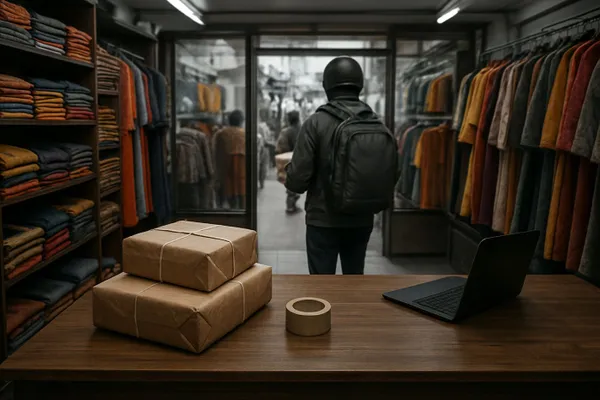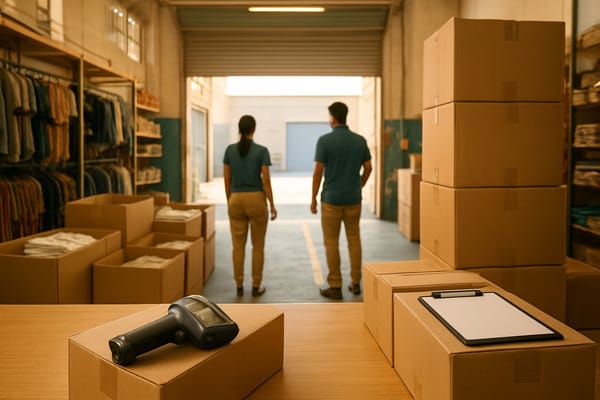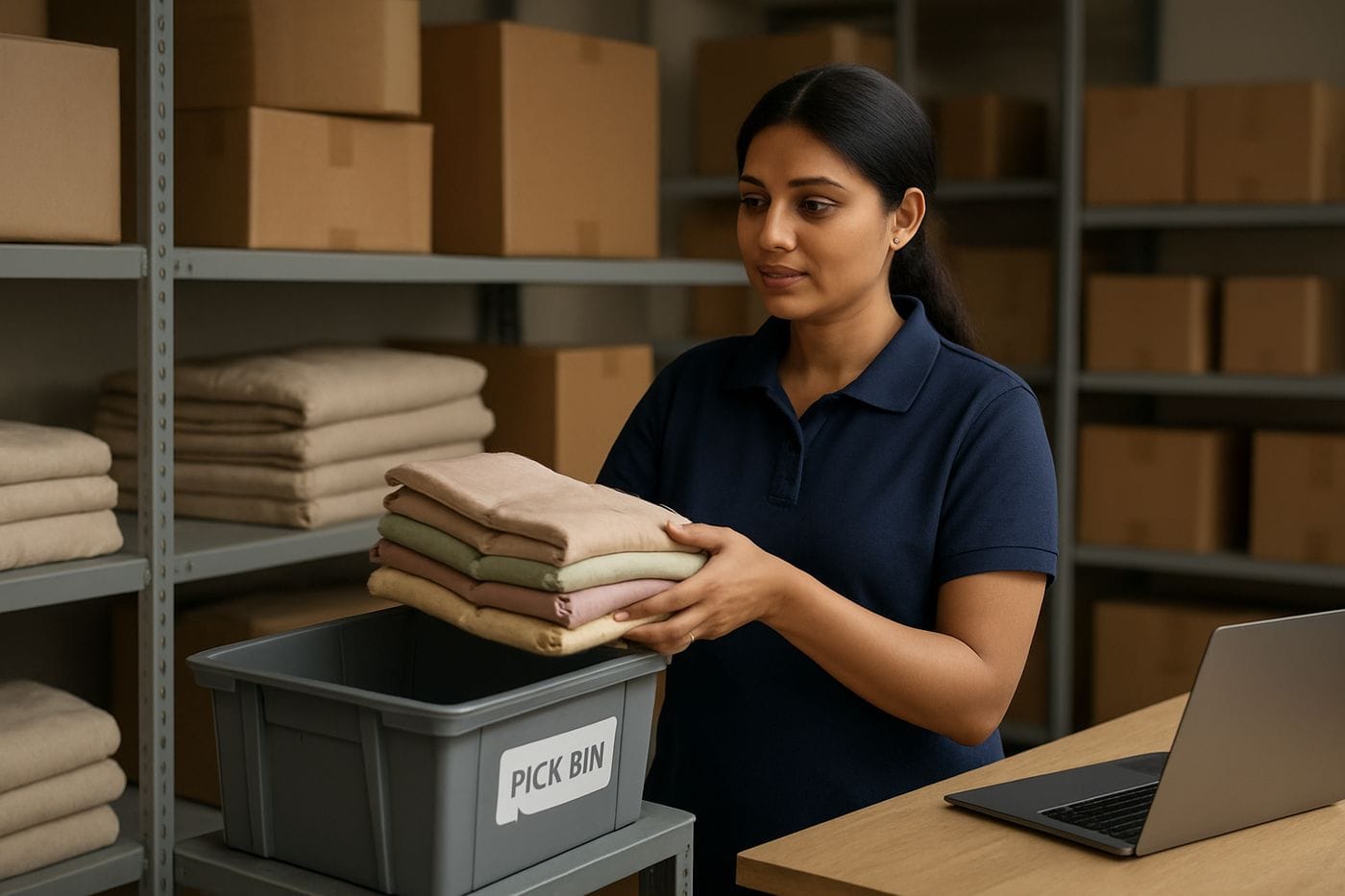
Pick face replenishment is the routine of refilling the small, easy-to-reach bins pickers pull from, using stock held in bulk storage behind them. When it fails, a product shows stock in your system, sits in your backroom, and still cannot be picked, so the order waits or gets cancelled.
Why do pick bins run empty when the backroom is full?
Because nobody owns the refill. Picking is tracked as work, but moving stock from bulk storage to the pick bin is usually a favour someone does when they notice.
Take a mid-sized apparel or home-goods godown in India. Incoming stock is put away into big reserve racks (see how putaway delays hide sellable stock). A small quantity of each fast mover sits in a pick bin near the pack bench. The system shows 120 units. Only 6 are in the bin. A picker reaches the bin, finds it empty, and one of three things happens:
- The picker walks to the reserve rack, searches, and returns after 10 or more minutes, which stalls every order behind that line.
- The picker marks the line short, the order is split or held, and the customer waits for something you actually own.
- The picker takes stock from a neighbouring bin, which quietly breaks the count for two products at once.
None of these show up as a loss line anywhere. They show up as slow dispatch, late-ship penalties on marketplaces and a rising number of short picks. The stock is there. The refill is not.
What does an empty pick bin cost a retailer?
It costs picker time, order speed and sometimes the sale itself. The mechanism matters more than any single figure, because each godown has its own walking distances and order mix.
- Picker time: a trip to the reserve rack in the middle of a pick run is walking that batch picking was meant to remove. If you have already worked on batch picking to cut walking time, empty bins quietly undo it.
- Order speed: a held line holds the whole order. Marketplaces judge you on dispatch time, so one empty bin can turn into a late dispatch on several orders.
- Cancellations: an order marked short often ends up cancelled, which means refunds and stock to put back.
- Wrong counts: borrowing from a neighbouring bin creates two mismatches that a cycle count will later flag but not explain.
Retail in India keeps growing, as the India Brand Equity Foundation tracks on its retail industry page, and more of that growth arrives through online orders that must ship on a clock. A godown that copes at normal volume often breaks at festive volume precisely because bins empty faster than anyone refills them.
How to refill pick bins before the rush empties them
Set a minimum level for every fast-moving bin, and let falling below it create a refill task automatically. Here is the order to do it in.
- List your top 50 products by order lines picked in the last 30 days, because these bins empty first and matter most.
- Record how many units each bin can physically hold and how many your busiest day picks from it.
- Set a minimum for each bin at roughly half a peak day of picking, and a maximum at the bin's physical capacity.
- Assign refill to a named person per shift, with a clear start time before the first pick wave, rather than leaving it to whoever is free.
- Create a refill task the moment a bin drops below its minimum, listing the source rack, the bin and the quantity to move.
- Scan or confirm both ends of the move, so the reserve count falls and the bin count rises in the same step.
- Review short picks every week, and raise the minimum for any bin that caused one.
Commmerce, an Omnichannel Retail Operating System for Indian retailers, has warehouse operations with pick lists, packing stations, dispatch and sub-locations, plus a task list that shows work raised from other modules, such as a shelf a picker found short. That means a short pick can become a refill job for a named person instead of a complaint at the end of the day.
How do you decide the minimum and maximum for each bin?
Use the product's own picking speed. A bin for a slow product can be tiny, while a bin for a top seller needs to hold a full day of picks, or it will empty before lunch.
| Product type | Pick pattern | Minimum rule | Refill timing |
|---|---|---|---|
| Top seller | Picked in every wave | About half a peak day | Before the first wave and again mid-shift |
| Steady mover | Picked a few times a day | One normal day | Once per shift |
| Slow mover | Picked a few times a week | One or two units | Daily check, or refill on pick |
| Bulky item | Few units fit in a bin | Whatever the bin holds | Pick direct from reserve |
Do not give every product the same rule. A uniform minimum means top sellers still run dry and slow movers hog the best bin space. If you have not reviewed where products sit, start with warehouse slotting, because a well-slotted bin is also a much easier bin to refill.
When should refills happen so pickers are never waiting?
Refill in the quiet window before picking starts, and again whenever a bin crosses its minimum. Refilling during a pick run is the worst time, because the refiller and the pickers get in each other's way.
- Before the shift: top up every top-seller bin to its maximum using a printed or on-screen list.
- Mid-shift: one person works only the refill tasks that crossed their minimum since morning.
- End of day: note which bins hit zero and why, so tomorrow's minimum is better.
During festive peaks, shorten the cycle. The same logic that applies to prioritising orders in the Diwali rush applies to bins: a top-seller bin that was fine on a normal day can empty twice in one shift when order volume doubles.
What mistakes do retailers make with pick bin refills?
The most common mistakes are refilling without recording it, setting one rule for every product, and treating a short pick as a picker error.
- Refilling without a record. If stock moves from reserve to bin by hand with no entry, the system and the shelf drift apart within days.
- Overfilling. A bin stuffed above its maximum hides stock behind the front row, so pickers still report it missing.
- Blaming the picker. A short pick is usually a refill failure. Treat it as data for the minimum, not as a performance issue.
- Skipping the count. Even with good refill, bins drift. A short, regular cycle count keeps them honest, as covered in how cycle counting fixes stock accuracy.
How do you know the refill routine is working?
Track three simple numbers each week: short picks per hundred order lines, average time from an order being released to the last item picked, and the number of bins that hit zero during a shift. All three should fall within a few weeks.
If short picks fall but dispatch time does not, your refill is working and a different bottleneck is slowing you down, such as packing. Industry groups such as the Retailers Association of India are a good place to benchmark how other retailers run operations. For a godown, a bin that never goes empty is a very practical place to start.
Frequently asked questions
What is a pick face or pick bin?
A pick face is the front-line storage spot a picker takes items from, usually near the pack bench. Bulk stock sits in reserve racks behind it and is moved forward when the pick face runs low.
How often should pick bins be refilled?
Top sellers typically need a refill before each shift and another mid-shift. Slow movers may need only a daily check. Let the minimum level, not the clock alone, trigger the task.
Who should be responsible for refilling?
Name one person per shift. If refilling belongs to everyone it belongs to no one, and pickers end up doing it in the middle of their runs.
Does this apply to a small godown with a few hundred products?
Yes. Start with your top 20 products. A small godown has less walking, but an empty bin still holds up an order in exactly the same way.
Why does the system show stock but the picker cannot find it?
The stock is in a reserve location, not in the pick bin. Without a refill step recorded in the system, the total looks healthy while the pick face is empty.