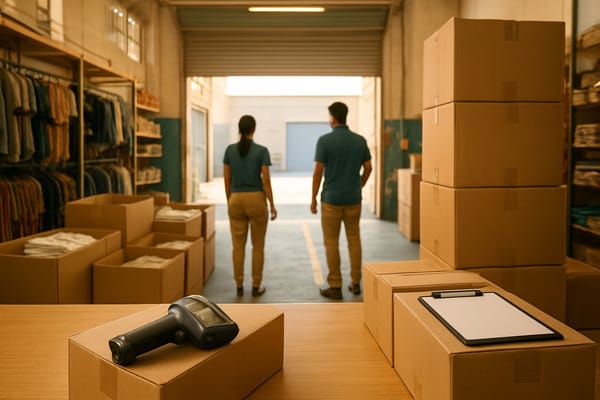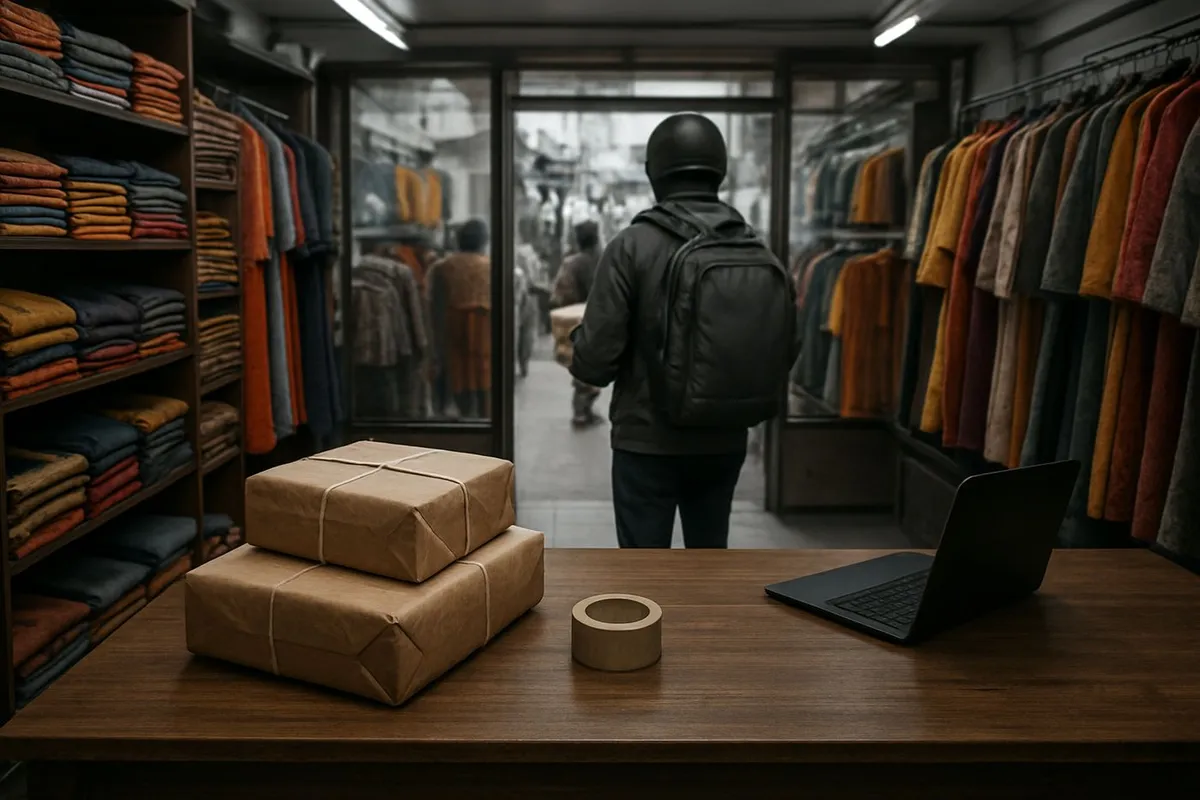
Capping online orders per store means setting a limit on how many web and marketplace orders one store accepts for packing in a given window, so walk-in customers are not left waiting. When a store hits its cap, new orders route to another location or to a later slot instead of piling onto one packer.
Why do online orders hurt walk-in sales in the same store?
Because the same few people, the same shelves and the same hour serve both. Online orders arrive in bursts, and if every order lands on the nearest store with stock, that store's staff stop serving the counter to pack parcels.
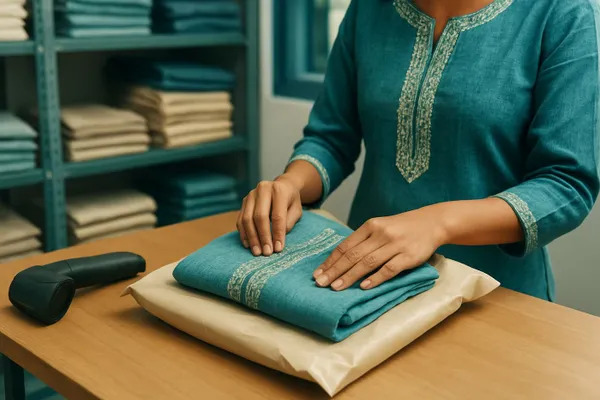
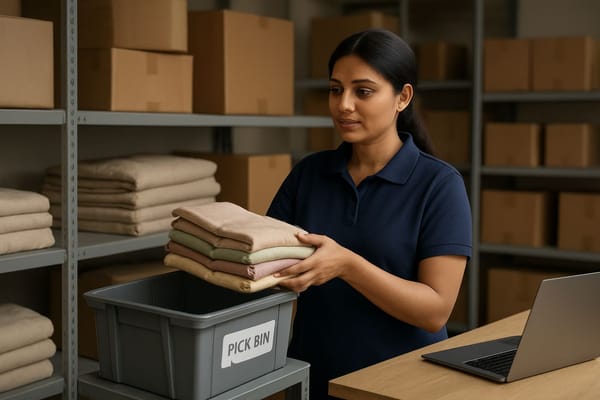
Most Indian retail stores run lean. On a Saturday evening there may be three people on the floor, and one of them is also the person who picks, packs and hands over parcels to the courier. An omnichannel plan on paper says every store becomes a fulfilment point. In practice, nobody decided how much online work a store can absorb before the shop itself suffers.
The cost shows up in two places. The walk-in customer who waits at the counter for ten minutes leaves without buying, and that sale is lost for good. The online order that was packed in a rush ships with the wrong size or a missing item, and comes back as a return. Both losses have a revenue consequence, and neither appears in a stock report.
The India Brand Equity Foundation's retail overview describes a sector where physical stores and online channels are growing side by side. That is the point: the store is serving both, so someone has to plan the load.
What does a store actually have capacity for?
A store has a limited number of pack-ready orders it can handle per hour without hurting the counter. That number depends on staff on shift, how far the stock sits from the packing spot, and how many walk-ins arrive at that hour.
Do not guess it. Measure it for one week before setting any rule. For each store, note the following:
- Staff on shift at each time block, and who is free to pack.
- Time to pick and pack one single-item order and one three-item order.
- Counter peak hours, usually evenings and weekends, when walk-ins need every pair of hands.
- Courier pickup time, since a parcel packed after the pickup waits until tomorrow anyway.
The last point is often missed. Packing an order at 6:40 pm when the courier left at 6:00 pm gains nothing. The order ships the next day whether it was packed in a hurry or calmly, so the rush only costs you the counter sale. This is the same logic behind a sensible order priority rule in the Diwali rush: do the work that ships today first.
How to cap online orders per store
You set a cap by turning the measured capacity into a number per store per time window, then letting your order system enforce it. The steps below work for a chain of three stores or thirty.
- Measure each store's real pack rate for one week, split by weekday and weekend, and by morning, afternoon and evening.
- Set a cap for each store and time block, starting at about 70 percent of the measured rate so the counter keeps breathing room.
- Define the overflow rule: when a store reaches its cap, send the next order to the nearest store that still has the stock and spare capacity.
- Add a last-resort rule: if every store is at its cap, accept the order with a later promised slot rather than rejecting it.
- Review the numbers every Monday and adjust the cap by store, using late orders and walk-in complaints as your signal.
- Give each store manager a pause switch for the day, so a staff absence does not break the plan.
Keep the first version simple. A single daily cap per store, with a single overflow store, is enough to stop the worst evenings. You can add time blocks later.
How should overflow orders be routed?
Route an overflow order to the nearest store that has the full order in stock and spare capacity, and fall back to a later slot if none qualifies. Splitting an order across stores should be the exception, because every split adds a second parcel and a second freight bill.
When you are tempted to split, check what it costs first. We covered the margin effect in how Indian retailers handle split orders without losing margin. In short, a split order is only worth it when the customer would otherwise cancel.
The comparison below shows how the three common routing choices behave when a store is at its cap.
| Choice at the cap | What happens | Risk |
|---|---|---|
| Keep sending orders to the same store | Packing queue grows, counter staff pulled away | Lost walk-in sales, packing mistakes, returns |
| Route the whole order to another store | Order ships on time from a store with spare capacity | Slightly longer delivery distance |
| Split the order across stores | Both stores share the work | Two parcels, two freight bills, customer confusion |
| Offer a later slot | Order waits for the next free window | Some customers cancel if the wait is long |
For the cost side of this choice, see ship from store versus warehouse delivery costs. A store that is too busy for online orders is often a sign the order should come from a warehouse instead.
What stops the cap from becoming a lost-sale rule?
A cap only works if the customer sees an honest promise. If your site says "ships today" while the store is at its cap, you have moved the problem from the counter to the complaint inbox. The promised date has to follow the cap.
Three habits keep the cap from costing you sales:
- Show the real dispatch slot at checkout instead of a blanket "ships today".
- Keep a click and collect option for customers who would rather pick up, which moves work off the packing bench. Our guide to setting up click and collect shows how.
- Track cancellations by cause, so you can tell a cap that is too tight from a slot that is too long.
Stock accuracy matters here too. If an overflow store is chosen because the system says it has the item, and the shelf is empty, the order bounces twice. The steps in preventing stock outs across multiple locations apply to the receiving store as much as the sending one.
Which numbers tell you the cap is right?
Watch four numbers per store per week: orders packed on the promised day, walk-in conversion at peak hours, returns for wrong or missing items, and the share of orders routed to overflow. If the first stays high and the second holds steady, the cap is right.
- On-time pack rate: orders packed before courier pickup, as a share of orders received.
- Peak-hour conversion: walk-ins who buy, compared with the same hour before online orders were routed in.
- Wrong or missing item returns: a rise means packers are rushing.
- Overflow share: if one store sends most of its orders away every day, its cap is too low or it is the wrong store for online work.
If one store always overflows, consider whether that store should be an online fulfilment point at all. Some stores are simply too small, and the honest answer is to make them walk-in only and let a larger store carry the online load. Backorders and delays create their own customer problem, so pair this with a clear message, as described in handling backorders without losing the customer.
What about invoices and compliance when orders move between stores?
Every order needs a valid invoice from the location that actually supplies the goods. If a store in one state ships an order that was first assigned to a store in another state, the tax invoice must reflect the supplying location. The CBIC GST portal publishes the rules on place of supply and invoicing, and your accountant should confirm how routing affects multi-state stores.
This is another reason to decide routing rules before the rush. Changing the supplying store after the invoice is raised creates a correction that someone has to fix by hand.
Where does Commmerce fit in this?
Commmerce is an Omnichannel Retail Operating System for Indian retailers. It brings store, warehouse and online orders into one place, so the order view and the stock view are shared by every location. That shared view is what makes a cap and an overflow rule possible, because the system can see what each store holds and which orders are waiting.
What it does not do on its own is decide your capacity. You still have to measure how many orders a store can pack without hurting its counter, and you still have to set the rule. The software enforces the decision. The decision itself is yours.
A simple week-one plan
Pick your busiest store. Measure its pack rate for seven days. Set one daily cap, name one overflow store, and write the later-slot message your site will show. At the end of the week, compare walk-in conversion at peak hours and the on-time pack rate with the week before. Then repeat for the next store. Most chains find that two or three stores cause nearly all the counter congestion, so you rarely need to roll this out everywhere at once.
The Retailers Association of India regularly publishes material on store operations and omnichannel practice, and it is a useful place to compare notes with other chains once your caps are running.
Frequently asked questions
How many online orders can a store pack per hour?
It depends on staff on shift, how far stock sits from the packing spot and how many items each order has. Measure one week of real pack times for single-item and multi-item orders instead of assuming a number, then set the cap below that rate.
Should small stores take online orders at all?
Only if they can pack without pulling staff off the counter. A store that overflows most of its orders daily is better kept walk-in only, with a larger store or warehouse carrying the online load.
What happens to an order when every store is at its cap?
Accept it with a later, honest dispatch slot instead of rejecting it or promising same-day shipping. Many customers will wait if the date is clear at checkout.
Does capping orders reduce online sales?
Not if the promised date follows the cap. The loss comes from promising same-day dispatch and missing it. A clear slot protects both the online customer and the walk-in.
How often should store caps be reviewed?
Weekly at the start, using late orders, peak-hour walk-in conversion and wrong-item returns as signals. Once the numbers settle, a monthly review is enough, with extra checks before festive peaks.