An RTO parcel is a return-to-origin shipment: an order the courier could not deliver and sent back to you. The money is already lost on freight, so the only thing left to save is the stock. Most chains lose that too, because the unit sits in a carton for days before anyone counts it as sellable again.
Why does RTO stock go missing after it comes back?
RTO stock goes missing because nobody owns the step between the courier handing over the parcel and a unit being back in a bin. The order shows as undelivered, the stock shows as sold, and the carton sits at the dispatch desk.
Think of a brand running six stores and an online channel from one warehouse. A kurta ships on Monday. The customer refuses at the door on Wednesday. The courier takes two to five days to bring it back. By the time it reaches your gate, the system still counts that kurta as sold. Your website shows it out of stock in that size, a store manager tells a walk-in customer it is gone, and the real unit is in a carton under a table.
This is different from fixing a failed delivery before it turns into an RTO, which we cover in how to fix NDRs before they become RTOs. Here the parcel has already come home and the job is to get value out of it quickly.
What does an RTO parcel cost beyond the freight?
An RTO costs the outbound freight, the return freight, the handling time and the days the unit is not available to sell. Of these, the idle days are the one most chains never measure.
- Freight both ways. You pay to send it and, depending on the courier contract, often to bring it back.
- Handling labour. Someone has to match the parcel to an order, open it and inspect it.
- Idle stock. A unit that is physically present but not sellable is dead capital for as long as it waits.
- Lost next sale. If that was the last piece in a size, every order that arrives while it sits is a missed sale or a backorder.
- Damage risk. The longer a returned carton sits open, the more likely a tag, seal or box is damaged and the unit has to be written down.
The cause of the RTO matters too. Some come from address and pincode problems, which pincode serviceability gaps explains. Others come from refused cash on delivery orders. Whatever the reason, the stock side is the same.
How do you get RTO stock back on the shelf fast?
You treat every RTO as an inbound receipt with a deadline. The parcel is scanned at the gate, matched to its order, inspected, and put back into stock within a fixed number of hours.
How to process RTO parcels in a multi-store chain
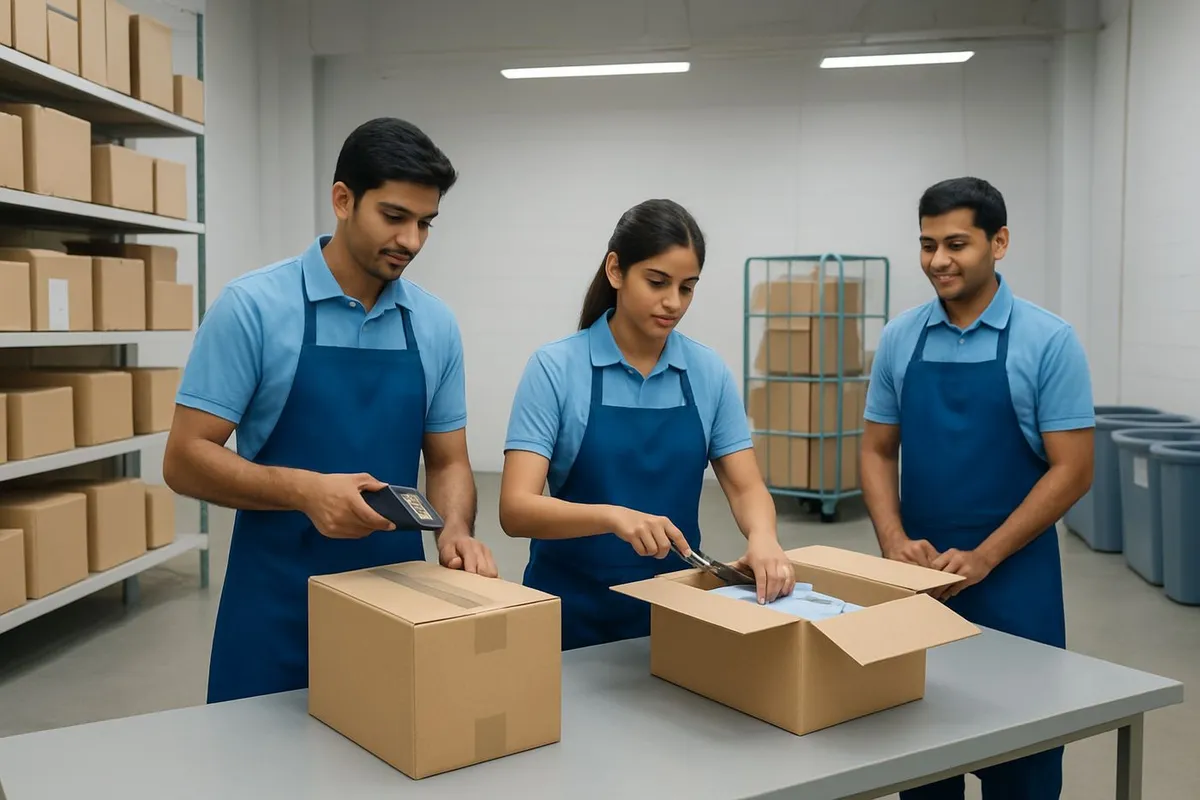
- Scan every returned parcel at the gate the moment it arrives, using the AWB number, so the system knows it is physically back.
- Match the scan to the original order and mark the order status as RTO received, not delivered and not cancelled.
- Open the parcel within the same shift and check the item against the order: right SKU, right size, tags and seals intact.
- Grade each unit as sellable, needs repacking, or damaged, and record the grade against the order.
- Put sellable units back into their pick bin the same day and let the stock count update on every channel.
- Route damaged units to the damaged stock area so they never reappear as good stock, as described in how to stop selling damaged stock as good stock.
- Raise a claim with the courier for any parcel that came back opened, light or with the wrong item.
Set a service level for the whole chain, for example every RTO parcel back in a bin within 24 hours of arriving at the gate. Then report the parcels that breach it every morning.
Which grade should a returned unit get?
Use three grades only, because staff will not apply more consistently. Each grade has one destination and one owner.
| Grade | What it means | Where it goes |
|---|---|---|
| A, sellable | Unopened or untouched, tags and seals intact | Back to its pick bin, available on all channels |
| B, repack | Sound but the outer pack or tag is damaged | Repack bench, then back to a bin the same day |
| C, damaged | Used, soiled, broken or wrong item inside | Damaged stock area, courier claim, then write-off or return to vendor |
A unit that comes back from a refused order is usually grade A. A unit that came back after being opened and tried is a customer return, which follows a different flow. Keep the two apart in the system so your RTO rate is not polluted by genuine returns.
How should the stock move when a parcel is in transit back?
Keep the unit visible as in-transit return rather than sold, so planners can see it is coming home. This stops two mistakes: reordering stock you already own, and promising it to a customer before it is physically back.
Do not make the unit sellable the moment the courier marks the parcel as returned. Couriers update status ahead of the physical handover, and a unit made sellable on that scan can be sold twice. Release it only after your own gate scan and inspection. This is the same discipline that applies when order cancellations strand stock: the trigger for availability must be your own count, not someone else's status.
What about GST and paperwork on an RTO?
An RTO is a non-delivery, so the sale usually has to be reversed in your records, and the way to do that depends on whether the invoice was already issued and how the courier and your CA treat it. Take this to your accountant rather than guessing.
The CBIC GST portal publishes the rules on credit notes and invoice cancellation. What your operations team needs is a clear trail: the original invoice, the AWB, the date of return and the grade. With that trail your finance team can reverse revenue and tax correctly, and you can reconcile courier remittances and refused cash on delivery orders against what actually came back.
What should the head of retail track every week?
Track four numbers: RTO rate by courier, days from gate arrival to back in a bin, the share of RTO units graded sellable, and units sitting in RTO status for more than three days. The second and fourth are the ones that expose lost stock.
- RTO rate by courier and by pincode. A courier with a high RTO rate in a region is costing you stock days, not only freight.
- Gate to bin time. This is your real recovery speed.
- Share graded sellable. A low share points to damage in transit or in packing.
- Aged RTO units. Anything in RTO status for more than three days needs a name next to it.
Cycle counts catch what these numbers miss. If RTO bins and the dispatch desk are counted on the same schedule as the shelves, as in cycle counting for Indian retail warehouses, units that fell between the gate and the bin show up quickly. For context on how fast organised retail and ecommerce are growing, and why these returns volumes matter more each year, see IBEF's ecommerce overview.
Where does Commmerce fit?
Commmerce is an Omnichannel Retail Operating System for Indian retailers. It keeps stock across stores, warehouses and online channels in one place, so a returned unit can show as in transit, then as sellable the moment it is scanned back, on every channel at once. It does not replace your courier or your accountant: the courier still decides how fast a parcel returns, and your CA decides the tax treatment. The operating discipline above works with a spreadsheet for a few stores, and gets hard to hold once stock sits in several cities.
Frequently asked questions
What is an RTO in retail?
RTO stands for return to origin. It is a shipment the courier could not deliver, because the customer refused it, could not be reached or the address failed, and that is sent back to the seller. The seller pays freight and must put the unit back into stock.
How long should an RTO parcel take to become sellable again?
Aim for within 24 hours of the parcel reaching your gate. The courier's transit back is outside your control, but the gate to bin time is entirely yours and is the part worth measuring.
Should RTO units be sold before inspection?
No. Even a refused parcel can come back opened, swapped or damaged. Inspect first, grade the unit, and only then make it available on any channel.
How is an RTO different from a customer return?
An RTO never reached the customer, while a customer return was delivered, used or tried, and then sent back. They need different inspection, different refunds and different reporting, so keep them as separate statuses.
Who should own RTO stock in a multi-store chain?
Give it to one named role at the warehouse or hub that receives the parcels. Shared ownership between dispatch, stores and customer care is how units end up in a carton nobody opens.